
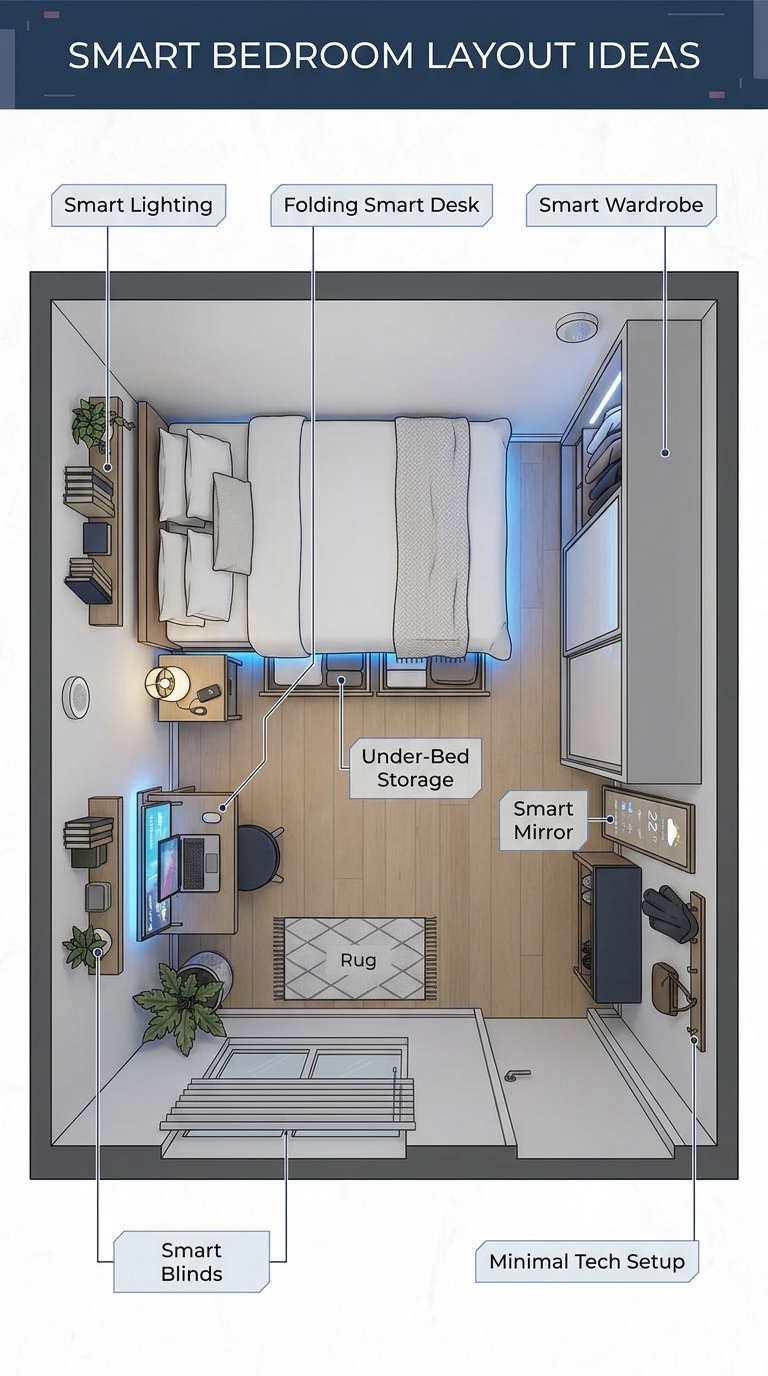
Designing a bedroom layout that actually works—not just looks good in photos—is one of the biggest challenges in home design. Whether you’re dealing with a compact apartment in Tokyo or a spacious master suite, layout decisions directly impact comfort, functionality, and even your sleep quality.
The truth? A great bedroom isn’t about how big it is—it’s about how intelligently it’s arranged. With the right layout, even the smallest room can feel open, organized, and calm. Poor planning, on the other hand, can make even a large bedroom feel cramped and chaotic.
In this ultimate guide, you’ll discover over 40 practical bedroom layout ideas, broken down by room type, along with expert-backed principles that ensure your space works beautifully in real life.

Why Bedroom Layout Matters More Than You Think
Before diving into ideas, let’s get one thing straight: layout is everything.
A well-designed bedroom layout helps you:
- Move freely without bumping into furniture
- Maximize storage without clutter
- Improve sleep quality and relaxation
- Make small rooms feel bigger
According to design experts, clear circulation, proper furniture scale, and intentional placement are the foundation of a functional bedroom .
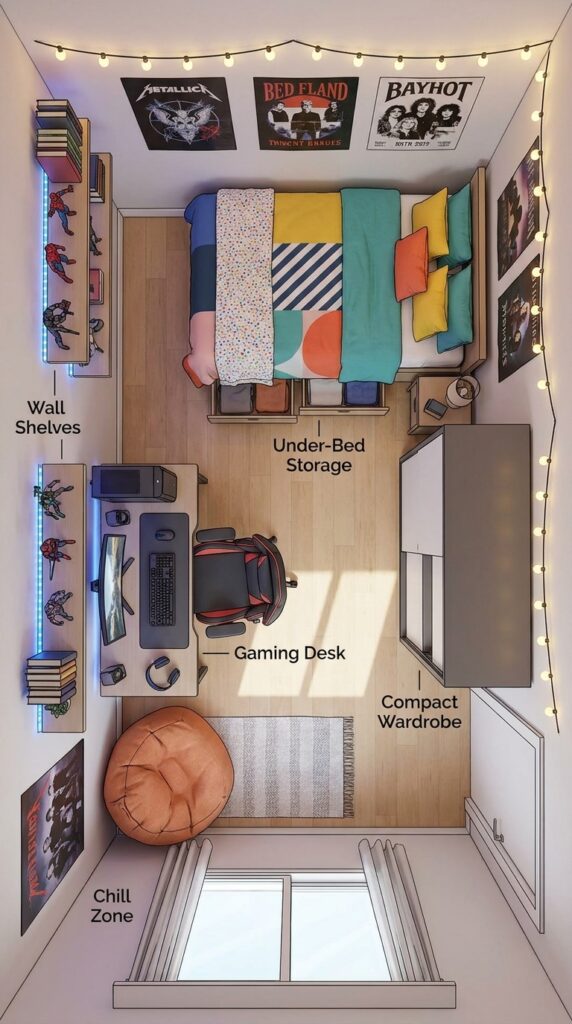
Core Principles of a Functional Bedroom Layout
These rules apply to every bedroom—small or large.
1. Start With the Bed (The Anchor Rule)
The bed is the largest and most important piece of furniture. Its placement determines everything else.
Best practices:
- Place the bed against the longest wall
- Avoid blocking windows or doors
- Keep at least one side accessible
This creates a natural flow and prevents awkward movement patterns .
2. Prioritize Movement Flow
Your bedroom should feel easy to navigate.
- Leave 60–75 cm walking space where possible
- Avoid blocking door swings
- Keep pathways clear
A cramped layout instantly makes a room feel smaller than it is.
3. Think Vertical, Not Horizontal
When floor space is limited, go upward.
- Wall-mounted shelves
- Tall wardrobes
- Floating nightstands
Using vertical space helps maximize storage without crowding the floor .
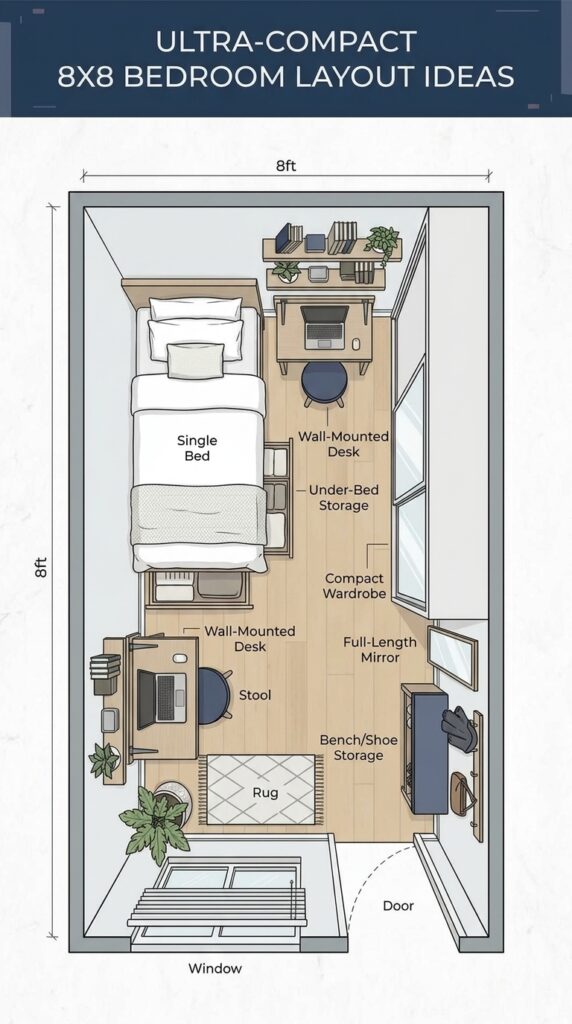
4. Choose the Right Furniture Scale
Oversized furniture kills small rooms.
- Swap king beds for queen/full
- Use slim nightstands
- Opt for low-profile beds
Right-sizing furniture is one of the easiest ways to create space instantly .
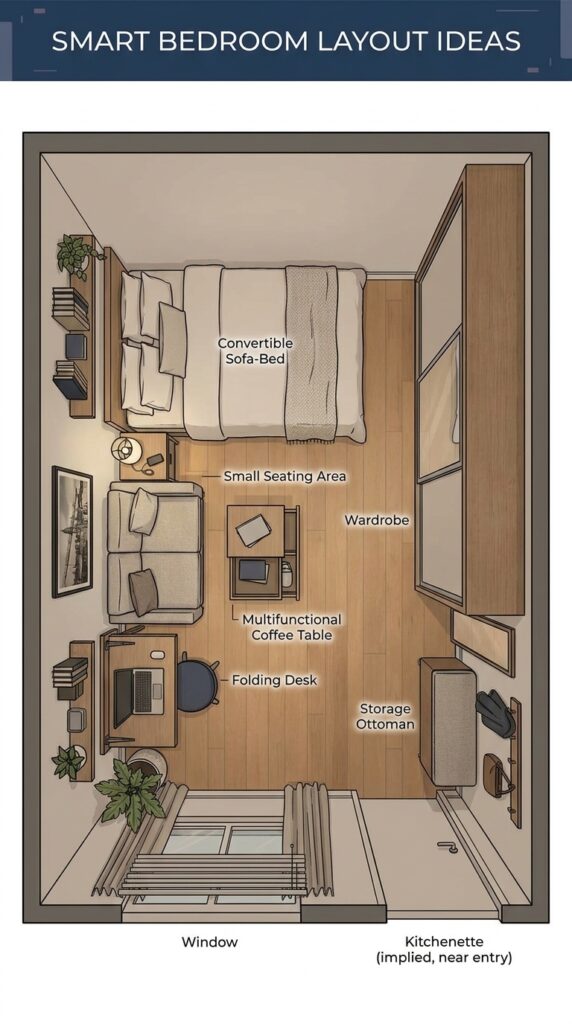
5. Use Multi-Functional Pieces
Every item should earn its place.
- Storage beds
- Foldable desks
- Ottomans with hidden storage
This reduces clutter while increasing functionality.
40+ Bedroom Layout Ideas That Actually Work
Let’s break them into categories so you can quickly find what fits your space.
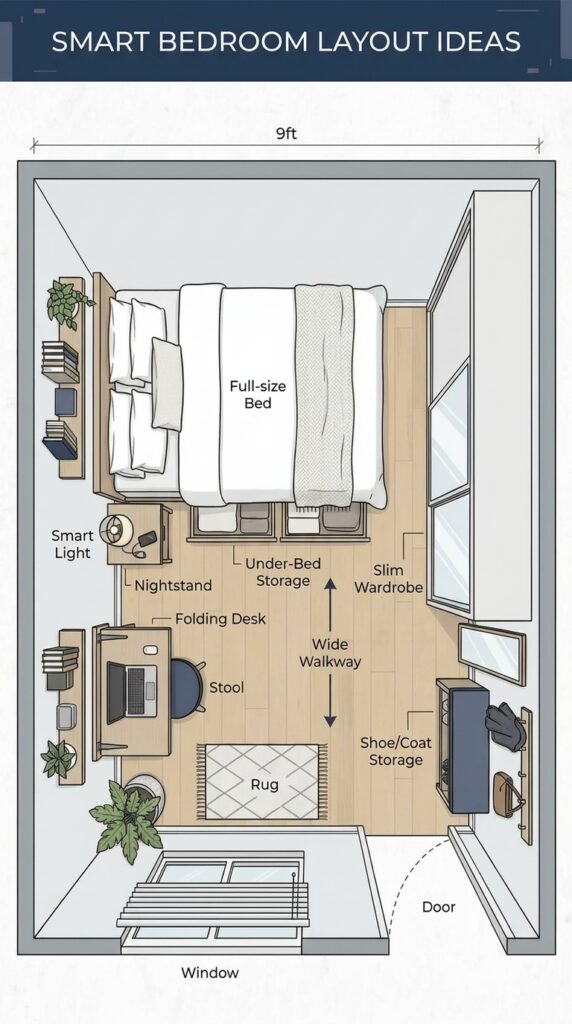
PART 1: Small Bedroom Layout Ideas (15 Designs)
1. Classic Centered Bed Layout
- Bed centered on main wall
- Two slim nightstands
- Dresser opposite
✔ Best for: Square rooms
✔ Why it works: Symmetry creates calm and balance
2. Corner Bed Layout
- Bed pushed into corner
- Open floor space in center
✔ Best for: Tiny rooms
✔ Bonus: Creates space for desk or chair
3. Minimalist Platform Layout
- Low-profile bed
- No bulky furniture
- Floating shelves
✔ Best for: Modern small apartments
4. Under-Window Bed Layout
- Bed placed below window
- Side storage units
✔ Best for: Awkward window placement
5. One-Side Access Layout
- Bed against wall on one side
✔ Best for: Ultra-narrow rooms
✔ Trade-off: Less symmetry, more space
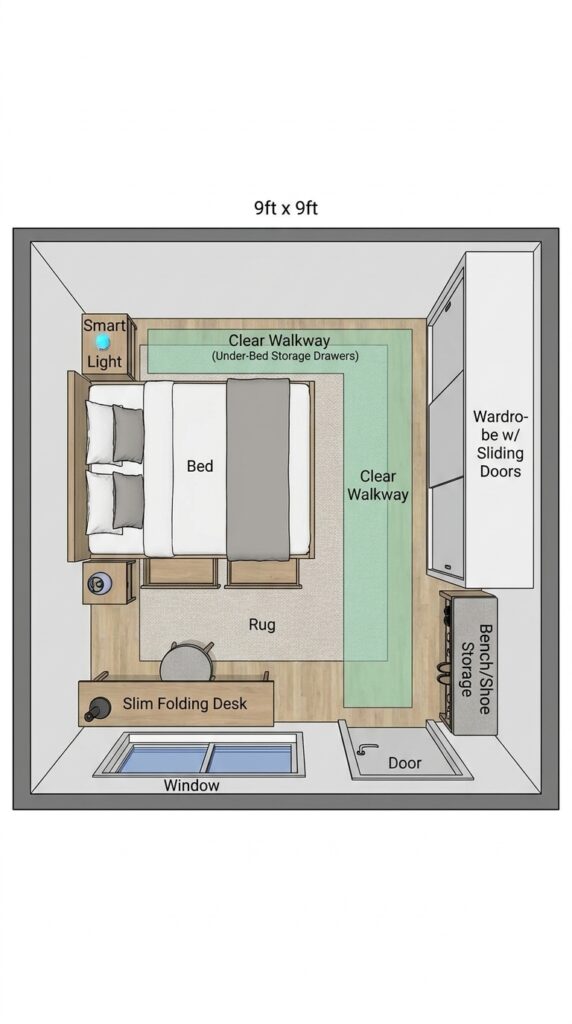
6. Floating Nightstand Layout
- Wall-mounted nightstands
- Floor remains open
✔ Great for: Visual spaciousness
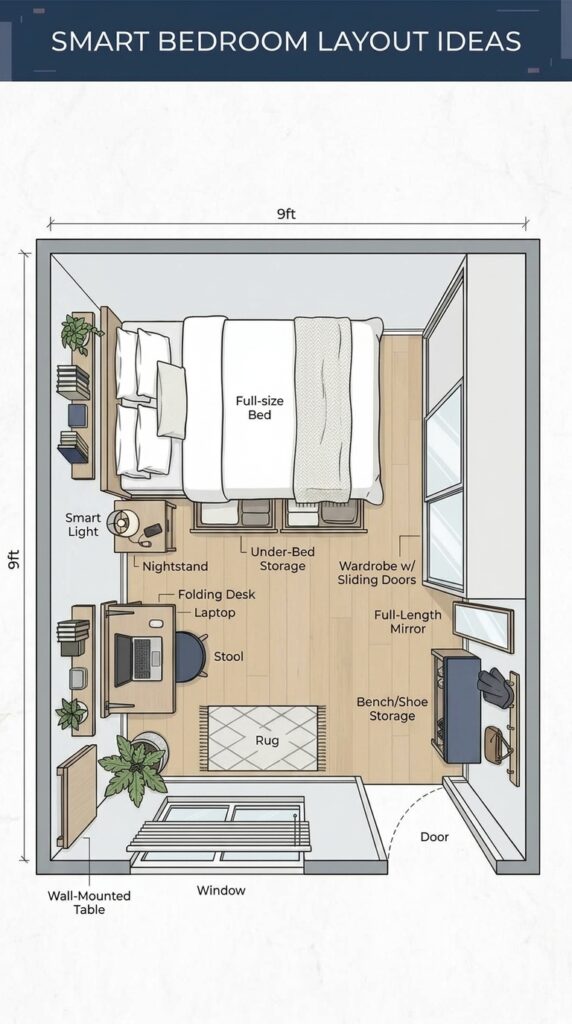
7. Built-In Storage Wall Layout
- Bed surrounded by shelves
✔ Best for: Studio apartments
8. Bed + Desk Combo Layout
- Desk at foot or side of bed
✔ Ideal for: Students & remote workers
9. Closet Wall Optimization Layout
- Entire wall used for storage
✔ Maximizes hidden storage
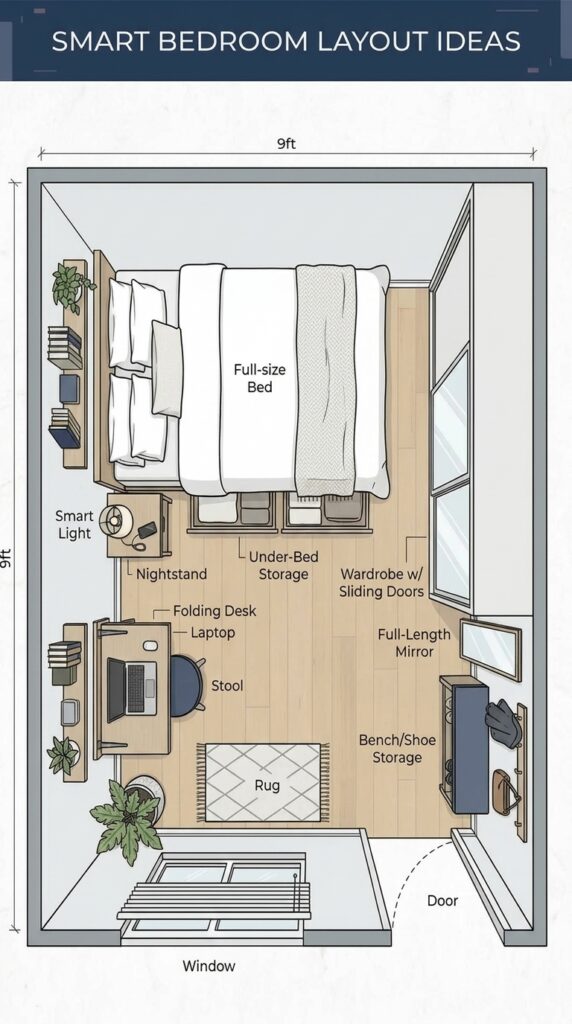
10. Diagonal Bed Layout
- Bed placed at an angle
✔ Adds visual interest
✔ Works in awkward rooms
11. Loft Bed Layout
- Bed elevated
- Workspace underneath
✔ Best for: Micro rooms
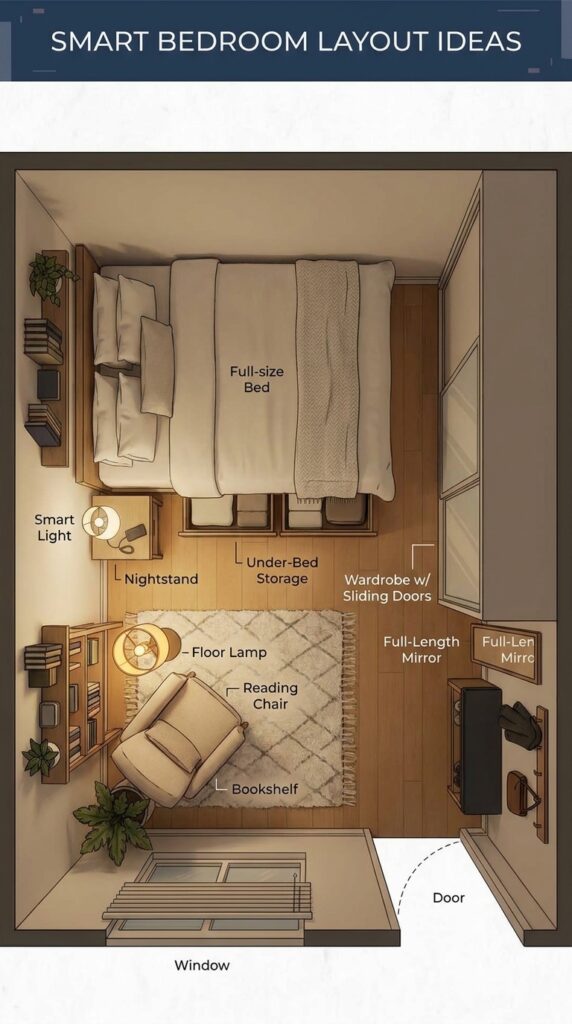
12. Murphy Bed Layout
- Foldable bed
✔ Best for: Multi-use rooms
13. Daybed Layout
- Bed doubles as sofa
✔ Perfect for guest rooms
14. Open Center Layout
- Furniture pushed to edges
✔ Creates illusion of space
15. Storage Bed Layout
- Bed with drawers underneath
✔ Eliminates need for dresser
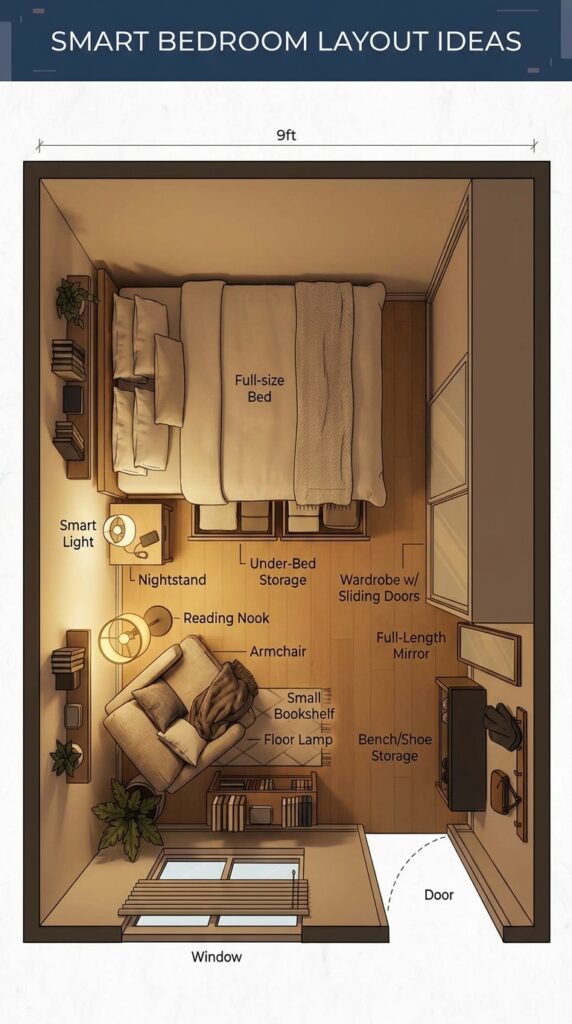
PART 2: Medium Bedroom Layout Ideas (15 Designs)
16. Hotel-Style Symmetrical Layout
- Bed centered
- Matching nightstands
- Bench at foot
✔ Clean, luxurious feel
17. Bed + Accent Chair Layout
- Seating corner added
✔ Adds functionality without clutter
18. Zoned Layout (Sleep + Work)
- Separate sleeping and working areas
✔ Great for hybrid lifestyles
19. Walkway-Focused Layout
- Clear walking path from door to bed
✔ Improves usability
20. Corner Workspace Layout
- Desk tucked into unused corner
21. Split Storage Layout
- Storage divided across walls
✔ Prevents visual heaviness
22. Window-Focused Layout
- Bed faces window
✔ Enhances natural light
23. L-Shaped Layout
- Furniture arranged in L pattern
✔ Efficient use of corners
24. Bench Storage Layout
- Storage bench at foot of bed
25. Double Function Layout
- Bedroom + mini living area
26. Gallery Wall Layout
- Visual focus behind bed
27. Floating Desk Layout
- Wall-mounted desk
28. Compact Walk-In Closet Layout
- Small dedicated dressing area
29. Bed Divider Layout
- Bed separates zones
30. Reading Nook Layout
- Cozy corner with chair + lamp
PART 3: Large Bedroom Layout Ideas (10+ Designs)
31. Master Suite Layout
- Bed + seating + dressing area
32. Fireplace-Centered Layout
- Bed faces focal point
33. Lounge Bedroom Layout
- Sofa inside bedroom
34. Dual-Zone Luxury Layout
- Sleeping + relaxing zones
35. Open Concept Layout
- Bedroom blends into living space
36. Canopy Bed Layout
- Statement centerpiece
37. Symmetrical Grand Layout
- Perfect balance on both sides
38. Bedroom + Office Layout
- Dedicated work area
39. Dressing Room Layout
- Wardrobe zone separated
40. Minimal Luxury Layout
- Fewer pieces, more space
Smart Space-Saving Tricks Designers Swear By
Use Mirrors Strategically
Mirrors reflect light and create depth, making rooms feel larger.
Keep Colors Light and Neutral
Light colors visually expand space (a tip echoed widely in design communities and expert advice).
Use Wall Lighting
Wall sconces free up nightstand space.
Declutter Ruthlessly
Less clutter = more perceived space.
Common Bedroom Layout Mistakes to Avoid
- Oversized furniture in small rooms
- Blocking windows or doors
- Too many furniture pieces
- Ignoring vertical space
- Poor lighting placement
How to Choose the Right Layout for Your Room
Ask yourself:
- What’s the room size and shape?
- Do you need a workspace?
- How much storage do you need?
- Is the room shared?
Your answers will guide your layout choice.
Final Thoughts
A bedroom layout isn’t just about aesthetics—it’s about how your space functions every single day.
The best layouts:
- Feel open, not cramped
- Support your lifestyle
- Balance comfort and storage
- Make your room enjoyable to be in
Even the smallest bedroom can feel like a sanctuary when designed thoughtfully. Start with the bed, respect the flow, think vertically—and you’ll unlock space you didn’t even know you had.