
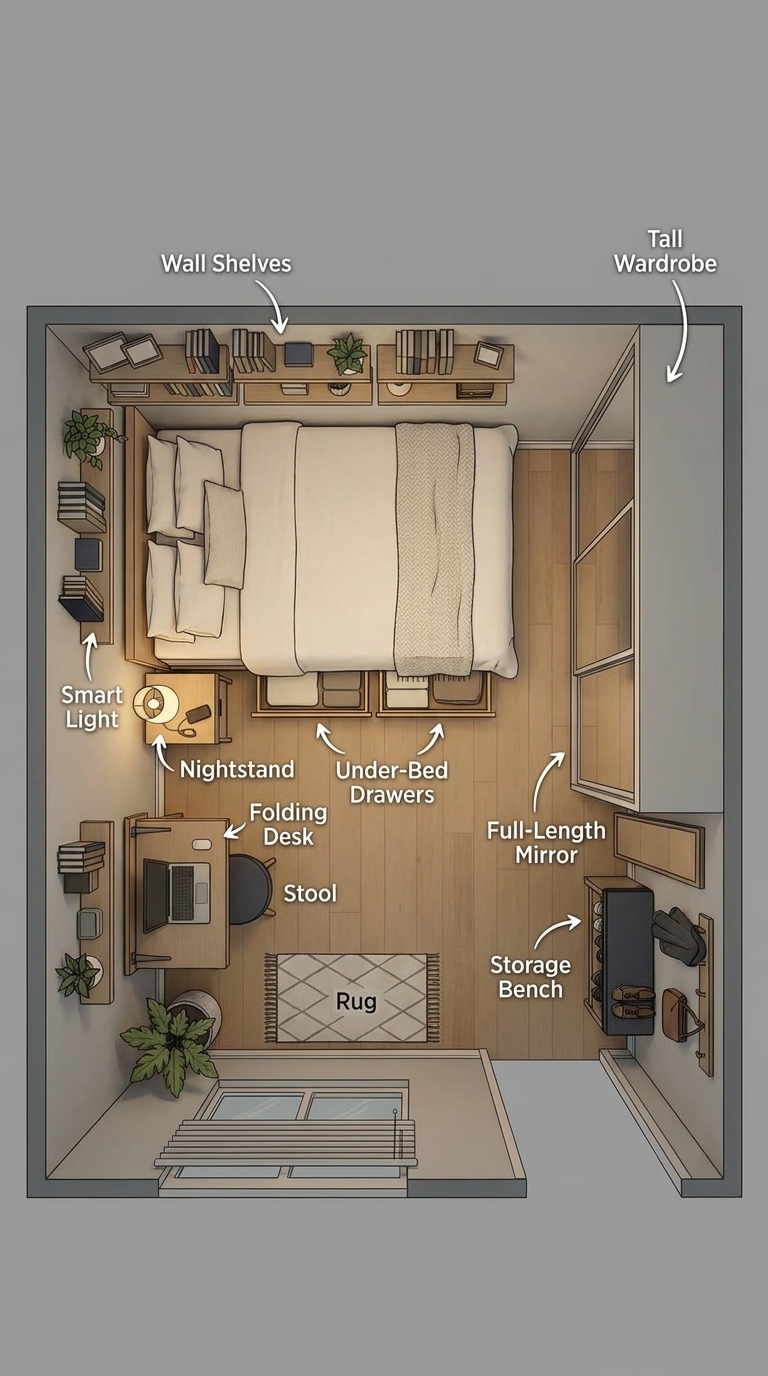
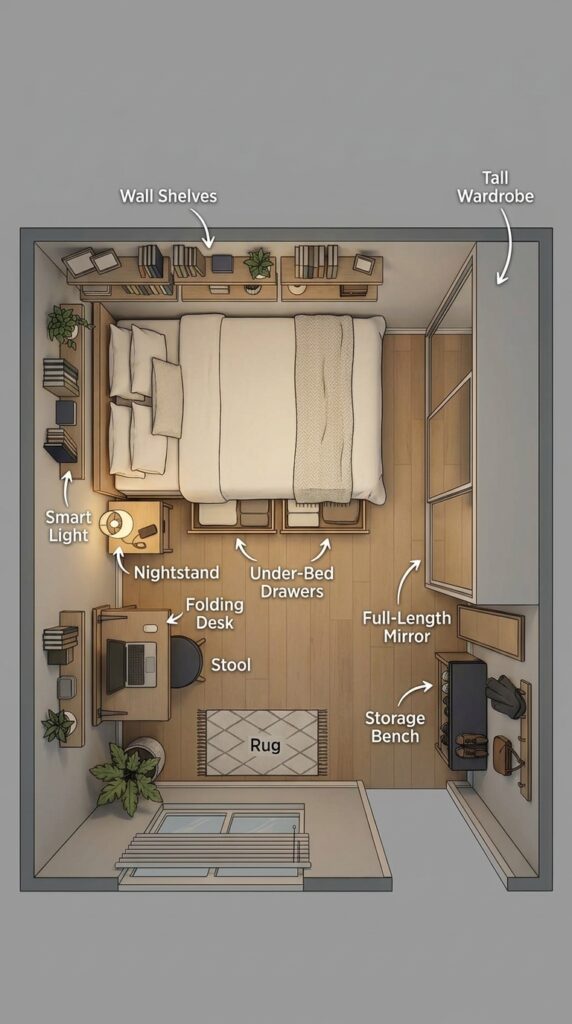
A small bedroom doesn’t have to feel cramped, cluttered, or limiting. In fact, with the right layout strategies, even the tiniest room can feel open, functional, and surprisingly luxurious. The secret isn’t just about buying smaller furniture—it’s about how you arrange, layer, and use your space intelligently.
Whether you’re dealing with a compact apartment bedroom in a busy city or trying to optimize a guest room, this guide walks you through 45 genius layout ideas that will completely transform how your space looks and feels.
Why Layout Matters More Than Size
Before jumping into ideas, let’s clear one thing up: a small bedroom isn’t a design problem—it’s a layout challenge.
A well-planned layout:
- Improves movement and flow
- Maximizes storage without clutter
- Enhances natural light
- Creates visual openness
Bad layout choices, on the other hand, can make even a medium-sized room feel suffocating.
Section 1: Smart Bed Placement Ideas (1–10)
1. Push the Bed Against One Wall
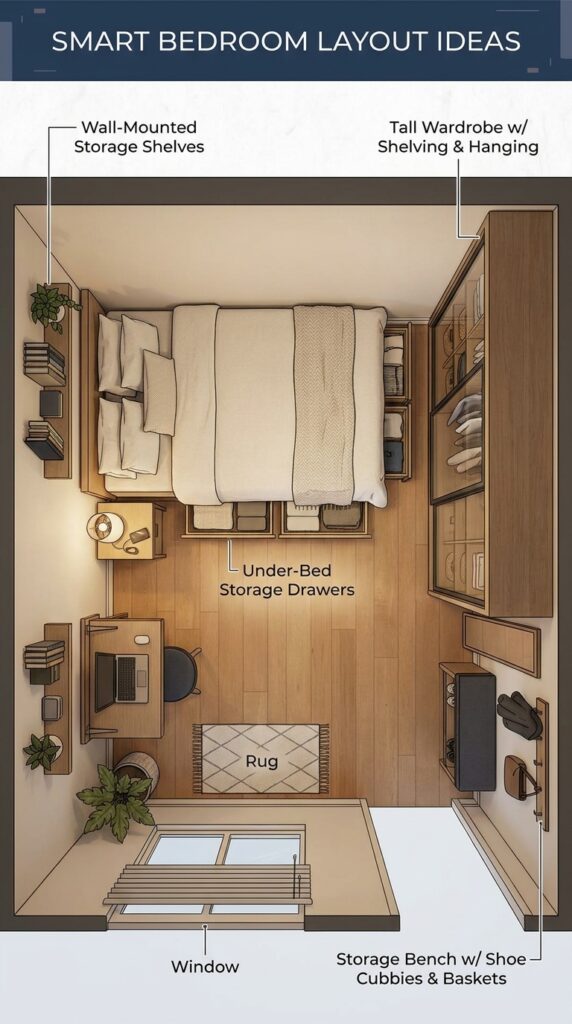
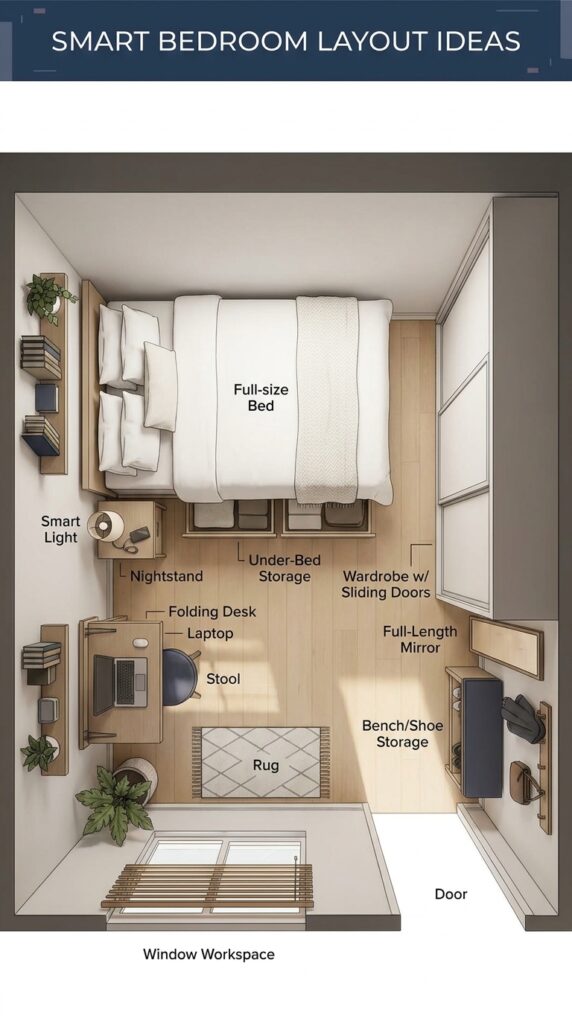
Instead of centering your bed, place it against a wall to open up walking space. This works especially well in narrow rooms.
2. Corner Bed Layout
Tuck your bed into a corner to create a cozy sleeping nook and free up valuable floor area.
3. Window-Centered Bed
Position your bed under a window to utilize natural light and avoid blocking other walls for storage.
4. Floating Bed Look
Use minimal or hidden legs to give your bed a floating appearance—it visually expands the floor area.
5. Platform Bed with Storage
Choose a platform bed with built-in drawers to eliminate the need for bulky dressers.
6. Loft Bed Setup
Raise your bed to create usable space underneath for a desk, wardrobe, or lounge area.
7. Murphy Bed (Wall Bed)
Perfect for ultra-small rooms—fold it up during the day to reclaim your entire floor.
8. Daybed Style Layout
Use a daybed along one wall to double as seating during the day and sleeping space at night.
9. Minimal Headboard or No Headboard
Bulky headboards take up visual space—opt for sleek or no headboard designs.
10. Bed Facing the Door (Feng Shui Inspired)
Positioning the bed facing the door can create a sense of openness and control in the room.
Section 2: Multi-Functional Furniture (11–20)
11. Storage Ottoman at the Foot of the Bed
Adds hidden storage while serving as seating.
12. Foldable Desk
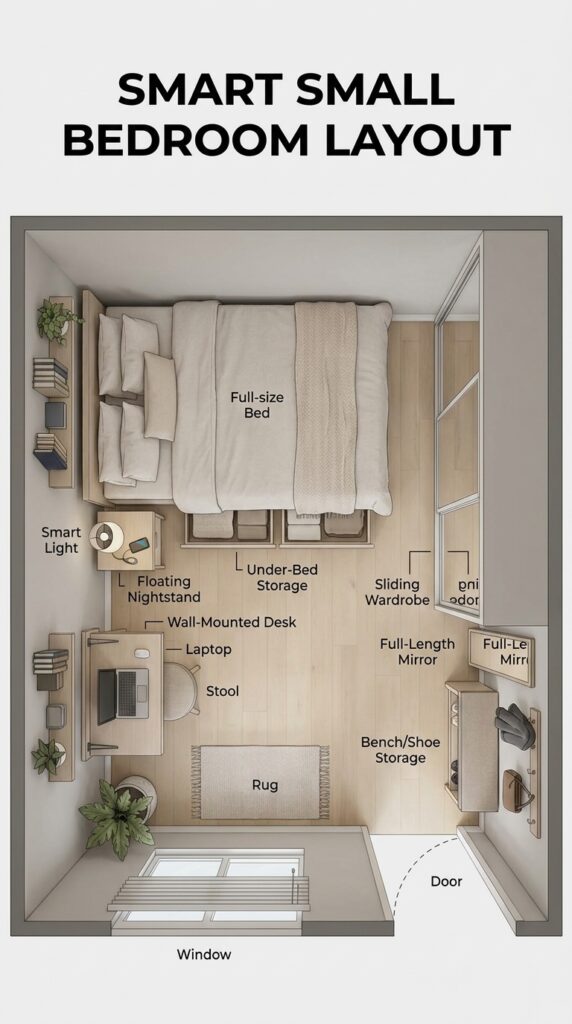
Install a wall-mounted foldable desk that disappears when not in use.
13. Bedside Shelf Instead of Nightstand
Swap bulky nightstands for floating shelves.
14. Convertible Sofa Bed
Ideal for studio-style bedrooms or dual-purpose rooms.
15. Stackable Furniture
Use stackable stools or chairs that can be stored vertically.
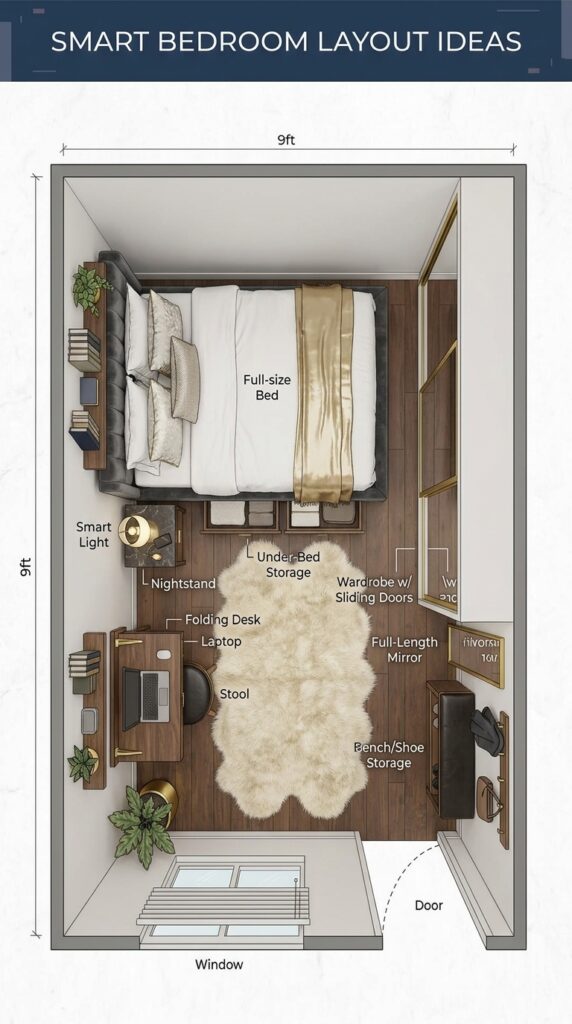
16. Wardrobe with Sliding Doors
Swing doors take up space—sliding doors save it.
17. Nesting Tables
Use nesting tables instead of a single large table.
18. Bed with Built-In Lighting
Eliminates the need for table lamps.
19. Storage Bench Under Window
Turns unused space into functional seating and storage.
20. Ladder Shelf
Leans against the wall without occupying much floor space.
Section 3: Vertical Space Optimization (21–30)
21. Floor-to-Ceiling Shelving
Maximize vertical storage instead of spreading out horizontally.
22. Hanging Wardrobes
Use open hanging racks to save space and create an airy look.
23. Over-the-Door Storage
Utilize the back of doors for hooks or organizers.
24. High-Mounted Curtain Rods
Hang curtains closer to the ceiling to make the room feel taller.
25. Wall Hooks Instead of Coat Racks
Save floor space with wall-mounted solutions.
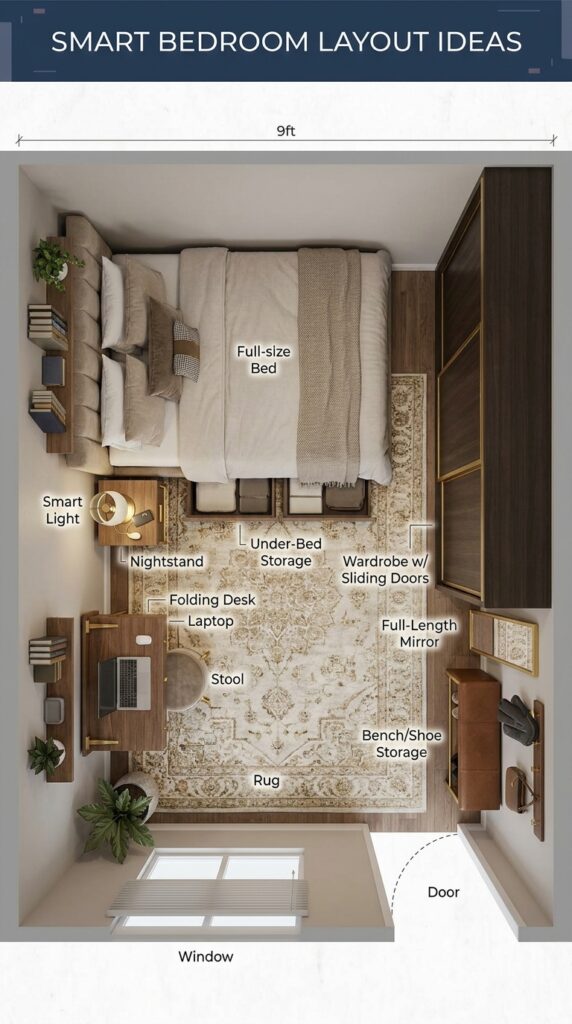
26. Floating Desk Setup
A wall-mounted desk keeps the floor clear.
27. Tall Mirrors
Draw the eye upward and reflect light.
28. Pegboard Wall Organizer
Flexible and customizable storage solution.
29. Wall-Mounted Lighting
Free up bedside surfaces.
30. Ceiling Storage (Advanced)
Use overhead storage racks for rarely used items.
Section 4: Layout Tricks That Create Illusion of Space (31–40)
31. Keep Pathways Clear
Avoid blocking natural walking paths.
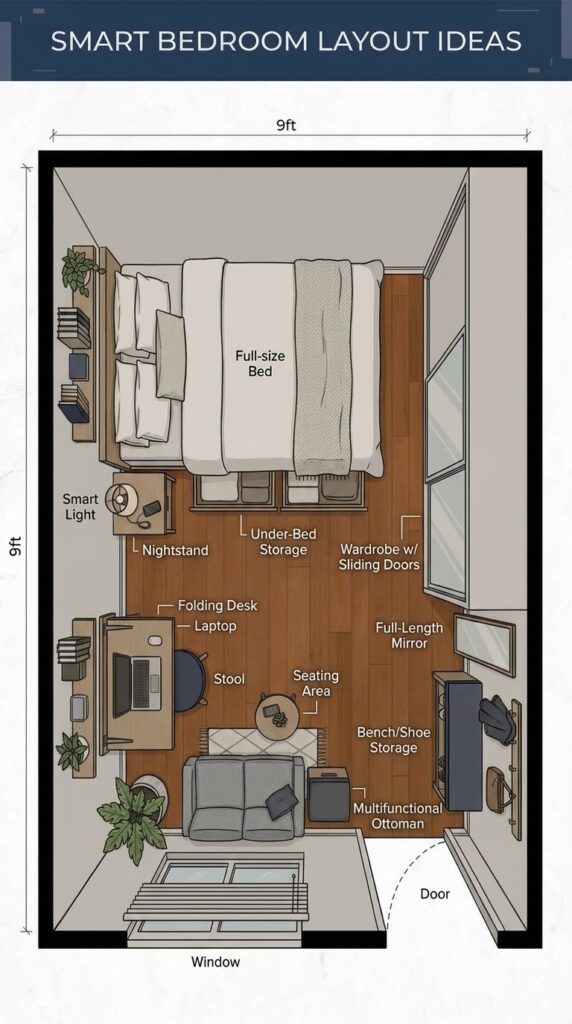
32. Use Light Color Palettes
Whites, creams, and pastels visually expand space.
33. Mirrors Opposite Windows
Reflect natural light to brighten the room.
34. Low-Profile Furniture
Keeps sightlines open and uncluttered.
35. Minimalist Approach
Less furniture = more perceived space.
36. Symmetrical Layouts
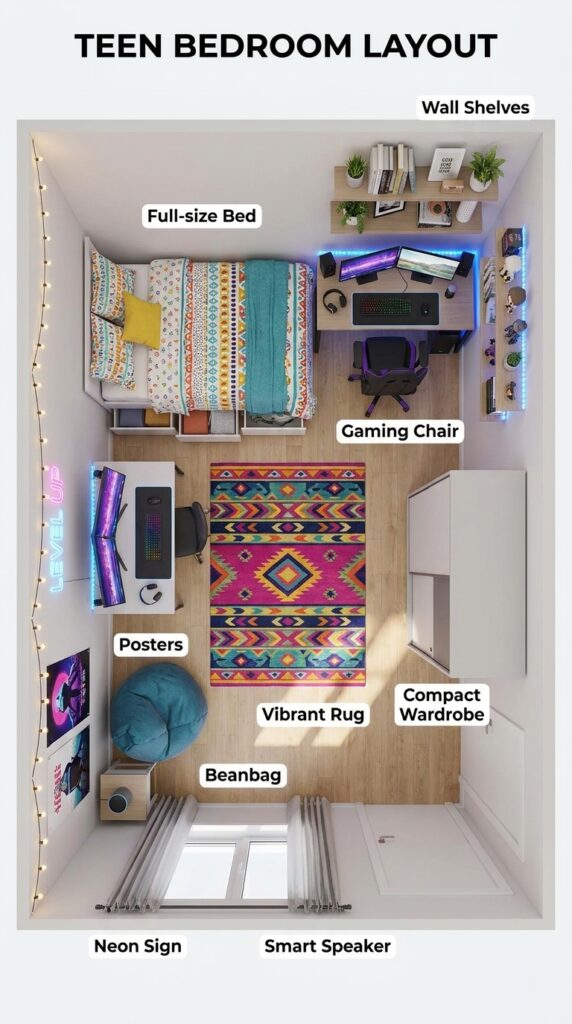
Creates visual balance and calmness.
37. Area Rugs to Define Zones
Helps organize space without adding walls.
38. Transparent Furniture
Acrylic or glass pieces feel invisible.
39. Hidden Storage
Reduce visible clutter.
40. Monochrome Design
Using one color family avoids visual fragmentation.
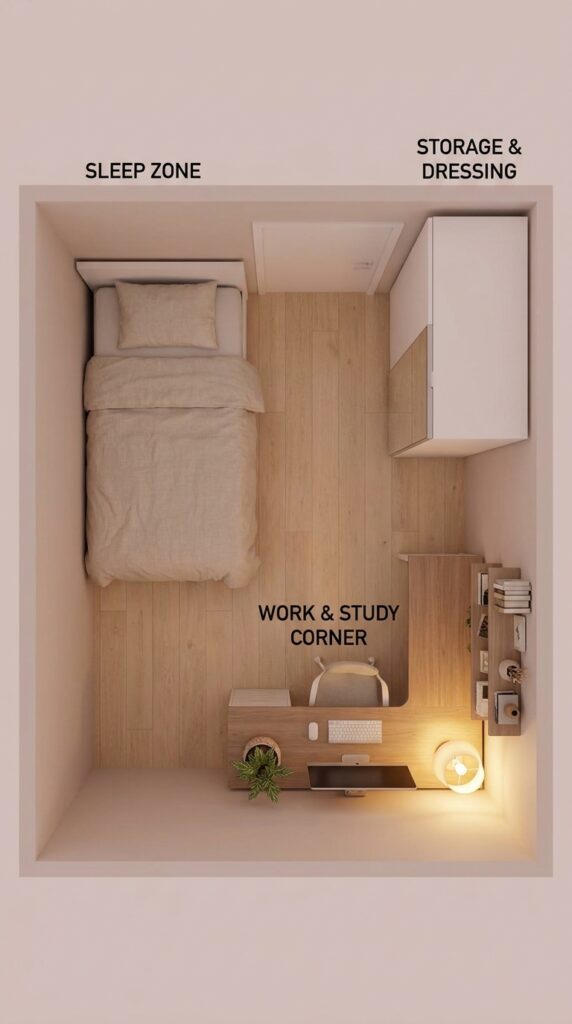
Section 5: Creative Layout Ideas You Probably Haven’t Tried (41–45)
41. Diagonal Bed Placement
Angling your bed can create dynamic space and unexpected openness.
42. Room Divider Shelving
Use open shelving as a divider without closing off the room.
43. Closet Office Combo
Turn your closet into a mini workspace.
44. Under-Bed Workspace
For loft beds, design a compact office or reading nook underneath.
45. Curtain Partition Layout
Use curtains instead of walls to separate zones.
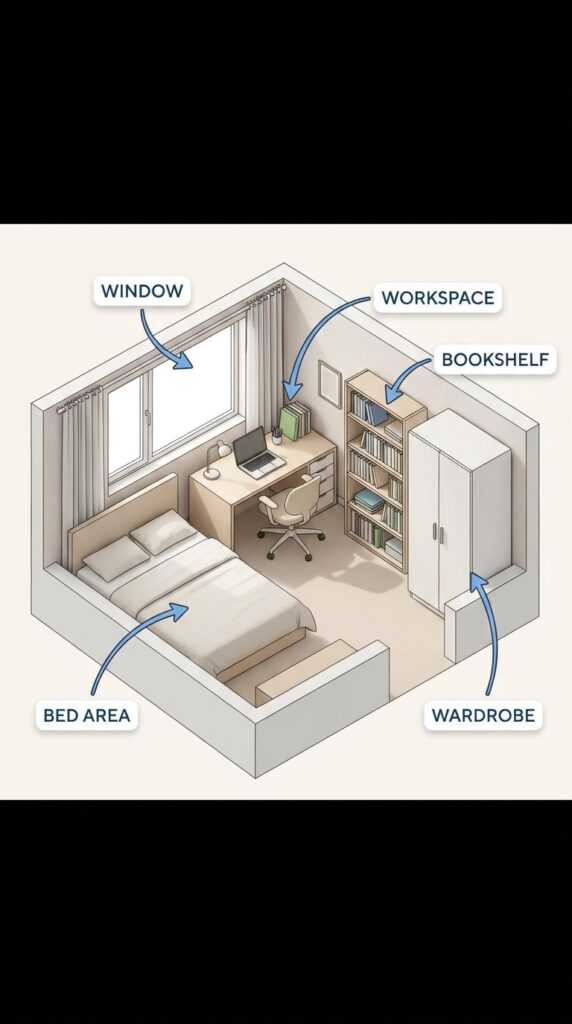
Bonus Tips: How to Instantly Make a Small Bedroom Feel Bigger
Declutter Ruthlessly
If you don’t use it, remove it. Visual noise shrinks space.
Stick to 2–3 Main Furniture Pieces
Avoid overcrowding with unnecessary items.
Use Multipurpose Decor
Think mirrors, storage baskets, and functional art.
Let Light In
Natural light is your best friend—avoid heavy, dark curtains.
Choose the Right Lighting
Layered lighting (ambient + task) creates depth.
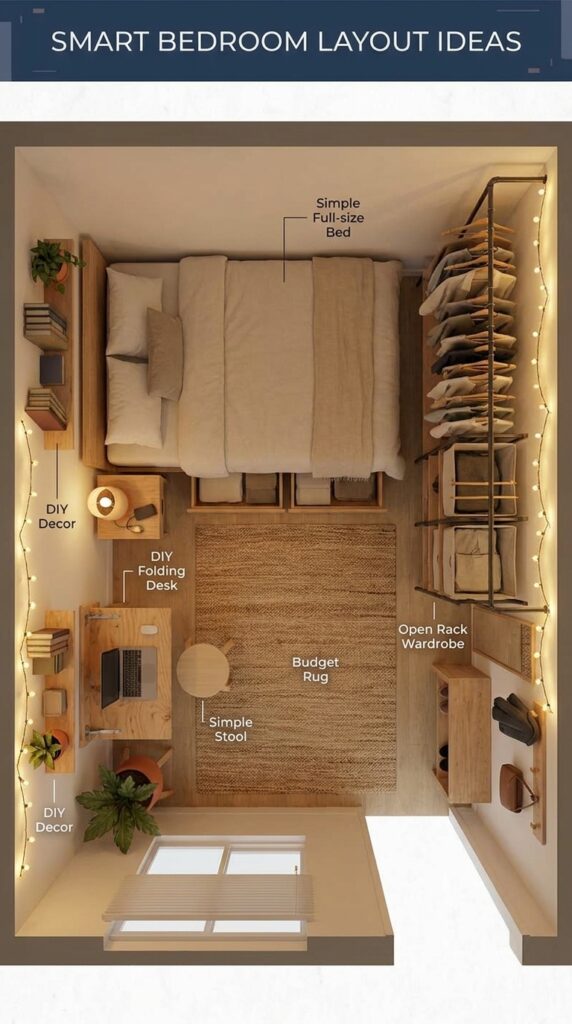
Sample Layout Combinations
To help you visualize, here are a few ready-made layout ideas:
Layout 1: Minimalist Student Room
- Corner bed
- Floating desk
- Ladder shelf
- Wall hooks
Layout 2: Small Luxury Bedroom
- Platform bed with storage
- Symmetrical wall lights
- Neutral color palette
- Large mirror
Layout 3: Multi-Functional Studio Bedroom
- Murphy bed
- Foldable desk
- Storage ottoman
- Curtain divider
Layout 4: Family-Friendly Small Bedroom
- Bunk or loft bed
- Under-bed storage
- Wall-mounted shelves
- Compact wardrobe
Common Mistakes to Avoid
- Overfilling the room with furniture
- Blocking windows with large pieces
- Ignoring vertical space
- Using dark, heavy color schemes
- Choosing style over functionality
Final Thoughts
A small bedroom doesn’t limit you—it challenges you to be smarter with your space. With the right layout, you can create a room that feels bigger, works better, and looks more stylish than you thought possible.
The real magic lies in combining multiple strategies:
- Smart bed placement
- Multi-functional furniture
- Vertical storage
- Visual illusion techniques
Pick 3–5 ideas from this guide and implement them thoughtfully. You don’t need all 45—just the right mix for your specific room.