
Stop Pulling These 15 “Weeds”—They’re Surprisingly Useful in the Garden
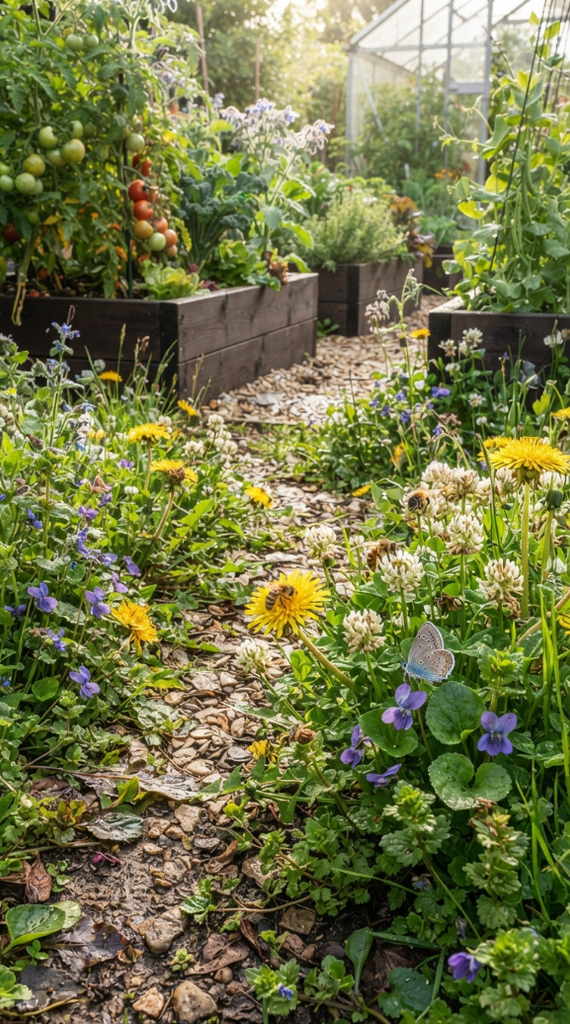
Most gardeners have the same reaction when they spot an unfamiliar plant growing between vegetables, along a fence, or in the lawn:
Pull it.
Immediately.
But not every volunteer plant is useless.
Some so-called “weeds” can protect soil, attract pollinators, improve biodiversity, provide habitat for beneficial insects, or even tell you something important about your growing conditions.
A few can also be used as food or herbal plants—but identification matters, and not every lookalike is safe.
So before you clear every spontaneous plant from your yard, take a closer look.
Some of the plants you have been fighting may actually be helping your garden.
Important: Never eat or use a wild plant medicinally unless you are completely certain of its identification and know it is safe for you. Avoid plants from roadsides, sprayed lawns, contaminated soil, or areas treated with pesticides or herbicides.
Here are 15 common “weeds” that may deserve a second chance.
1. Dandelion
Dandelions may be one of the most disliked lawn plants, but they are far more useful than they look.
Why Gardeners Usually Remove Them
They spread easily, develop deep taproots, and can quickly appear across lawns and beds.
Why They Can Be Useful
Dandelion flowers provide early-season nectar and pollen for insects when fewer flowers may be available.
Their deep roots can also help loosen compacted soil.
When the plant dies back, those roots can leave tiny channels in the soil.
Garden Benefit
Dandelions can indicate compacted or disturbed soil.
Seeing many of them may be a clue that the soil needs improvement.
Simple Approach
You do not have to let them take over.
Consider leaving a few in less formal parts of the yard while removing them from vegetable rows or carefully maintained lawns.
2. White Clover
White clover was once commonly included in lawn seed mixes.
Today, many people consider it a weed.
That reputation may be undeserved.
Why It Can Be Useful
Clover belongs to the legume family.
With the help of soil bacteria, it can contribute to nitrogen cycling in the soil.
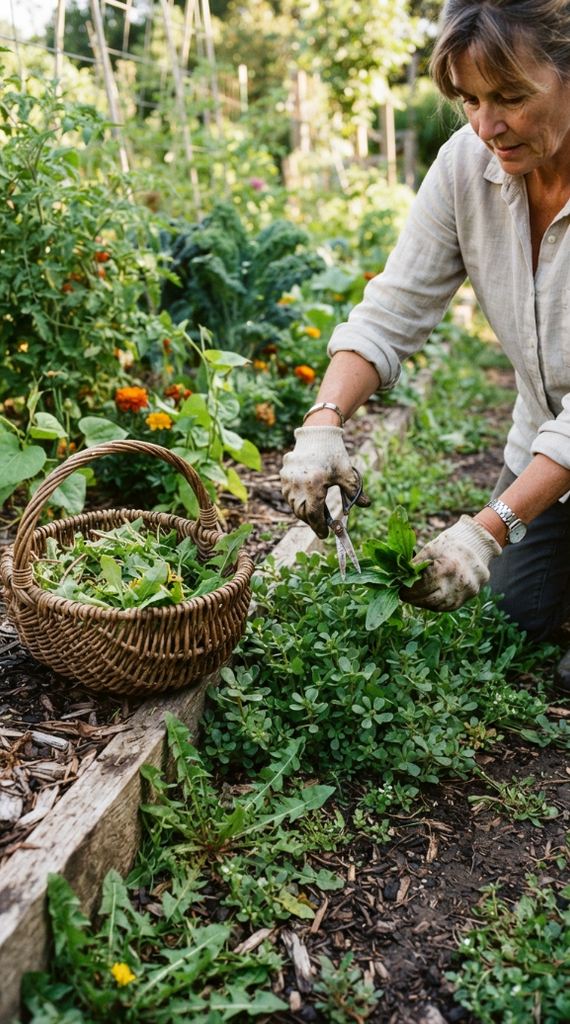
Its flowers also attract bees and other pollinators.
Garden Benefit
Clover can act like a living ground cover.
It helps:
- Cover bare soil
- Reduce erosion
- Support pollinators
- Stay green during some dry periods
- Reduce the need for a perfectly manicured lawn
When to Keep It
Clover can be especially useful in informal lawns, orchard areas, pathways, and pollinator-friendly landscapes.
3. Chickweed
Chickweed often appears during cooler weather in moist, fertile soil.
It spreads low across the ground and can form thick green mats.
Why It Can Be Useful
Because it grows close to the soil surface, chickweed can help protect bare ground from erosion.
Its small flowers may also support tiny beneficial insects.
What It Can Tell You
Chickweed often prefers:
- Moist soil
- Fertile soil
- Mild temperatures
- Partially shaded areas
Its presence can tell you something about the microclimate of your garden.
Garden Tip
If it is not competing heavily with seedlings, a light patch of chickweed can function like temporary living mulch.
4. Purslane
Purslane often appears in garden beds during hot weather.
Its fleshy leaves and reddish stems make it relatively distinctive.
Why Gardeners Dislike It
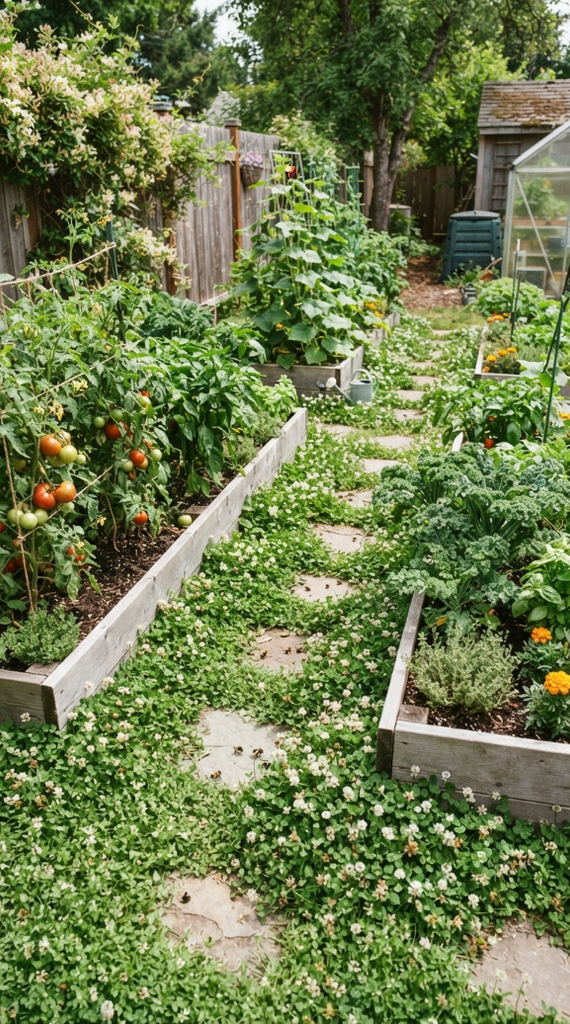
Purslane spreads low and can root where stems contact moist soil.
Why It Can Be Useful
Its low growth can shade exposed soil and reduce moisture loss.
Purslane is also known for tolerating hot, dry conditions that stress many other plants.
Garden Benefit
Its presence often indicates that an area receives plenty of warmth and sunlight.
Important
Purslane has edible uses, but do not consume it unless you are completely sure of the identification. Some plants can be confused with less desirable lookalikes.
5. Plantain
This is not the banana-like fruit.
Broadleaf plantain and narrowleaf plantain commonly grow in lawns, paths, and compacted areas.
Why It Can Be Useful
Plantain is extremely tolerant of foot traffic and difficult soil.
It often grows where other plants struggle.
What It Tells You
A lot of plantain can be a strong hint that the soil is compacted.
Instead of only pulling the plant, consider improving the underlying condition.
Try:
- Aerating the soil
- Adding organic matter
- Reducing repeated foot traffic
- Improving drainage
Think of plantain as a little soil warning sign.
6. Lamb’s Quarters
Lamb’s quarters often appears in disturbed soil, vegetable beds, compost areas, and freshly cultivated spaces.
Why It Can Be Useful
Its fast growth makes it excellent at covering bare soil.
That can reduce erosion while the ground is otherwise exposed.
Its seeds and foliage can also provide food for wildlife.
Garden Benefit
It can function as a temporary pioneer plant in disturbed areas.
However, it can become large and competitive.
Best Strategy
Leave a few around the edges if you like the biodiversity benefit, but remove plants that crowd young vegetables.
7. Yarrow
Yarrow can behave like a wildflower in one garden and like a weed in another.
It spreads easily and tolerates poor soil.
Why It Can Be Useful
Yarrow flowers attract a wide range of beneficial insects.
These may include:
- Hoverflies
- Small native bees
- Parasitic wasps
- Predatory insects
These insects can help create a healthier garden ecosystem.
Garden Benefit
Yarrow is excellent for:
- Pollinator gardens
- Wildflower borders
- Dry areas
- Low-maintenance beds
Its fern-like foliage also gives it ornamental value.
8. Violets
Wild violets often appear in lawns and shaded garden areas.
Many gardeners struggle to remove them because they spread through underground structures.
Why You Might Keep Them
Violets produce attractive spring flowers and can act as low ground cover.
They also support certain butterfly species and other wildlife.
Best Places to Keep Them
Violets can work beautifully in:
- Shady corners
- Woodland-style gardens
- Beneath trees
- Naturalized lawns
Instead of treating every violet as a problem, consider allowing them to form a soft flowering patch.
9. Dead Nettle
Dead nettle often appears in gardens during cool weather.
Despite the name, it does not sting like true stinging nettle.
Why It Can Be Useful
Its purple flowers provide early-season food for bees.
It also covers bare soil at a time when many garden plants are not actively growing.
Garden Benefit
Dead nettle can function as seasonal ground cover.
It often disappears or becomes less vigorous once hot weather arrives.
When to Remove It
Pull it when it begins crowding vegetable seedlings or desirable ground covers.
10. Henbit
Henbit is often confused with dead nettle because both produce small purple flowers during cooler weather.
Why It Can Be Useful
Henbit blooms early.
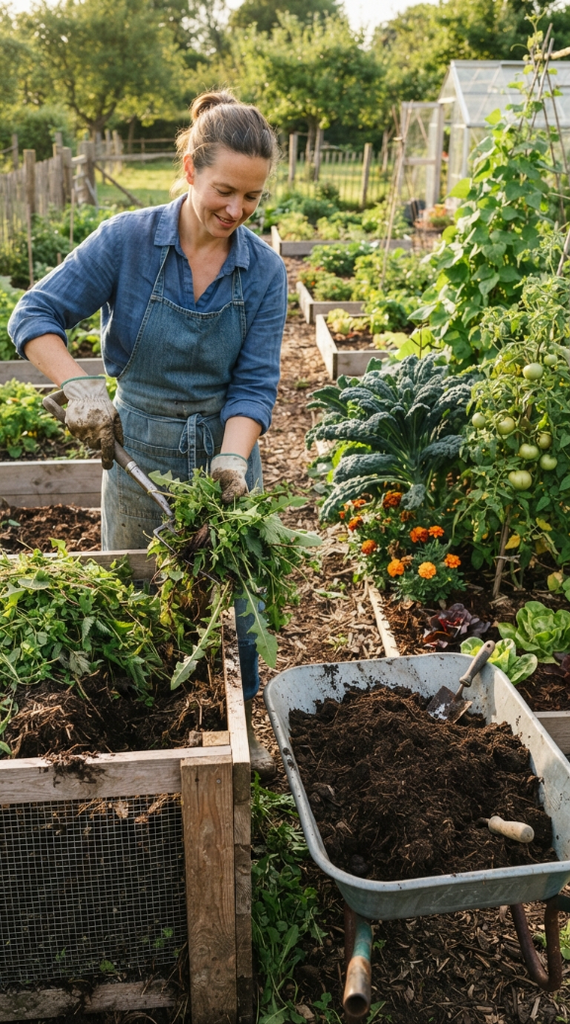
That makes it valuable to pollinators emerging before many ornamental flowers begin blooming.
Garden Benefit
In unused corners and orchard areas, it can provide seasonal ground cover and wildlife value.
Simple Rule
If it is growing somewhere harmless, you may not need to remove it immediately.
If it is taking over seedbeds, control it before it sets seed.
11. Docks
Dock plants have broad leaves and strong taproots.
They often appear in disturbed, damp, or poorly managed soil.
Why Gardeners Usually Remove Them
They can become large and produce a lot of seed.
Why They Can Still Be Useful
Their deep roots help penetrate compacted layers.
The large leaves also add organic material when cut and composted properly.
What They Can Tell You
Dock may indicate:
- Compaction
- Moist soil
- Disturbance
- Poor drainage in some areas
Rather than simply fighting it, use its presence as a reason to inspect soil conditions.
12. Queen Anne’s Lace
Queen Anne’s lace produces delicate white flower heads and is often found along field edges and open ground.
Why It Can Be Useful
Its flowers attract many small beneficial insects.
These may include:
- Hoverflies
- Parasitic wasps
- Small bees
- Predatory insects
These species can contribute to natural pest control.
Important Safety Note
Queen Anne’s lace can be confused with dangerous plants, including poison hemlock.
Do not harvest or consume wild carrot-family plants unless you are highly confident in identification.
Garden Use
If you know the plant and it is growing in a suitable area, it can fit well in a pollinator or meadow-style garden.
13. Goldenrod
Goldenrod is sometimes blamed for seasonal allergies, even though wind-pollinated plants such as ragweed are usually much bigger contributors to airborne pollen problems.
Why It Can Be Useful
Goldenrod is extremely valuable for late-season pollinators.
Its bright yellow flowers provide nectar when many other plants have finished blooming.
Garden Benefit
Goldenrod can support:
- Bees
- Butterflies
- Beneficial insects
It can also add dramatic late-summer and fall color.
The Catch
Some varieties spread aggressively.
Keep them in controlled areas rather than allowing them to take over small beds.
14. Common Mallow
Common mallow often appears along paths, compacted soil, and disturbed garden edges.
Its rounded leaves and small flowers make it easy to overlook.
Why It Can Be Useful
Mallow flowers can support pollinators.
Its foliage also adds diversity to low-maintenance garden areas.
Garden Benefit
It can survive in conditions where fussier plants fail.
That makes it useful in rough, neglected, or transitional sections of the yard.
When to Control It
Remove plants that crowd crops or spread heavily into formal beds.
15. Stinging Nettle
Stinging nettle has a bad reputation for obvious reasons.
Touching it can be painful.
But in the right location, nettles can be surprisingly valuable.
Why It Can Be Useful
Nettles support the larvae of several butterfly species and can provide wildlife habitat.
They also grow vigorously in fertile soil.
Garden Benefit
A small, controlled patch in a low-traffic corner can support biodiversity.
Important
Do not place nettles near:
- Children’s play areas
- Paths
- Patios
- Doorways
- Frequently used garden beds
Wear gloves and protective clothing when handling them.
Why Some “Weeds” Are Actually Helpful
The word “weed” does not describe a botanical category.
It usually just means:
A plant growing where you do not want it.
That means the same plant can be helpful in one location and annoying in another.
A clover patch in a vegetable row may compete with seedlings.
The same clover in a lawn may support bees and reduce bare soil.
Context matters.
5 Ways Useful Weeds Can Help Your Garden
1. They Feed Pollinators
Many spontaneous plants bloom before or after traditional garden flowers.
This helps extend the season of nectar and pollen.
2. They Protect Bare Soil
Bare soil is vulnerable to:
- Erosion
- Crusting
- Moisture loss
- Temperature extremes
Low-growing plants can provide temporary cover.
3. They Reveal Soil Conditions
Certain plants appear repeatedly under particular conditions.
For example:
Plantain may suggest compaction.
Moisture-loving plants can indicate damp areas.
Drought-tolerant weeds may highlight dry soil.
Use them as clues.
4. They Support Beneficial Insects
Small flowers often attract predators and parasitoids that feed on garden pests.
A more diverse garden usually supports a more diverse insect population.
5. They Add Organic Matter
Plants pull nutrients from the soil and atmosphere into their tissues.
When suitable plant material is composted or allowed to break down safely, some of that organic matter returns to the soil.
When You Should Still Pull a Weed
Useful does not mean harmless.
Remove plants when they:
- Crowd vegetables
- Block sunlight
- Spread aggressively
- Harbor serious pests or diseases
- Produce huge quantities of unwanted seed
- Damage structures
- Threaten native plant communities
- Are toxic around children or pets
- Are legally regulated invasive species in your area
The goal is not to let the garden become completely wild.
It is to become more selective about what you remove.
A Better Way to Weed
Instead of asking:
“Is this a weed?”
Ask:
Is it competing with something I want?
Is it invasive in my area?
Does it provide food for pollinators?
Is it protecting bare soil?
Is it telling me something about my soil?
Will it become difficult to control later?
That small mindset shift can make gardening easier.
You may discover that you have been spending hours removing plants that were not causing any real problem.
Be Careful With Invasive Species
A plant can be beneficial to insects and still be ecologically harmful in certain regions.
Some introduced plants spread into natural habitats and displace native vegetation.
Before intentionally keeping or spreading an unfamiliar plant, check whether it is considered invasive where you live.
Local extension offices, native plant societies, or environmental agencies are good places to check.
Should You Compost Weeds?
Usually, yes—with a few precautions.
Young weeds without mature seeds can often be composted.
Avoid putting weeds into a cool compost pile if they have:
- Mature seeds
- Persistent underground roots
- Serious diseases
- Aggressive rhizomes
Those materials may survive and spread when the compost is used.
When in doubt, dispose of problematic plants separately.
Try a “Wild Corner”
If you want more biodiversity without sacrificing a tidy garden, designate a small wild area.
Let selected volunteer plants grow there.
You may be surprised how quickly the space attracts:
- Bees
- Butterflies
- Hoverflies
- Beetles
- Birds
- Other wildlife
A garden does not have to be messy to support nature.
Even one small corner can make a difference.
Final Thoughts
Not every plant that appears without an invitation needs to be pulled.
Some “weeds” protect the soil.
Some feed pollinators.
Some loosen compacted ground.
Some support beneficial insects.
And some simply reveal what is happening underneath the surface.
That does not mean you should stop weeding completely.
It means weeding can be more intentional.
Keep the plants that are useful.
Remove the ones that cause problems.
And before you yank out that unfamiliar little plant next time, take a moment to identify it.
You may discover it is doing more good in your garden than you realized.