How Roof Coatings Can Extend the Life of Your Commercial Roof and Reduce Maintenance Costs
A commercial roof is one of the most important — and expensive — parts of any building.
It protects your property, equipment, inventory, employees, tenants, and customers from rain, heat, wind, UV exposure, and changing weather conditions. Yet commercial roofs are often ignored until a leak appears or visible damage becomes serious.
By that point, repair costs can already be significant.
The good news is that many commercial roofs do not need to be completely replaced as soon as they begin showing signs of aging.
In many cases, a properly selected and professionally applied roof coating system can restore the existing roof surface, improve weather resistance, reduce maintenance requirements, and significantly extend the useful life of the roof.
That can mean fewer leaks, fewer emergency repairs, lower long-term costs, and more time before a major roof replacement becomes necessary.
For building owners and facility managers trying to control operating expenses, that can make roof coatings a very attractive option.
So how exactly do commercial roof coatings work? How do they extend roof life? And can they really reduce maintenance costs?
Let’s break it down.
What Is a Commercial Roof Coating?
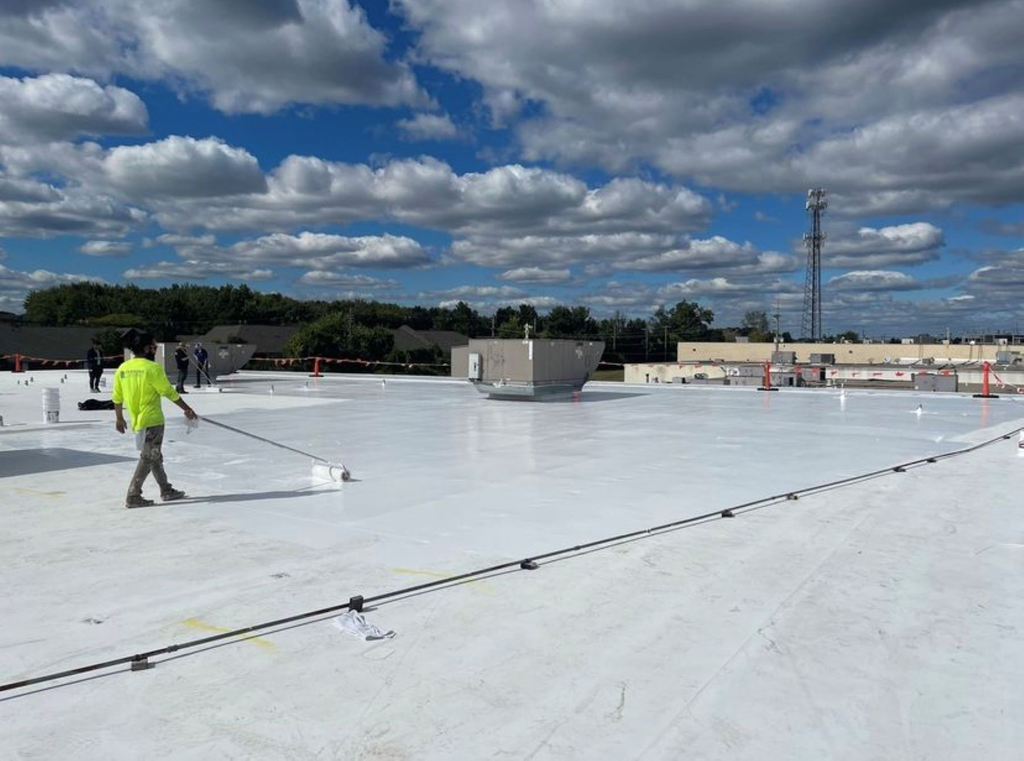
A commercial roof coating is a protective liquid-applied material installed over an existing roof surface.
Once cured, it creates a continuous protective membrane across the roof.
Unlike traditional roofing systems that may involve large sheets, rolls, shingles, or panels, roof coatings are usually applied directly onto the existing roof using rollers, brushes, or spray equipment.
Depending on the product, coatings may be applied to:
- Metal roofs
- Modified bitumen roofing
- Built-up roofing
- EPDM
- TPO
- PVC
- Spray polyurethane foam roofing
- Concrete roof decks
- Other compatible commercial roofing systems
The exact compatibility depends on the coating material and the condition of the existing roof.
A roof coating is not simply “paint for your roof.”
It is a functional protective layer designed to resist weather exposure, moisture, ultraviolet radiation, and other environmental stresses.
Some coatings also provide reflective properties that reduce solar heat absorption.
Why Commercial Roofs Deteriorate Over Time
To understand why coatings can help, you first need to understand what damages commercial roofs.
Even a well-installed roof is constantly exposed to environmental stress.
Over the years, those stresses slowly weaken the roofing system.
Some of the biggest causes include:
- UV radiation
- Heat
- Rain
- Standing water
- Temperature fluctuations
- Wind
- Hail
- Dirt and debris
- Foot traffic
- Mechanical equipment
- Aging sealants
- Expansion and contraction
These forces may not cause visible problems immediately.
Instead, deterioration often happens gradually.
For example, roofing materials may become brittle after years of sunlight exposure. Seams may begin to separate. Small cracks can develop around penetrations. Flashing may loosen.
Eventually, water finds a pathway into the roof system.
Once moisture enters, the damage can spread.
That is why preventive maintenance is usually far less expensive than waiting for a major leak.
Roof coatings are essentially designed to give an aging but still serviceable roof another layer of protection.
How Roof Coatings Extend the Life of a Commercial Roof
A roof coating helps extend roof life in several different ways.
Some are obvious, while others are less noticeable but equally important.
Let’s look at the major benefits.
1. Roof Coatings Protect the Existing Roof From UV Damage
Sunlight is one of the biggest long-term enemies of commercial roofing materials.
Ultraviolet radiation gradually breaks down many roofing surfaces.
Over time, UV exposure can cause materials to:
- Dry out
- Become brittle
- Crack
- Fade
- Lose flexibility
- Deteriorate around seams and joints
This damage is particularly significant on low-slope commercial roofs because large areas of the roof receive direct sunlight for hours every day.
A roof coating creates a protective barrier between the original roofing membrane and the sun.
Instead of UV radiation hitting the existing roof directly, much of that exposure is absorbed or reflected by the coating.
This slows deterioration of the original roof surface.
Reflective coatings can provide additional protection
Many commercial roof coatings are light-colored or highly reflective.
These coatings can reflect a significant portion of solar radiation rather than allowing the roof to absorb it.
That reduces surface temperatures during hot weather.
Lower roof temperatures can reduce thermal stress and help slow material degradation.
Pro Tip: If your commercial roof receives intense sunlight for much of the year, ask your roofing contractor about high-reflectivity coating options designed for your existing roof type.
2. Roof Coatings Create a Seamless Waterproof Barrier
One of the biggest weaknesses in many commercial roofing systems is the number of joints, seams, penetrations, and connection points.
Water often enters roofs around areas such as:
- HVAC equipment
- Roof drains
- Skylights
- Pipes
- Vents
- Flashing
- Seams
- Fasteners
Even tiny openings can allow moisture to enter during heavy rainfall.
Over time, water infiltration can damage insulation, decking, ceilings, walls, electrical systems, and interior finishes.
One major advantage of liquid-applied roof coatings is that they create a continuous membrane.
Once applied and cured properly, the coating can cover:
- Small cracks
- Seams
- Fasteners
- Flashing areas
- Minor surface imperfections
This creates an additional waterproofing layer across the roof.
Fewer exposed seams means fewer potential leak points
Many traditional roofing systems contain seams where materials overlap or connect.
These areas often require regular inspection because movement and aging can eventually cause separation.
A continuous coating system reduces the number of exposed weak points.
That does not mean the roof becomes completely maintenance-free, but it can significantly reduce the chances of minor defects turning into leaks.
3. Roof Coatings Help Reduce Thermal Expansion and Contraction
Commercial roofs experience large temperature swings.
During the day, the roof heats up.
At night, it cools down.
This cycle causes roofing materials to expand and contract repeatedly.
Over thousands of cycles, this movement places stress on:
- Seams
- Fasteners
- Flashing
- Adhesives
- Roofing membranes
Eventually, cracking or separation may occur.
Reflective roof coatings can help moderate roof temperatures.
By reducing heat absorption, they can reduce the amount of thermal expansion experienced by the roofing system.
Less expansion and contraction means less mechanical stress.
And less stress can mean a longer service life.
Think of it as reducing daily wear
Imagine bending a plastic strip back and forth repeatedly.
Eventually, it weakens.
Roofing materials experience a similar form of stress from constant heating and cooling.
Anything that reduces those temperature extremes may help slow the aging process.
4. Roof Coatings Can Delay Expensive Roof Replacement
Commercial roof replacement can be extremely expensive.
Depending on roof size, materials, labor, insulation condition, and building configuration, replacement costs can represent a major capital expense.
A coating system may allow a building owner to restore an existing roof rather than immediately replacing it.
This is especially useful when the roof is aging but still structurally sound.
Restoration versus replacement
A roof restoration typically involves steps such as:
- Inspecting the existing roof
- Repairing damaged areas
- Replacing severely deteriorated sections
- Cleaning and preparing the surface
- Repairing seams and flashing
- Applying primer if necessary
- Installing the coating system
This can often be significantly less disruptive than removing and replacing the entire roof.
There may also be less demolition waste.
Important limitation
A roof coating cannot save every roof.
If the roof has widespread water damage, saturated insulation, serious structural problems, or severe membrane failure, replacement may still be the better choice.
Remember: Roof coatings work best when applied before the roof reaches the point of extensive failure.
Waiting too long may eliminate restoration as a practical option.
5. Roof Coatings Can Reduce Routine Repair Costs
A commercial roof without adequate protection may develop recurring minor problems.
Examples include:
- Small cracks
- Failed sealant
- Seam separation
- Minor leaks
- Loose flashing
- Rust on metal roofing
- Weather-related surface damage
These problems may seem small individually, but repeated service calls add up.
Every roof repair may involve:
- Contractor labor
- Travel charges
- Equipment
- Materials
- Interior repairs
- Cleanup
- Business disruption
A properly installed coating can reduce the frequency of some of these problems by protecting vulnerable roof areas.
Instead of repairing the same types of defects every year, the coating provides a continuous protective surface.
That can help reduce long-term maintenance spending.
6. Coatings Can Protect Metal Roofs From Corrosion
Metal commercial roofs are durable, but they are not immune to corrosion.
Over time, protective finishes may deteriorate.
Water and oxygen can then reach the metal surface.
Rust may develop around:
- Fasteners
- Seams
- Scratches
- Edges
- Drainage areas
- Roof penetrations
Once corrosion begins, it can spread.
In severe cases, metal panels may eventually need replacement.
Specialized roof coating systems can help protect properly prepared metal roofing from moisture and oxidation.
Before coating, contractors typically address existing rust and repair problem areas.
The coating then acts as another barrier between the metal and the environment.
Fasteners are especially important
Many metal roofs use exposed fasteners.
These fasteners may loosen slightly over time because of thermal movement.
Washers can deteriorate, allowing water to penetrate.
During a restoration project, fasteners and seams can be treated before the final coating is installed.
This can help prevent future leaks.
7. Roof Coatings Can Improve Energy Efficiency
One of the most attractive benefits of reflective roof coatings is their ability to reduce heat absorption.
Dark roofing surfaces can become extremely hot under direct sunlight.
That heat can transfer into the building, increasing cooling demand.
Reflective roof coatings help bounce more sunlight away from the roof.
As a result, the roof surface may remain cooler.
This can reduce heat gain through the roof assembly.
Potential benefits include:
- Reduced cooling demand
- Lower indoor temperatures
- Improved comfort
- Reduced strain on HVAC systems
- Potential energy savings
The actual savings depend on many factors, including:
- Climate
- Roof insulation
- Building design
- HVAC efficiency
- Roof area
- Coating reflectivity
- Building operating hours
Not every building will see the same level of savings.
But in hot climates or buildings with large roof surfaces, reflective coatings may provide meaningful energy benefits.
Pro Tip: Energy savings should be considered an additional benefit, not the only reason to install a roof coating. The roof’s condition and waterproofing needs should come first.
8. Roof Coatings Can Reduce HVAC Stress
A cooler roof can also reduce demand on air-conditioning equipment.
During hot weather, HVAC systems may have to work continuously to maintain indoor temperatures.
If a large amount of solar heat enters through the roof, cooling equipment must work harder.
By reducing heat absorption, reflective roof coatings can help reduce the load on the cooling system.
That may contribute to:
- Shorter cooling cycles
- Reduced wear on equipment
- More consistent indoor temperatures
- Lower peak cooling demand
For large warehouses, retail centers, offices, and industrial facilities, even small improvements in cooling efficiency can become meaningful over time.
9. Roof Coatings Reduce Waste Compared With Full Replacement
Roof replacement usually involves removing large amounts of existing roofing material.
That material must then be transported and disposed of.
Depending on the roofing system, this may include:
- Membrane material
- Insulation
- Fasteners
- Flashing
- Adhesives
- Underlayment
- Other construction waste
Roof restoration often allows much of the existing roof to remain in place.
That can significantly reduce demolition waste.
It can also reduce the amount of new material required.
For companies trying to reduce construction waste or improve sustainability, this can be another reason to consider restoration before replacement.
10. Roof Coatings Can Make Future Maintenance Easier
A coated roof can often be easier to inspect.
A clean, uniform surface makes it easier to identify:
- Punctures
- Cracks
- Ponding water
- Damage around equipment
- Loose flashing
- Areas requiring touch-up
Some coating systems can also be recoated later.
Instead of replacing the entire roof after the coating reaches the end of its service life, the roof may sometimes be cleaned, repaired, and coated again.
This creates the possibility of multiple restoration cycles.
The roof still needs maintenance
One common mistake is assuming that a coated roof never needs attention again.
That is not true.
Commercial roofs should still be inspected regularly.
The difference is that maintenance may become more predictable and manageable.
Types of Commercial Roof Coatings
Not all roof coatings are the same.
Different materials offer different strengths and weaknesses.
Choosing the right coating depends on the roof type, climate, drainage, building use, and budget.
Acrylic Roof Coatings
Acrylic coatings are water-based and commonly used on commercial roofs.
They are often highly reflective and resistant to UV exposure.
They can work well in sunny climates where ponding water is limited.
Common advantages
- Good UV resistance
- Reflective
- Easy application
- Often cost-effective
- Low odor compared with some solvent-based products
However, acrylic coatings may not be ideal for roofs that frequently experience standing water unless the specific product is rated for those conditions.
Silicone Roof Coatings
Silicone coatings are known for strong water resistance and UV performance.
They are often used on flat or low-slope roofs where occasional ponding water may occur.
Common advantages
- Excellent UV resistance
- Strong water resistance
- Good performance under ponding conditions
- Long-lasting
One drawback is that silicone surfaces can become slippery when wet.
They may also attract dirt over time, which can reduce reflectivity.
Polyurethane Roof Coatings
Polyurethane coatings are known for toughness and durability.
They can resist impact and foot traffic better than some softer coating materials.
They may be particularly useful around rooftop equipment where maintenance workers regularly walk.
Common advantages
- High impact resistance
- Durable surface
- Good abrasion resistance
- Useful in high-traffic areas
Some systems use different polyurethane layers for base and top coatings.
Elastomeric Roof Coatings
The term elastomeric describes coatings that remain flexible after curing.
That flexibility allows them to expand and contract with the roof.
Many acrylic, silicone, and polyurethane systems may have elastomeric properties.
This flexibility is important because commercial roofs constantly move because of temperature changes.
A rigid coating could crack.
A flexible coating can better tolerate movement.
How Much Longer Can a Roof Coating Extend Roof Life?
There is no single answer.
The lifespan of a coating depends on:
- Existing roof condition
- Coating type
- Coating thickness
- Installation quality
- Climate
- Drainage
- Maintenance
- UV exposure
- Foot traffic
In many cases, a properly installed commercial roof coating system can add several years of useful service life to an existing roof.
Some systems may provide approximately 10, 15, or even 20 years of additional protection depending on product specifications, thickness, maintenance, and warranty terms.
The key word is properly installed.
A high-quality coating placed over a poorly prepared or failing roof may not perform well.
Why Surface Preparation Is Critical
Surface preparation is one of the most important parts of a coating project.
In fact, coating failure is often caused by poor preparation rather than the coating material itself.
Before installation, the roof should typically be inspected and cleaned.
Depending on the roof condition, preparation may involve:
- Pressure washing
- Removing dirt
- Removing loose coating
- Repairing cracks
- Repairing flashing
- Sealing seams
- Treating rust
- Replacing wet insulation
- Repairing damaged membrane
- Applying primer
The roof must also be sufficiently dry before coating.
Adhesion matters
A roof coating must bond securely to the underlying surface.
Dust, grease, moisture, old loose coatings, or incompatible materials can interfere with adhesion.
That can lead to peeling or blistering.
Pro Tip: Ask your contractor whether they perform adhesion testing before installing the coating. This can help confirm that the selected system is compatible with the existing roof.
Choosing the right contractor is just as important as choosing the right coating system, because proper inspection, surface preparation, repairs, and application all play a major role in long-term performance. Working with experienced roof coating contractors can help ensure the existing roof is properly evaluated before any coating is applied, reducing the risk of adhesion problems, trapped moisture, or premature coating failure. A qualified contractor can also recommend the most suitable coating based on your roof type, drainage conditions, exposure to sunlight, and overall condition, helping you get the most value from your commercial roof restoration investment.
When a Roof Coating May Not Be the Right Solution
Roof coatings are useful, but they are not magic.
A coating should not be used to hide serious roof problems.
You may need roof replacement instead if there is:
- Extensive wet insulation
- Structural decking damage
- Severe membrane deterioration
- Major drainage problems
- Widespread roof failure
- Significant trapped moisture
- Serious rust-through on metal panels
Applying a coating over major damage may only postpone an unavoidable replacement.
Worse, it can trap moisture inside the roof assembly.
That is why a professional inspection should happen first.
How Roof Coatings Reduce Commercial Roof Maintenance Costs
The cost savings from roof coatings generally come from several areas.
Fewer emergency leak repairs
Preventing water entry reduces the need for urgent service calls.
Less interior damage
Roof leaks can damage:
- Ceiling tiles
- Drywall
- Inventory
- Electrical equipment
- Flooring
- Office equipment
Preventing leaks helps avoid these secondary costs.
Longer replacement cycles
Extending roof life means capital replacement expenses can potentially be delayed.
Lower maintenance frequency
A protected roof may require fewer repetitive minor repairs.
Potential energy savings
Reflective coatings may reduce cooling costs in suitable buildings.
Reduced disruption
Roof restoration can often be less disruptive than complete tear-off and replacement.
For active commercial buildings, reduced disruption can be extremely valuable.
What Does Commercial Roof Coating Maintenance Involve?
Even coated roofs require basic preventive care.
A good maintenance program should include periodic inspections.
Pay attention to:
- Drains
- Gutters
- Ponding areas
- Roof penetrations
- Flashing
- Seams
- Rooftop equipment
- Foot traffic areas
- Coating damage
Debris should also be removed regularly.
Leaves, dirt, and other materials can block drainage.
Standing water may then develop.
Small coating defects should generally be repaired early.
A tiny puncture can often be fixed quickly.
If ignored, it may allow water into the roof system.
How Often Should a Commercial Roof Be Inspected?
Many building owners inspect roofs at least twice per year, often during spring and fall.
Additional inspections may be appropriate after major weather events such as:
- Hailstorms
- Heavy rain
- Strong winds
- Snowstorms
Rooftops containing a lot of mechanical equipment may require more frequent checks.
Maintenance crews should also inspect the roof after contractors perform work.
HVAC technicians, electricians, plumbers, and other trades can accidentally damage roof surfaces.
Common Mistakes to Avoid When Installing Roof Coatings
A roof coating project can provide excellent value, but poor installation can dramatically reduce performance.
Here are some common mistakes to avoid.
Coating over a wet roof
Moisture trapped beneath the coating can cause blistering and deterioration.
Ignoring existing leaks
The roof should be repaired before coating.
Coating should not be treated as a shortcut around necessary repairs.
Applying the wrong coating
Coating chemistry must be compatible with the existing roofing material.
Applying insufficient material
Coating thickness affects durability and warranty requirements.
Trying to save money by using less material than specified may reduce performance.
Poor surface cleaning
Dirt, grease, and loose material can prevent proper adhesion.
Ignoring drainage problems
A coating does not automatically fix low spots or poor roof slope.
Drainage problems should be addressed separately.
How to Know If Your Commercial Roof Is a Good Candidate for Coating
Your roof may be suitable for restoration if:
- The roof is generally structurally sound
- Leaks are limited and repairable
- Most insulation is dry
- The roof membrane remains largely intact
- Drainage is functioning properly
- Surface deterioration is moderate rather than severe
A professional roof survey can help determine whether restoration makes financial sense.
In some cases, contractors may use moisture detection methods to identify wet areas that need removal before coating.
Questions to Ask a Commercial Roofing Contractor
Before approving a roof coating project, ask the contractor several important questions.
You may want to ask:
- Is my existing roof compatible with this coating?
- Are there wet areas under the roof?
- What repairs are required first?
- What coating material do you recommend?
- Why is that coating suitable for this roof?
- How thick will the finished coating be?
- How will seams and penetrations be treated?
- Will primer be required?
- How will the roof be cleaned?
- What warranty is available?
- What maintenance is required afterward?
A reputable contractor should be able to explain the entire system clearly.
Be cautious if the recommendation seems to be simply “coat everything” without evaluating the existing roof first.
Roof Coating vs. Roof Replacement: Which Is Better?
The right choice depends entirely on roof condition.
Roof coating may be better when:
- The roof is still structurally sound
- Damage is limited
- Moisture intrusion is minimal
- The owner wants to extend service life
- Replacement would be unnecessarily expensive
Roof replacement may be better when:
- Damage is widespread
- Insulation is saturated
- The deck is deteriorated
- The roof has already undergone multiple unsuccessful repairs
- Existing materials are beyond restoration
The cheapest option today is not always the cheapest option long term.
The goal should be finding the solution with the best total life-cycle value.
Frequently Asked Questions About Commercial Roof Coatings
Are commercial roof coatings waterproof?
Many commercial roof coatings are designed to provide a water-resistant or waterproof protective membrane when installed correctly.
However, performance depends on surface preparation, coating type, thickness, drainage, and installation quality.
Can roof coatings stop existing leaks?
A coating system may help eliminate leaks if the underlying roof defects are properly repaired first.
Simply applying coating over active leaks without addressing damaged seams, flashing, insulation, or roof materials is not recommended.
Can you coat an old commercial roof?
Often, yes.
Many aging roofs can be restored with coatings if they remain structurally sound.
The roof should be professionally evaluated first.
How long do commercial roof coatings last?
Depending on the coating type, thickness, roof condition, climate, and maintenance, coating systems may last approximately 10 to 20 years or longer in some applications.
Product warranties vary significantly.
Can roof coatings be reapplied?
In many cases, yes.
One of the benefits of coating systems is that they may be renewed after cleaning, inspection, and necessary repairs.
This may allow additional service-life extension without full roof replacement.
Are roof coatings worth the cost?
They can be highly cost-effective when installed on the right roof.
The greatest value usually comes from delaying replacement, preventing leaks, reducing maintenance, and protecting the existing roofing system.
Do reflective roof coatings lower energy bills?
They can reduce roof surface temperatures and cooling demand, particularly in warm, sunny climates.
Actual savings vary depending on the building, insulation, HVAC system, climate, and operating conditions.
Final Thoughts
Replacing a commercial roof is a major expense, and in many cases, replacement may be necessary eventually.
But it does not always need to happen as soon as a roof begins showing signs of age.
A properly designed roof coating system can give an existing commercial roof a second life.
By protecting the roof from UV exposure, moisture, thermal movement, weathering, and surface deterioration, coatings can slow the aging process and help reduce the frequency of repairs.
They may also provide additional benefits such as:
- Better energy performance
- Reduced cooling loads
- Improved waterproofing
- Less construction waste
- Fewer maintenance emergencies
- Longer roof replacement cycles
The biggest advantage, however, is preventive protection.
Roof coatings work best when building owners act before the roof becomes severely damaged.
Once insulation is saturated, decking deteriorates, or structural damage develops, restoration becomes much more difficult.
So if your commercial roof is aging but still in relatively good condition, it may be worth having a qualified roofing professional evaluate whether a coating system could extend its service life.
A relatively small investment in restoration today may help prevent a much larger replacement expense tomorrow.
Key Takeaway
Commercial roof coatings can extend roof life by creating a protective barrier against sunlight, moisture, heat, and weathering. When applied to a suitable roof and maintained properly, they can reduce repairs, lower maintenance costs, improve energy efficiency, and delay expensive roof replacement.