
12 Raised-Bed Mistakes That Are Ruining Your Harvest
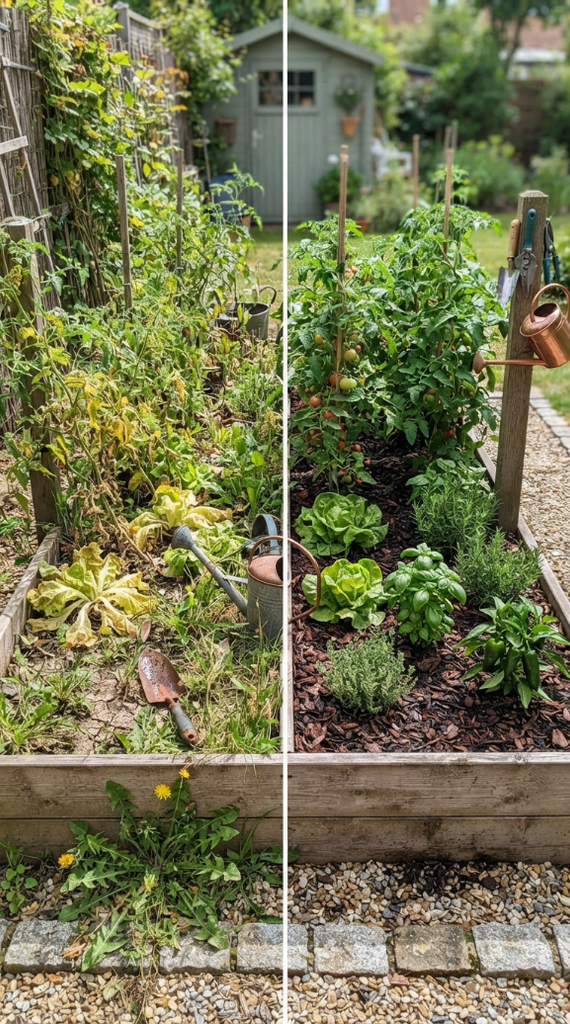
Raised beds can make gardening easier, cleaner, and far more productive.
They warm up faster in spring, drain better than many in-ground gardens, reduce weed pressure, and let you control the soil from the start.
So why do some raised beds still produce weak plants, tiny vegetables, yellow leaves, and disappointing harvests?
Usually, the problem is not the raised bed itself.
It is one or two small mistakes in how the bed was built, filled, planted, watered, or maintained.
The good news is that most raised-bed problems are easy to fix once you know what to look for.
Below are 12 common raised-bed mistakes that can quietly reduce your harvest—and the simple changes that can make a big difference.
1. Filling the Bed With the Wrong Soil
This is one of the biggest raised-bed mistakes.
A raised bed is only as good as the soil inside it.
Many gardeners fill their beds with whatever soil is cheapest, including heavy garden soil, pure topsoil, or low-quality fill dirt.
That can create poor drainage, compaction, and weak root growth.
Why It Hurts Your Harvest
Vegetable roots need:
- Air
- Moisture
- Nutrients
- Good drainage
- Loose soil structure
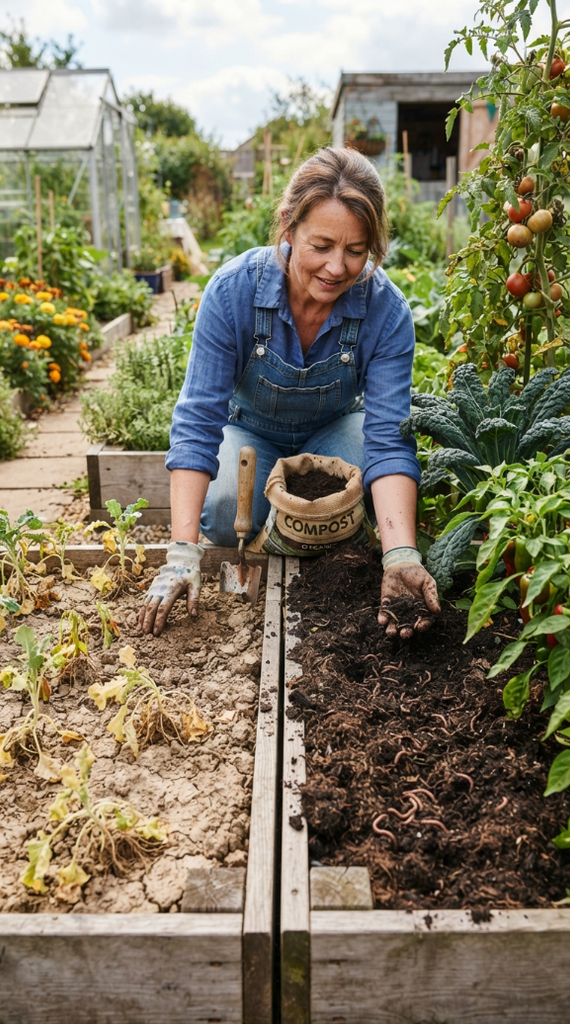
Dense soil can prevent roots from spreading properly.
Water may sit around the roots for too long, or the bed may become rock-hard during hot weather.
The Fix
Use a balanced raised-bed mix.
A simple mixture can include:
- Quality topsoil
- Compost
- A light, aerating material such as aged bark, coco coir, or similar organic matter
The exact mix does not need to be perfect.
The goal is loose, fertile soil that holds moisture without becoming waterlogged.
Quick Tip: Avoid filling an entire raised bed with pure compost. Compost is valuable, but most vegetables do better with a more balanced soil mix.
2. Making the Bed Too Wide
A huge raised bed may look impressive, but width matters.
If you cannot comfortably reach the center, maintenance becomes difficult.
You may end up stepping inside the bed to weed or harvest.
That defeats one of the main benefits of raised-bed gardening.
Why It Hurts Your Harvest
Walking inside the bed compacts the soil.
Compacted soil contains less air and makes it harder for roots to grow.
It also makes planting and harvesting more awkward.
The Fix
Keep raised beds narrow enough to reach the center from both sides.
A common practical width is around 4 feet when the bed can be accessed from both sides.
Beds placed against a wall or fence should generally be narrower.
The basic rule is simple:
If you have to step into the bed, it is probably too wide.
3. Forgetting How Much Sun Vegetables Need
Raised beds are sometimes built where they look best instead of where plants will grow best.
Unfortunately, vegetables do not care how attractive the layout looks.
They care about sunlight.
Why It Hurts Your Harvest
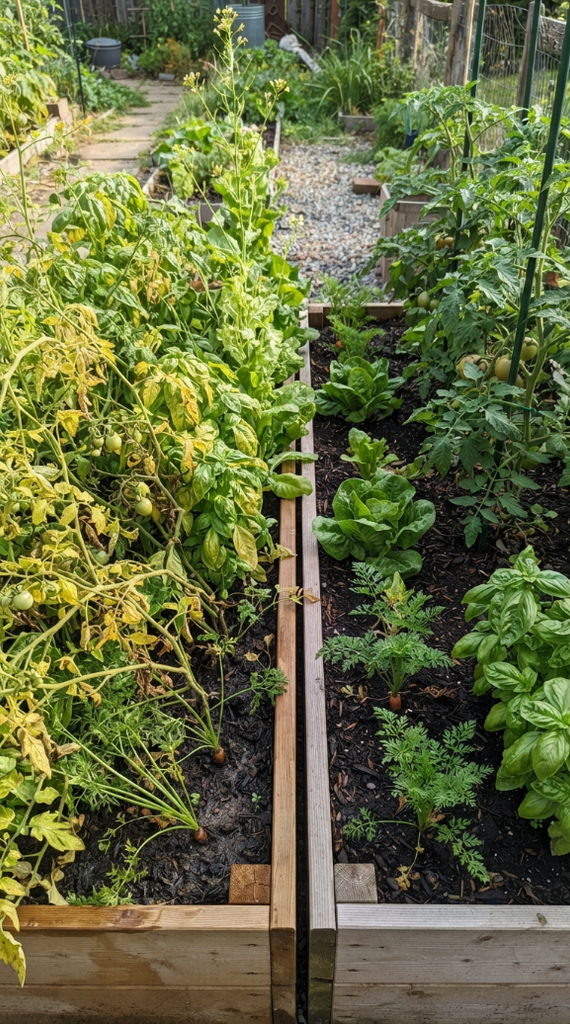
Many fruiting vegetables need plenty of sun to produce well.
Examples include:
- Tomatoes
- Peppers
- Cucumbers
- Squash
- Eggplant
- Beans
In too much shade, plants may grow tall and leafy but produce very little food.
The Fix
Place vegetable beds where they receive strong sunlight for a large part of the day.
Leafy crops such as lettuce and spinach can tolerate more shade than fruiting vegetables.
Before building a permanent bed, watch how sunlight moves across your yard throughout the day.
Pro Tip: Check summer sunlight, not just spring sunlight. Trees that are bare in March may create deep shade by June.
4. Overcrowding Your Plants
This mistake is incredibly tempting.
You have extra seedlings.
There is still a tiny patch of empty soil.
So you squeeze in just one more tomato.
Then one more pepper.
Then maybe some basil between them.
A few weeks later, the bed looks like a jungle.
Why It Hurts Your Harvest
Crowded plants compete for:
- Water
- Nutrients
- Sunlight
- Root space
Poor airflow can also increase disease problems.
Tomatoes, squash, cucumbers, and other vigorous crops can quickly overwhelm neighboring plants.
The Fix
Follow realistic spacing recommendations.
Think about the mature size of each plant rather than the size of the seedling today.
A tiny tomato seedling may eventually become several feet tall and wide.
It is usually better to grow fewer healthy plants than many struggling plants.
5. Watering Too Little
Raised beds often drain faster than traditional garden soil.
That is usually a benefit.
But during hot weather, it also means they can dry out quickly.
Why It Hurts Your Harvest
Vegetables under water stress may:
- Stop growing
- Drop flowers
- Produce small fruit
- Develop bitter leaves
- Wilt repeatedly
- Become more vulnerable to pests
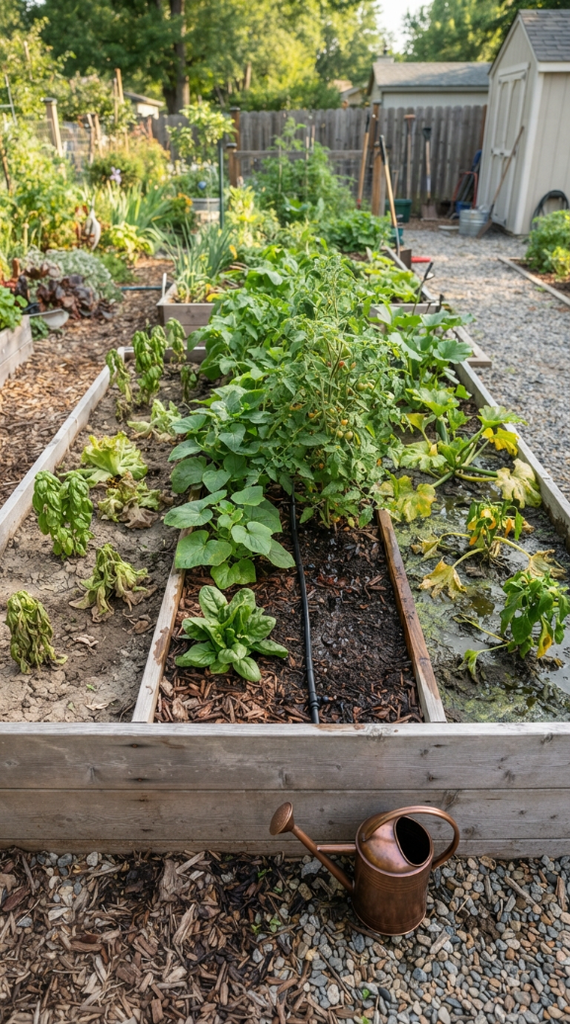
Inconsistent watering can also contribute to problems such as blossom-end rot in tomatoes.
The Fix
Check soil moisture below the surface.
The top of the bed may look dry even when deeper soil is still moist.
Water deeply enough to reach the root zone.
During very hot weather, raised beds may require more frequent watering than nearby in-ground beds.
6. Watering Too Much
Raised beds drain well, but that does not mean they can never be overwatered.
Automatic watering systems can create problems when gardeners run them on a fixed schedule regardless of weather.
Why It Hurts Your Harvest
Constantly wet soil can reduce oxygen around the roots.
This may cause:
- Yellow leaves
- Weak growth
- Root diseases
- Fungus problems
- Nutrient uptake issues
The Fix
Water according to actual soil moisture rather than the calendar.
Push your finger several inches into the soil.
If it still feels moist, your plants may not need more water.
Rainy periods should usually mean less irrigation.
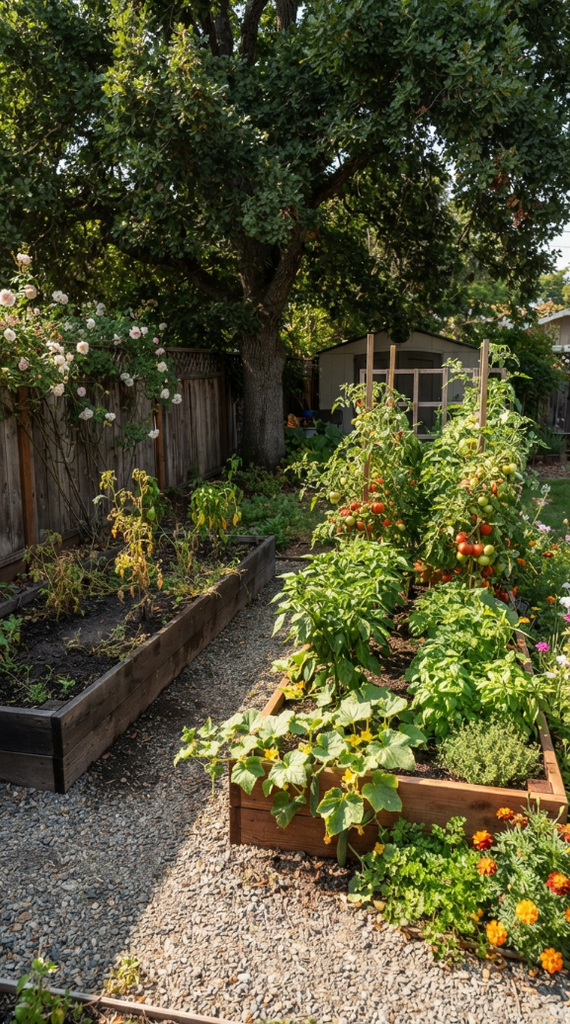
7. Skipping Mulch
Bare soil may look tidy when the bed is freshly planted.
But leaving the soil exposed can create more work later.
Why It Hurts Your Harvest
Unmulched soil:
- Dries faster
- Gets hotter
- Develops more weeds
- Can form a crust
- Loses moisture quickly during wind and heat
The Fix
Apply a light layer of organic mulch around established plants.
Possible materials include:
- Straw
- Shredded leaves
- Grass clippings used carefully
- Fine bark
- Compost
Keep mulch slightly away from plant stems to reduce moisture-related problems.
Why Mulch Helps
Mulch acts like a protective blanket.
It keeps the root zone cooler and helps moisture remain in the soil longer.
That is especially valuable in raised beds because exposed soil can heat up quickly.
8. Forgetting That Raised-Bed Soil Settles
You fill the bed all the way to the top.
A few months later, the soil level has dropped several inches.
That is normal.
Organic materials break down and soil settles over time.
Why It Hurts Your Harvest
If you never replenish the bed, soil depth gradually decreases.
Nutrient levels can also decline.
The Fix
Top up raised beds regularly.
A good time is before each major planting season.
Add:
- Compost
- Quality soil
- A suitable soil amendment if needed
You usually do not need to remove everything and start again.
Refreshing the upper layer is often enough.
9. Never Feeding the Soil
Raised beds are not permanently fertile.
Vegetables remove nutrients from the soil every time you harvest them.
Heavy feeders can use a surprising amount of nutrition during one growing season.
Why It Hurts Your Harvest
Nutrient-poor soil may cause:
- Pale leaves
- Slow growth
- Small vegetables
- Poor flowering
- Low yields
The Fix
Add compost regularly and fertilize when needed.
Heavy-feeding vegetables may need additional nutrition during the season.
Examples include:
- Tomatoes
- Corn
- Squash
- Cucumbers
- Cabbage
Do not assume more fertilizer is always better.
Too much nitrogen can create enormous leafy plants with very little fruit.
Example: A heavily fertilized tomato may look magnificent but produce surprisingly few tomatoes.
10. Planting Tall Crops Where They Shade Everything Else
Plant placement matters almost as much as plant spacing.
Tall crops can create a wall of shade.
Why It Hurts Your Harvest
A row of tall tomatoes, corn, or climbing beans can block sunlight from lower plants.
The shaded crops may become thin, weak, and unproductive.
The Fix
Think about plant height before planting.
In many gardens, taller crops are placed toward the side that creates the least harmful shade.
Use trellises strategically.
Climbing vertically can actually save space when it is planned properly.
Good crops for vertical growing include:
- Cucumbers
- Pole beans
- Peas
- Some squash varieties
- Indeterminate tomatoes
11. Ignoring Crop Rotation
Planting the same crop in the same bed every year is convenient.
But over time, it can create problems.
Why It Hurts Your Harvest
Growing closely related vegetables repeatedly in one location can allow certain pests and diseases to build up.
It may also repeatedly draw the same nutrients from the soil.
The Fix
Rotate plant families when practical.
For example, avoid planting tomatoes in exactly the same spot every season if you have enough space to rotate them.
Other related crops include:
- Tomatoes, peppers, potatoes, and eggplants
- Broccoli, cabbage, kale, and cauliflower
- Beans and peas
- Cucumbers, squash, pumpkins, and melons
In very small gardens, perfect rotation may not be possible.
In that case, focus heavily on soil health, cleanup, and disease prevention.
12. Waiting Too Long to Deal With Pests and Disease
Raised beds feel controlled and protected.
But pests still find them.
Sometimes surprisingly fast.
Why It Hurts Your Harvest
A small pest problem can become a major infestation within days.
Common raised-bed pests may include:
- Aphids
- Caterpillars
- Slugs
- Beetles
- Whiteflies
- Spider mites
Disease can also spread rapidly in crowded plantings.
The Fix
Inspect the garden frequently.
Look at:
- Leaf tops
- Leaf undersides
- New growth
- Stems
- Fruit
- Soil surface
Remove affected leaves when appropriate.
Catch infestations while they are still small.
A five-minute inspection every few days can save an entire crop.
Bonus Mistake: Building the Bed Without Thinking About Drainage
Raised beds usually improve drainage, but poor design can still create trouble.
For example, beds placed directly over an impermeable surface may hold water differently than beds placed over soil.
The Fix
Before building, think about where excess water will go.
If the bed sits over natural ground, water can usually move downward.
For beds on patios, rooftops, or concrete, drainage needs more careful planning.
Never allow plant roots to sit constantly in stagnant water.
Bonus Mistake: Choosing Materials Without Considering Longevity
Raised beds can be built from many materials.
Common options include:
- Wood
- Metal
- Brick
- Stone
- Composite materials
Each has advantages and disadvantages.
Untreated wood may eventually rot.
Dark metal may heat up strongly in certain climates.
Very thin materials may warp.
The Fix
Choose material based on:
- Climate
- Budget
- Desired lifespan
- Appearance
- Bed size
- Maintenance level
A cheap bed that needs replacement every two years may eventually cost more than a durable one.
How Deep Should a Raised Bed Be?
One of the most common questions is how deep a raised bed needs to be.
There is no single answer because different plants have different root systems.
Shallow-rooted crops can grow in relatively modest soil depth.
Larger crops benefit from more root space.
Examples of plants that appreciate deeper soil include:
- Tomatoes
- Carrots
- Parsnips
- Large peppers
- Some squash
If the raised bed sits over healthy garden soil, roots may continue growing downward.
If the bed sits over concrete or another hard surface, the soil depth inside the bed becomes much more important.
The Best Plants for Raised Beds
Raised beds work especially well for vegetables and herbs.
Popular choices include:
- Tomatoes
- Lettuce
- Spinach
- Radishes
- Carrots
- Peppers
- Beans
- Peas
- Cucumbers
- Beets
- Kale
- Basil
- Parsley
- Chives
You can also grow flowers among vegetables.
Flowers may improve appearance and attract beneficial insects and pollinators.
Good choices include:
- Marigolds
- Nasturtiums
- Calendula
- Alyssum
- Zinnias
A Simple Raised-Bed Layout for Beginners
You do not need complicated garden planning software.
Try dividing the bed into zones.
For example:
Back or Trellis Side
Grow:
- Tomatoes
- Pole beans
- Cucumbers
Middle
Grow:
- Peppers
- Kale
- Bush beans
- Herbs
Front Edge
Grow:
- Lettuce
- Radishes
- Parsley
- Small flowers
This arrangement helps prevent larger plants from completely overwhelming smaller crops.
Signs Your Raised Bed Needs Attention
Your raised bed may need improvement if you notice:
- Water sitting on the soil surface
- Soil drying extremely quickly
- Plants remaining unusually small
- Yellowing across multiple plants
- Hard, compacted soil
- Repeated disease problems
- Very low harvests
- Soil level dropping dramatically
- Poor root development
Do not immediately assume the seeds or plants are bad.
Look at the growing environment first.
The 10-Minute Raised-Bed Check
Once or twice each week, spend 10 minutes checking your beds.
Check Soil Moisture
Push your finger into the soil.
Look for Pests
Turn over several leaves.
Remove Weeds
Pull them while they are small.
Tie Up Vines
Support climbing plants before they fall over.
Harvest Mature Vegetables
Frequent harvesting often encourages additional production.
Remove Damaged Leaves
This can improve airflow and make it easier to notice new problems.
These tiny maintenance sessions are often much more effective than trying to rescue the garden after weeks of neglect.
How to Improve an Existing Raised Bed
If your raised bed is already struggling, you probably do not need to rebuild everything.
Start with these steps:
- Check drainage.
- Test how quickly the soil dries.
- Loosen compacted soil gently.
- Add compost.
- Remove overcrowded plants.
- Add mulch.
- Adjust watering.
- Check sunlight.
- Inspect for pests.
- Feed plants only if needed.
Make one or two changes at a time.
This makes it easier to identify what was actually causing the problem.
Raised-Bed Gardening: Do This, Not That
Instead of:
Watering lightly every day.
Do This:
Water deeply when the soil actually needs moisture.
Instead of:
Cramming in as many plants as possible.
Do This:
Give each plant enough space to mature.
Instead of:
Leaving soil bare all summer.
Do This:
Use mulch to conserve moisture.
Instead of:
Filling the bed with cheap dense dirt.
Do This:
Use loose, fertile, well-draining soil.
Instead of:
Fertilizing constantly.
Do This:
Feed according to plant needs and soil condition.
Instead of:
Ignoring tiny pest problems.
Do This:
Inspect your garden regularly.
Final Thoughts
Raised beds can produce an incredible amount of food in a relatively small space.
But the bed itself does not guarantee a great harvest.
The real difference comes from what happens inside it.
Healthy soil.
Enough sunlight.
Correct spacing.
Consistent watering.
Regular feeding.
Good airflow.
And a few minutes of observation each week.
If your raised bed has been disappointing this year, do not assume you are bad at gardening.
Look through these 12 mistakes and identify which ones may be happening in your garden.
Sometimes one small change—adding mulch, improving soil, reducing overcrowding, or adjusting watering—is enough to completely transform the harvest.
And once your raised bed begins producing properly, you may be surprised by just how much food can come from such a small patch of soil.