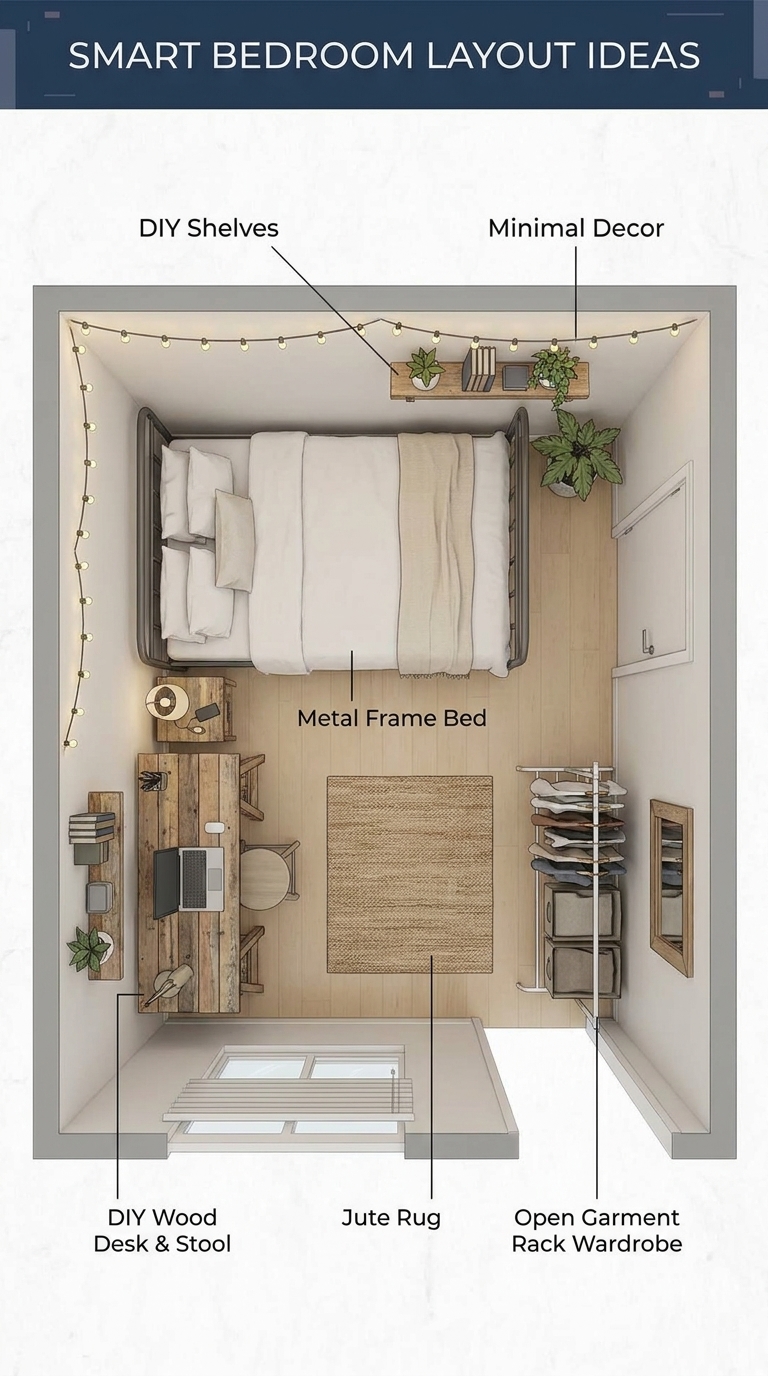
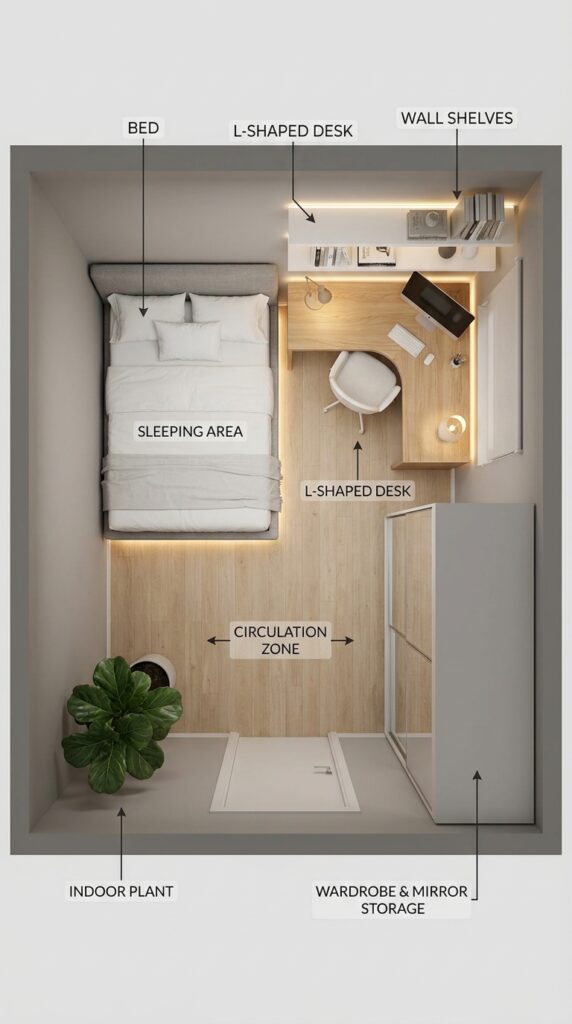
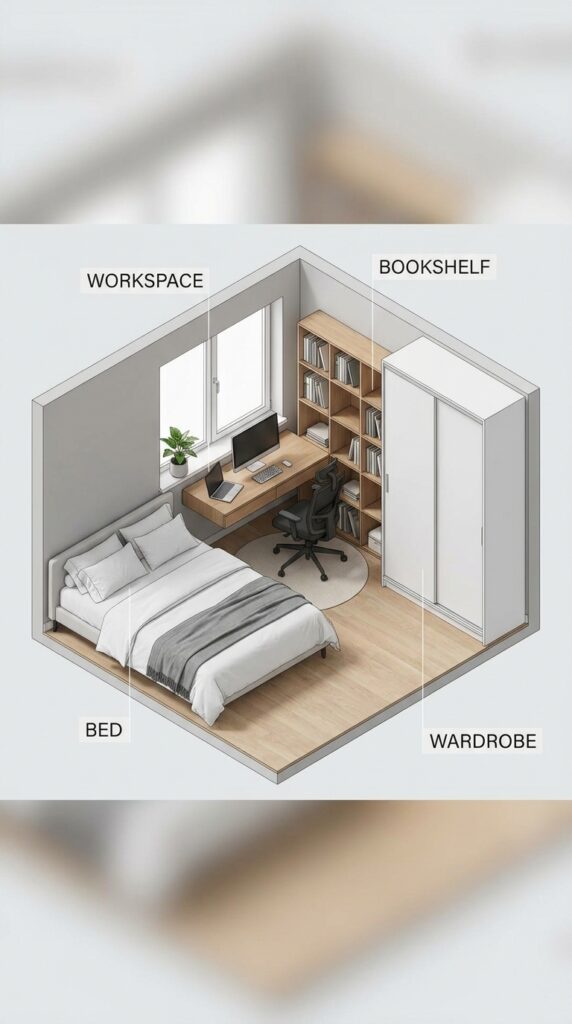
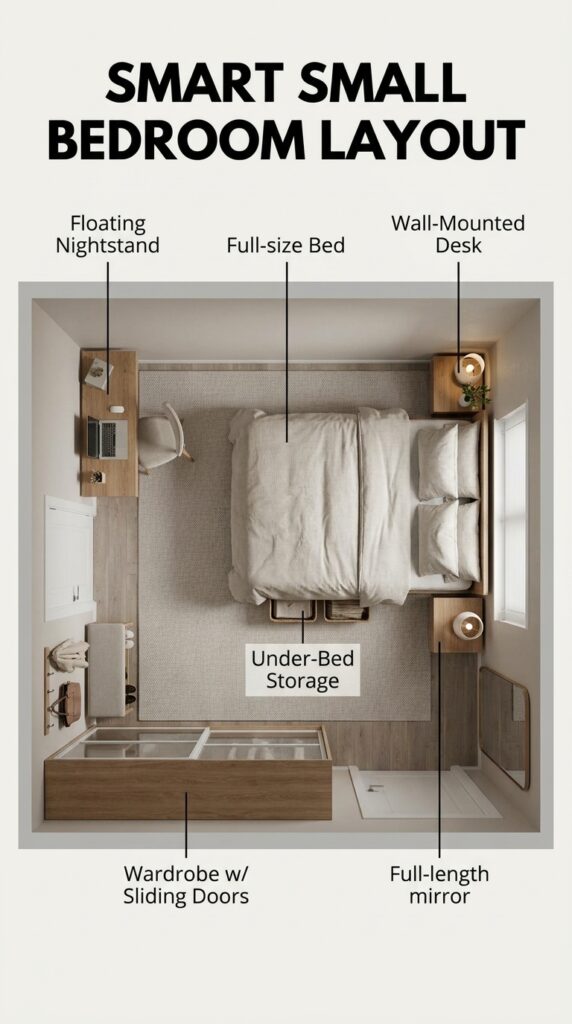
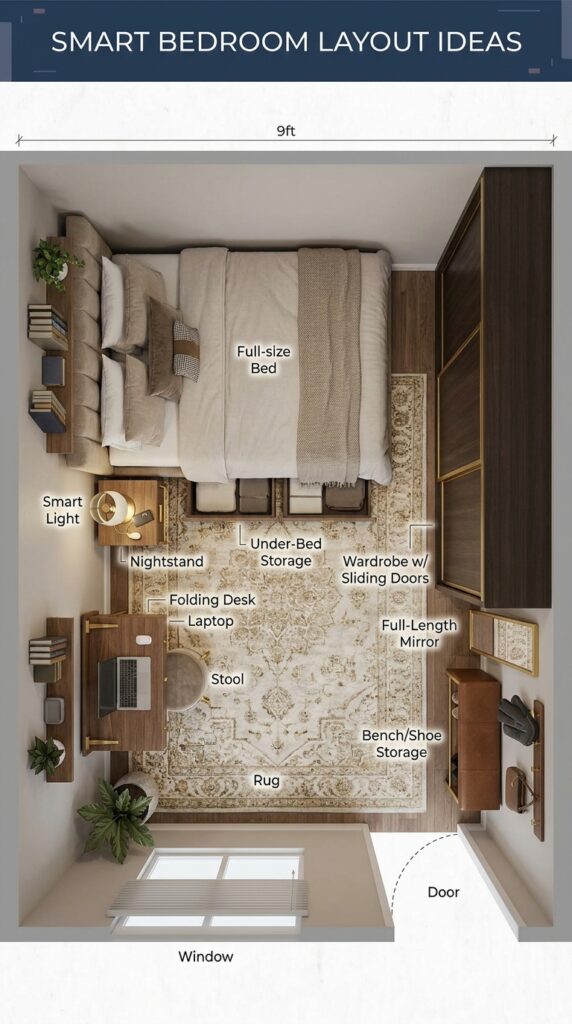
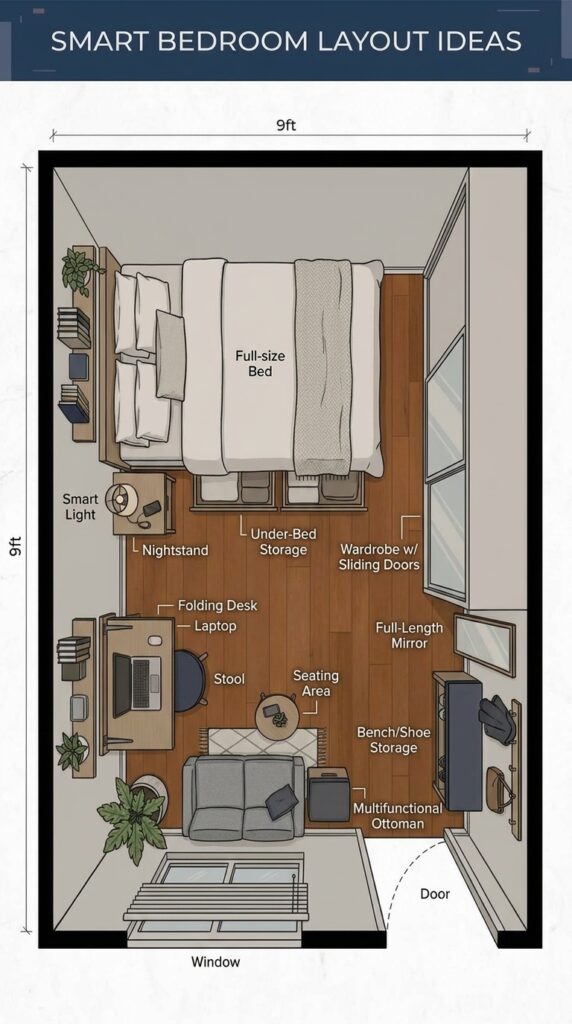
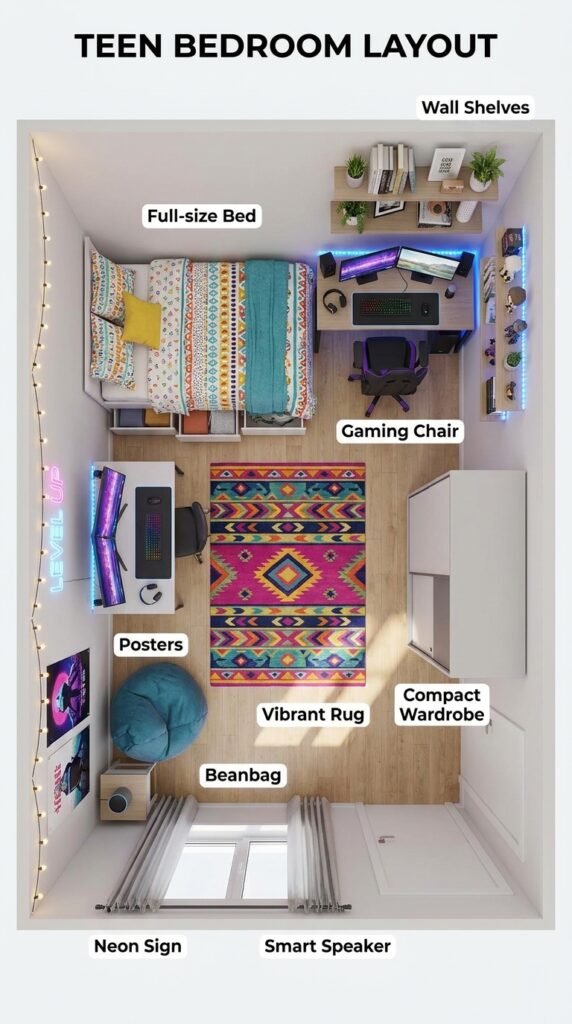
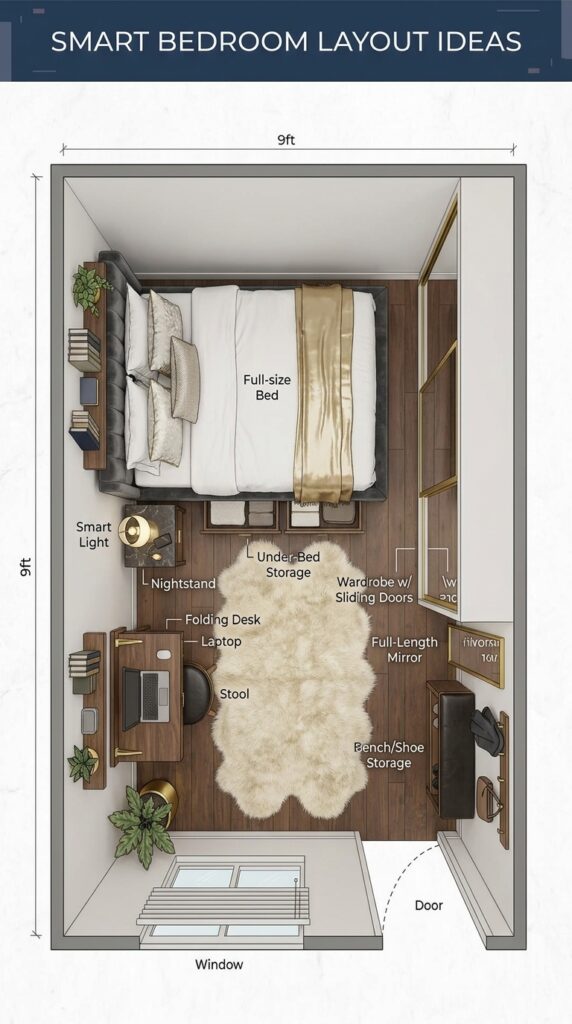
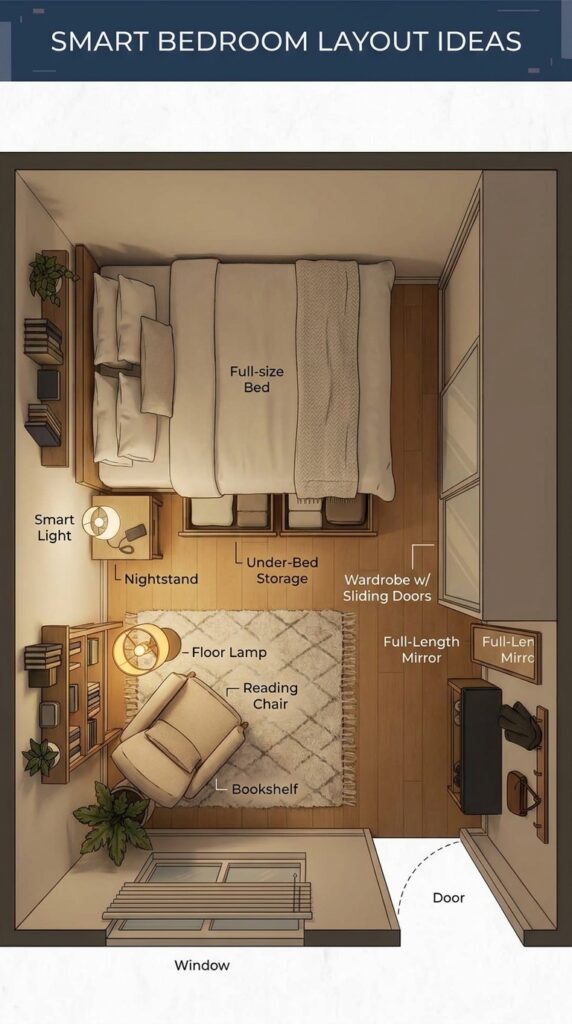
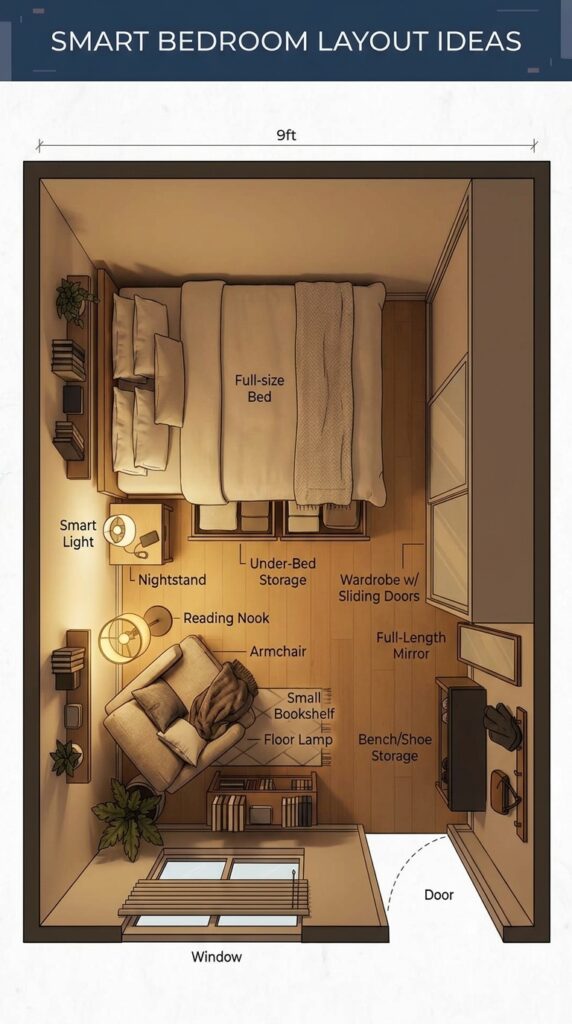
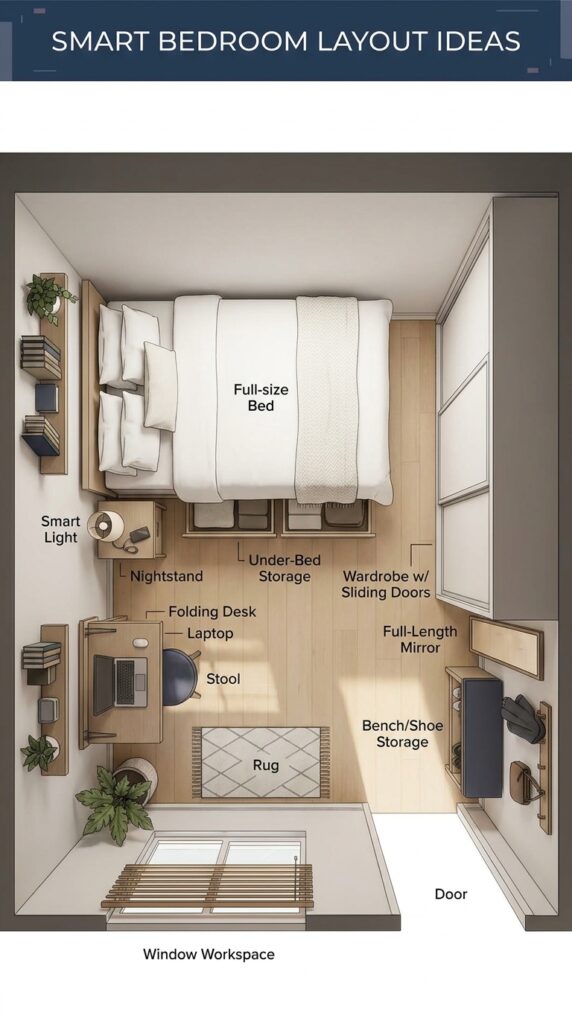
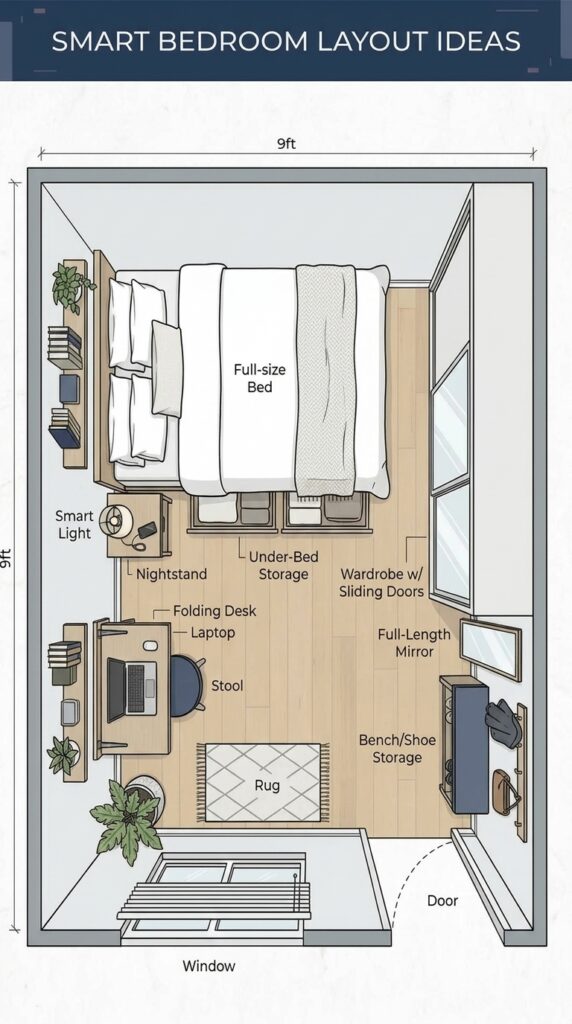
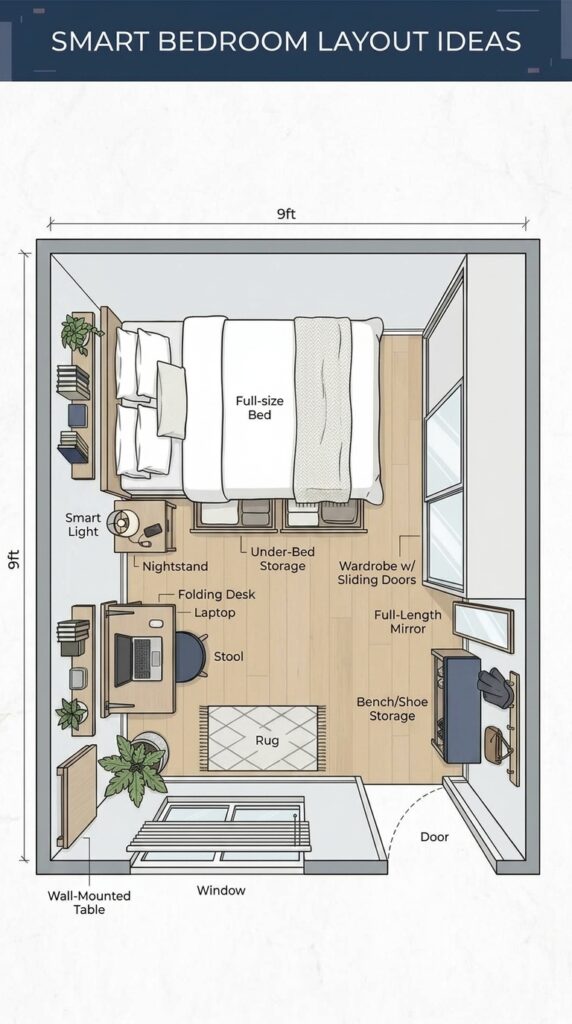
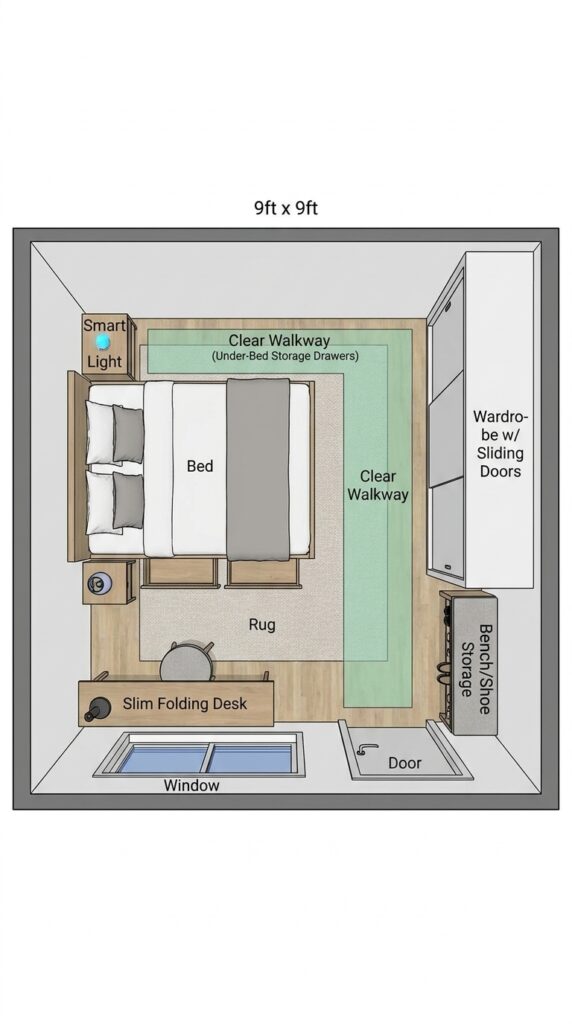
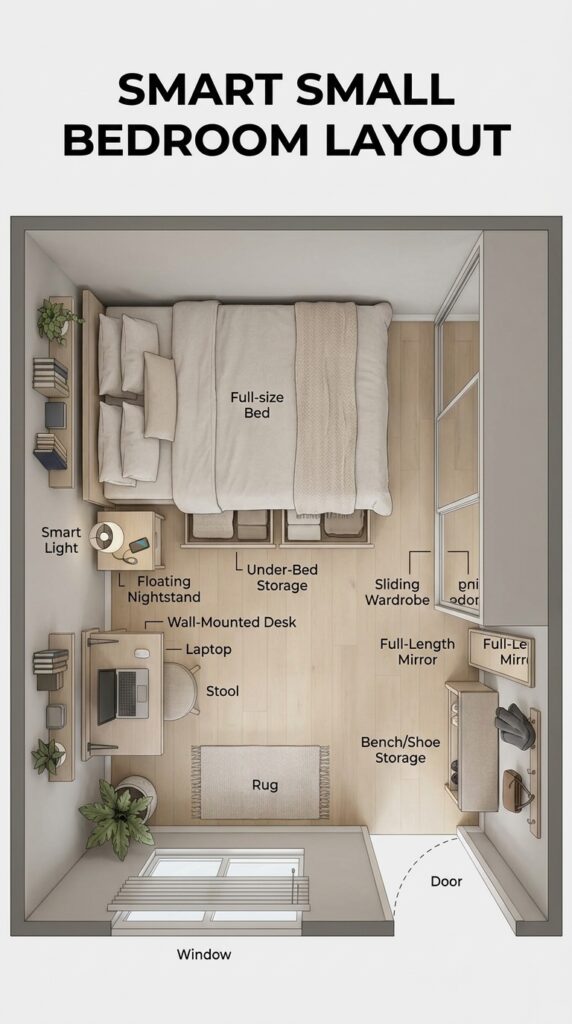
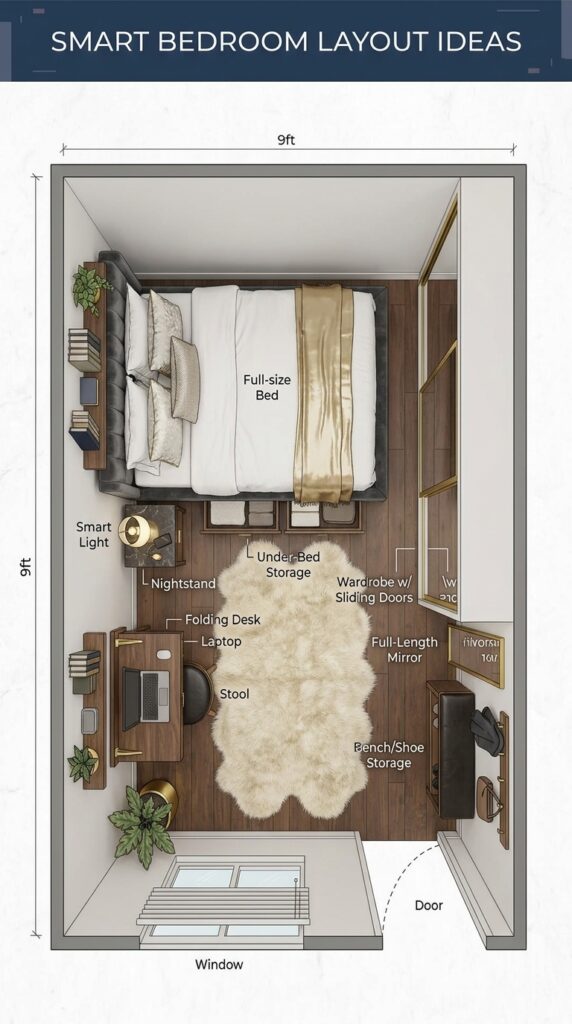
Designing the perfect bedroom layout isn’t just about where you place your bed—it’s about creating a space that feels calm, functional, and uniquely yours.
Whether you’re working with a compact bedroom, a master suite, or something in between, the right layout can dramatically improve how your space looks and feels. A well-planned bedroom promotes better sleep, reduces clutter, and makes everyday routines smoother.
In this guide, you’ll learn expert design principles, step-by-step planning strategies, and 35 real bedroom layout ideas you can adapt to your own space.
🛏️ PART 1: WHAT MAKES A BEDROOM LAYOUT “PERFECT”?
Let’s get one thing straight:
👉 There’s no one-size-fits-all layout.
The “perfect” bedroom layout depends on:
Room size and shape
Window and door placement
Storage needs
Lifestyle (work, relaxation, kids, etc.)
However, designers agree on one key principle:
A perfect layout balances comfort, movement, and function.
The 3 pillars of a great bedroom layout:
1. Flow (Movement)
You should be able to move easily around the room without bumping into furniture.
👉 Ideal walkway space: 24–36 inches (60–90 cm)
2. Function (Purpose)
Every piece of furniture should serve a purpose.
👉 Avoid overcrowding with unnecessary items
3. Visual Balance (Aesthetics)
The room should feel visually pleasing and not “heavy” on one side.
📐 PART 2: STEP-BY-STEP GUIDE TO DESIGNING YOUR BEDROOM LAYOUT
Designers don’t guess—they follow a process. Here’s how you can do it too:
Step 1: Measure Your Room
Start with:
Length and width
Ceiling height
Window and door positions
👉 Pro tip: Sketch your room or use simple layout apps
Step 2: Choose Your Bed Position First
Your bed is the anchor of the room.
Best placement rules:
Against the longest wall
Visible from the door (but not directly aligned)
Avoid blocking windows if possible
Step 3: Define Zones
Even in small bedrooms, zoning works:
Sleeping zone
Storage zone
Work/vanity area
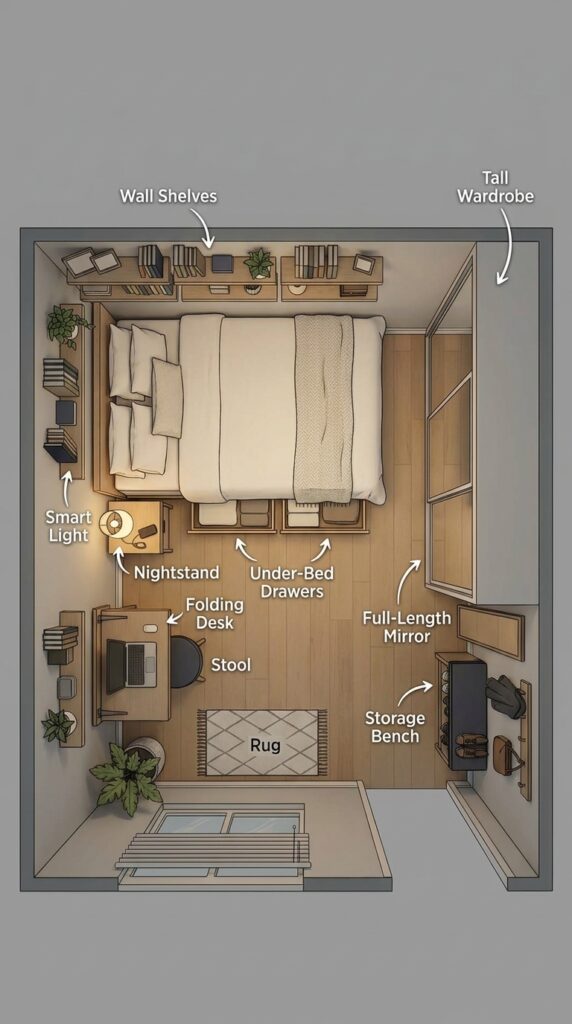
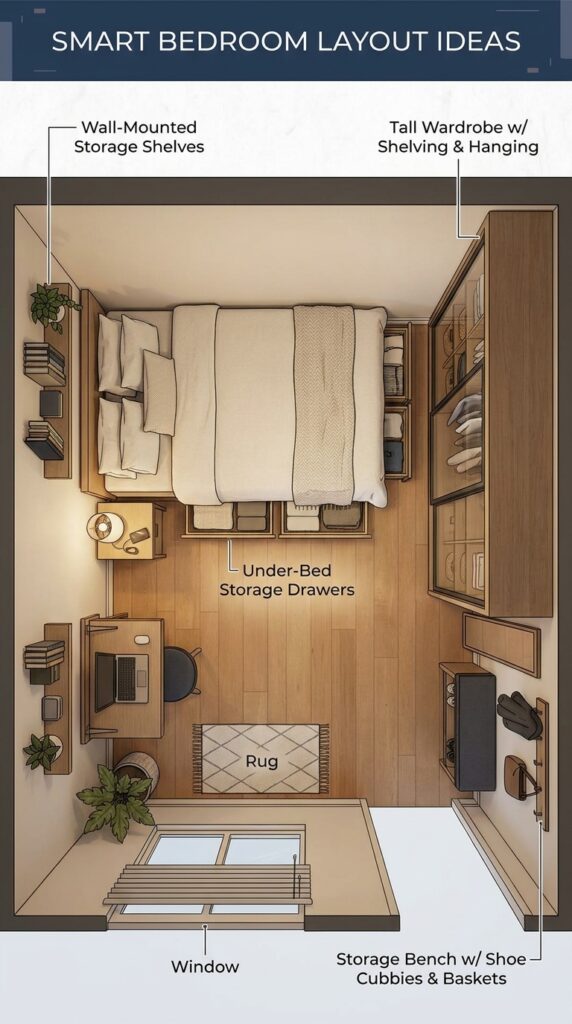
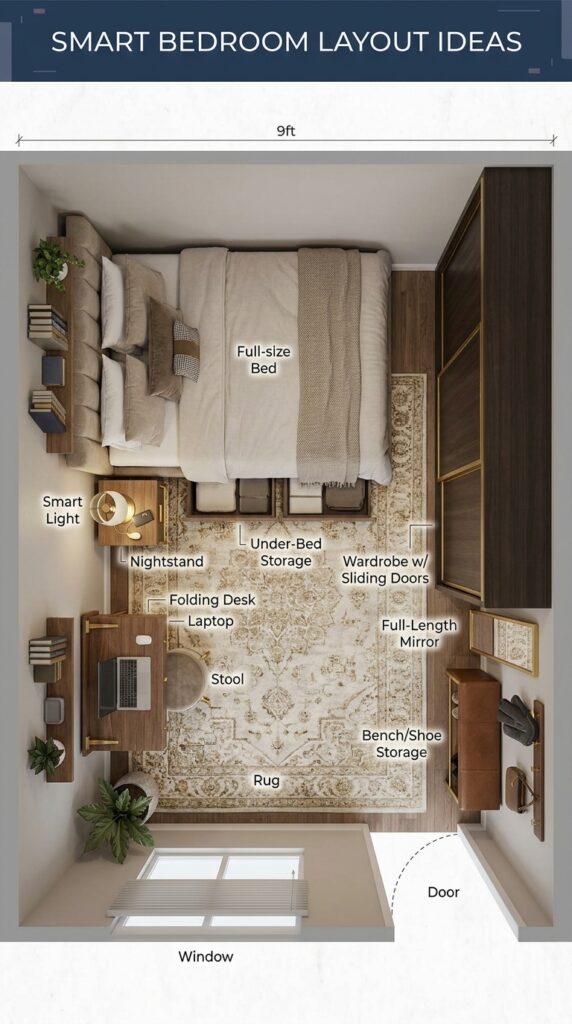
Step 4: Add Storage Strategically
Think vertical, not horizontal:
Tall wardrobes
Wall shelves
Under-bed storage
Step 5: Maintain Clear Pathways
Don’t block:
Door swings
Window access
Closet entry
Step 6: Balance the Room
Avoid placing all heavy furniture on one side.
👉 Symmetry = calm, balanced feel
🧠 PART 3: EXPERT BEDROOM LAYOUT TIPS THAT ACTUALLY WORK
These are the insights designers swear by:
✔ Anchor the Bed Properly
A floating or awkwardly placed bed makes the room feel off.
✔ Use Multi-Functional Furniture
Especially in small rooms:
Storage beds
Foldable desks
Ottoman benches
✔ Go Vertical with Storage
Walls are your best friend.
✔ Keep the Floor Visible
Furniture with legs creates openness.
✔ Use Lighting to Define Zones
Bedside lamps
Wall sconces
LED strips
✔ Don’t Overfill the Room
More furniture ≠ better design
🏡 PART 4: 35 REAL BEDROOM LAYOUT EXAMPLES
Now let’s get into the practical inspiration you can actually use.
🔹 SMALL BEDROOM LAYOUTS (1–12)
1. Corner Bed Layout
Bed tucked into a corner for maximum floor space.
2. Single-Wall Layout
All furniture aligned along one wall.
3. Under-Window Bed Layout
Bed placed under window to free wall space.
4. Minimalist Layout
Only essentials: bed + storage
5. Floating Shelf Layout
Wall-mounted storage replaces bulky furniture
6. Narrow Room Layout
Bed along long wall, walkway on one side
7. Storage Bed Layout
Drawers under bed reduce need for wardrobe
8. Open-Foot Layout
No furniture at bed’s foot
9. Mirror Expansion Layout
Mirror reflects light, making room feel bigger
10. Light Color Layout
Neutral tones expand visual space
11. Foldable Desk Layout
Wall-mounted desk saves space
12. Loft Bed Layout
Bed elevated, workspace below
🔹 MEDIUM BEDROOM LAYOUTS (13–24)
13. Classic Centered Layout
Bed centered with two nightstands
14. Bed + Desk Layout
Desk near window for natural light
15. Bed + Wardrobe Layout
Wardrobe along one wall
16. Symmetrical Layout
Matching furniture on both sides
17. Accent Wall Layout
Bed anchored by feature wall
18. Corner Desk Layout
Efficient workspace in unused corner
19. Open Closet Layout
No doors for airy feel
20. Bed Facing Window Layout
Creates visual depth
21. Reading Nook Layout
Chair + lamp in corner
22. Dresser Opposite Bed Layout
Balanced visual weight
23. Rug-Zoned Layout
Rug defines sleeping area
24. Multi-Use Layout
Sleeping + work + storage zones
🔹 LARGE BEDROOM LAYOUTS (25–35)
25. Hotel-Style Layout
Bed centered, seating area at foot
26. Bedroom + Lounge Layout
Sofa or armchair added
27. Walk-In Closet Layout
Dedicated dressing area
28. Bedroom + Office Layout
Separate work zone
29. Fireplace Layout
Bed oriented toward focal point
30. Window-Framed Bed Layout
Bed between windows
31. Bench-at-Foot Layout
Functional + aesthetic
32. Gallery Wall Layout
Artwork above bed
33. Dual-Zone Layout
Sleeping + relaxing areas separated
34. Statement Bed Layout
Bed as focal centerpiece
35. Luxury Symmetry Layout
Perfect balance, hotel-like feel
📊 PART 5: COMMON BEDROOM LAYOUT MISTAKES TO AVOID
Even good furniture won’t save a bad layout.
❌ Blocking natural light
❌ Oversized furniture in small rooms
❌ Poor bed placement
❌ Ignoring walking space
❌ Too many items (visual clutter)
🎨 PART 6: HOW TO VISUALIZE YOUR BEDROOM IN 3D
If you want to take things to the next level (especially for Pinterest or planning):
Use tools like:
SketchUp
Planner 5D
Roomstyler
Process:
Input room dimensions
Place bed first
Add furniture
Adjust spacing
Test multiple layouts
👉 This helps you avoid costly mistakes
🚀 PART 7: QUICK LAYOUT FORMULAS (CHEAT SHEET)
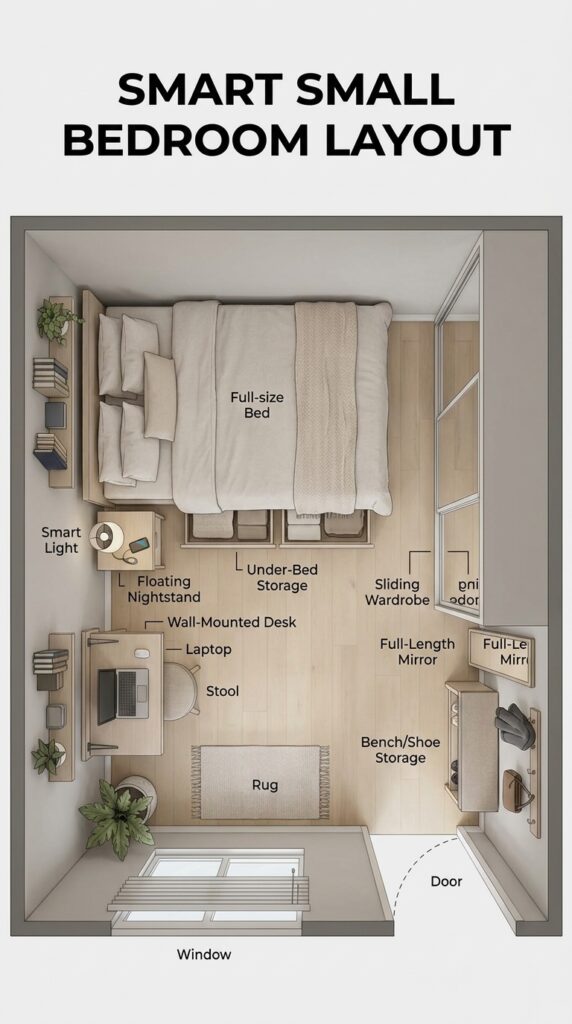
Small Room Formula:
Bed + vertical storage + minimal furniture
Medium Room Formula:
Bed center + balanced sides + functional zones
Large Room Formula:
Bed + seating + layered zones
💡 FINAL THOUGHTS
Designing the perfect bedroom layout is less about rules—and more about smart decisions.
When you:
prioritize function
maintain clear flow
use space efficiently
…even the smallest bedroom can feel stylish, comfortable, and spacious.