
6 Signs Your HVAC Ductwork May Be Affecting Your Indoor Air Quality
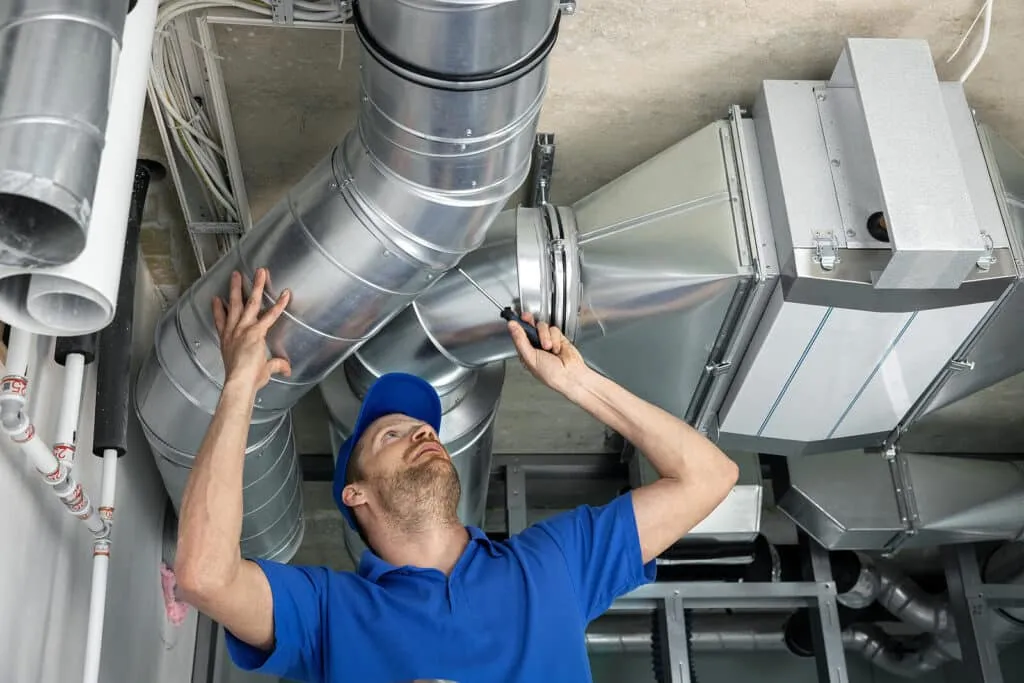
When people think about indoor air quality, they usually blame the obvious suspects: dust, pet hair, pollen, cleaning products, smoke, or maybe an old air filter.
But there is another part of your home that can quietly influence the air you breathe every single day — your HVAC ductwork.
Your air ducts act like the respiratory system of your home. Every time your heating or cooling system turns on, air travels through those ducts before reaching your bedrooms, living room, kitchen, office, and other spaces.
If those ducts are clean, properly sealed, dry, and in good condition, they can help your HVAC system circulate comfortable air efficiently.
But when ductwork becomes dirty, damaged, leaky, damp, or contaminated, it can contribute to poor indoor air quality and make your home feel dusty, stuffy, or uncomfortable.
The tricky part is that duct problems are often hidden behind walls, ceilings, floors, attics, or crawl spaces. You may not immediately realize that your air ducts are part of the problem.
So how can you tell?
Here are six common signs your HVAC ductwork may be affecting your indoor air quality, along with what they mean, why they happen, and what you can do about them.
Why HVAC Ductwork Matters for Indoor Air Quality
Before looking at the warning signs, it helps to understand what your ductwork actually does.
A central HVAC system generally pulls indoor air through return vents, conditions that air by heating or cooling it, and then sends it back into your home through supply ducts.
That means the same network of ducts may move thousands of cubic feet of air through your home every day.
If that pathway contains contaminants or allows pollutants to enter, those materials may be distributed to multiple rooms whenever the HVAC system operates.
Potential duct-related air quality problems can include:
- Dust and fine particles
- Construction debris
- Pet hair and dander
- Pollen
- Mold spores
- Excess moisture
- Insulation fibers
- Odors
- Pest-related contaminants
- Outdoor pollutants entering through leaks
This does not mean every dusty home needs professional duct cleaning. In fact, many indoor air quality problems come from sources outside the duct system.
However, certain patterns can strongly suggest that your ductwork deserves a closer look.
1. Excessive Dust Keeps Coming Back After You Clean
One of the first warning signs many homeowners notice is persistent dust.
You vacuum.
You wipe down the furniture.
You clean the shelves.
And somehow, just a day or two later, everything looks dusty again.
A certain amount of dust is normal in any home. People naturally bring particles indoors on clothing and shoes, and everyday activities release fibers, skin cells, pet dander, and other material into the air.
But if dust seems unusually heavy or returns very quickly after cleaning, your HVAC system may be contributing to the problem.
How ductwork can contribute to excessive dust
Dust can accumulate inside ductwork over time, particularly if the system has poor filtration, gaps in the duct system, or a history of construction or remodeling.
Leaky return ducts can be especially problematic.
Imagine a return duct running through a dusty attic or crawl space.
If that duct has cracks or poorly sealed joints, the HVAC blower may pull unfiltered air from that area directly into the system.
That air could contain:
- Dust
- Insulation particles
- Dirt
- Pollen
- Insect debris
- Other airborne contaminants
Those particles may then circulate through your HVAC equipment and eventually enter living spaces through supply vents.
If dust keeps returning, odors seem to come from the vents, or allergy symptoms become more noticeable whenever your HVAC system is running, it may be worth having the ductwork professionally inspected. In some cases, HVAC duct cleaning can help remove accumulated dust, debris, pet dander, and other contaminants from the air distribution system, particularly when there is visible buildup or a known source of contamination. The key is to combine cleaning with proper filtration, moisture control, and duct sealing so the problem is less likely to return.
Look closely around your vents
One clue is visible dust buildup around registers and vent covers.
A small amount is not unusual, especially over long periods. But heavy black or gray dust collecting around multiple vents may deserve investigation.
You can also remove a vent cover and carefully inspect the visible section of ductwork using a flashlight.
If you see thick layers of debris just inside the duct, it may be worth having the system professionally evaluated.
Pro Tip: Before paying for duct cleaning, check your HVAC filter first. An incorrect filter size, poor filter fit, or overdue replacement can allow large amounts of dust to bypass filtration.
What to do
Start with the simplest possibilities:
- Replace or inspect your HVAC filter.
- Make sure the filter fits properly without large gaps.
- Vacuum return grilles and supply registers.
- Check whether renovation work recently created extra dust.
- Have accessible duct joints inspected for leakage.
If excessive dust continues despite good housekeeping and filtration, a professional HVAC or indoor air quality inspection may help identify whether the duct system is contributing.
2. You Notice Musty, Stale, or Unusual Odors When the HVAC Turns On
Does your home smell normal until the heating or air-conditioning system starts running?
That pattern matters.
If an unpleasant smell appears primarily when air begins flowing through the vents, something inside or near the HVAC system could be responsible.
Common descriptions include:
- Musty
- Damp
- Earthy
- Stale
- Moldy
- Dusty
- Burnt
- Sour
Not every odor comes directly from the ducts, though.
The source could also be the evaporator coil, drain pan, air handler, filter, furnace, or another HVAC component.
Still, ductwork should be part of the investigation.
Musty smells can point to moisture
Ducts are supposed to stay dry.
If moisture enters the system because of condensation, roof leaks, plumbing leaks, high humidity, or damaged insulation, damp conditions can develop inside or around the ductwork.
Moisture combined with dust and organic debris creates conditions where microbial growth may occur.
That is why persistent musty odors should not simply be covered with air fresheners.
You need to identify the moisture source.
Do not ignore condensation problems
Ducts running through hot, humid spaces can sometimes develop condensation when cold conditioned air travels through them.
Poor or damaged duct insulation can make this problem worse.
Over time, persistent moisture may affect surrounding building materials as well as the duct system itself.
Remember: Odor is a symptom. Cleaning the duct without correcting the moisture problem may only provide temporary improvement.
What to do
If you notice recurring odors:
- Replace the air filter.
- Inspect visible ductwork for moisture.
- Check for water near the air handler.
- Look for staining around vents.
- Check condensate drain lines and drain pans.
- Have the HVAC system inspected if the smell persists.
A qualified technician may need to determine whether the issue involves the ducts, coil, blower compartment, drainage system, or another part of the HVAC system.
3. Your Allergy or Respiratory Symptoms Seem Worse Indoors
Poor indoor air quality can affect comfort differently from person to person.
One household member may notice nothing unusual, while another experiences:
- Sneezing
- Coughing
- Watery eyes
- Nasal irritation
- Throat irritation
- Headaches
- Increased allergy symptoms
These symptoms can have many causes, so they should never automatically be blamed on ductwork.
However, your HVAC system deserves attention if symptoms seem noticeably worse while you are indoors and improve after leaving the home.
Air ducts can redistribute allergens
Particles that may move through an HVAC system include:
- Pollen
- Dust
- Pet dander
- Fine particles
- Mold spores
- Outdoor pollution
Your ducts do not necessarily create these contaminants.
The bigger issue is circulation.
Once particles enter the HVAC system, airflow may carry them to different parts of the house.
For example, pet dander originating in the living room can eventually travel into bedrooms through return and supply air pathways.
Likewise, pollen entering through open doors and windows may become airborne and circulate repeatedly.
Duct leakage can introduce new contaminants
Leaks on the return side of an HVAC system can sometimes pull air from unconditioned spaces.
This is particularly concerning if ducts run through:
- Attics
- Garages
- Crawl spaces
- Basements
- Utility rooms
Those areas may contain more dust, humidity, insulation debris, pest contamination, or outdoor pollutants than your living spaces.
Once drawn into the HVAC system, these contaminants may be carried throughout the home.
Pro Tip: If allergy symptoms are the main concern, do not focus only on duct cleaning. Indoor air quality often improves most when filtration, humidity control, source control, ventilation, and duct sealing are addressed together.
Consider your air filter
Your HVAC filter is one of the most important defenses against airborne particles.
But higher filtration is not always automatically better.
A filter with too much airflow resistance for your system can reduce HVAC performance.
The ideal filter should provide useful particle capture without creating excessive pressure drop.
Ask your HVAC professional what filter efficiency your system is designed to handle.
4. You See Visible Mold-Like Growth Around Vents or Inside Ductwork
Visible growth around supply registers should get your attention.
Dark spots, fuzzy patches, discoloration, or unusual residue around vents may indicate moisture-related contamination.
However, appearance alone does not always confirm mold. Dust, soot, adhesive residue, and other materials can sometimes look similar.
That is why identifying the cause is more important than jumping straight to conclusions.
Mold requires moisture
Microbial growth does not happen simply because air ducts exist.
There must typically be enough moisture available for growth.
Potential moisture sources include:
- High indoor humidity
- Condensation
- Leaking roofs
- Plumbing leaks
- Wet insulation
- Poorly insulated ductwork
- Clogged condensate drains
- Improperly sized HVAC equipment
- Water intrusion after storms or flooding
If contamination appears around a vent, inspect the surrounding area for water staining or condensation.
Insulated ducts require special attention
Many HVAC ducts contain internal or external insulation.
If porous insulation becomes wet and contaminated, cleaning may be more complicated than simply wiping down a metal surface.
In some situations, damaged insulation may need replacement.
Why simply spraying cleaner into vents is a bad idea
Homeowners sometimes spray bleach, fragrance, disinfectant, or household cleaner directly into air vents.
That is generally not a good first response.
You could introduce chemicals into the air distribution system without solving the underlying moisture problem.
Some products may also damage duct materials or create unpleasant fumes.
Remember: If moisture caused the problem, moisture control has to be part of the solution.
What to do
If you suspect mold or biological growth:
- Avoid disturbing large contaminated areas.
- Determine where moisture is coming from.
- Inspect insulation and nearby building materials.
- Have suspicious widespread growth professionally evaluated.
- Correct the moisture issue before or alongside cleaning.
For people with asthma, severe allergies, or other health concerns, professional indoor air quality guidance may be especially worthwhile.
5. Some Rooms Feel Stuffy While Others Get Strong Airflow
Poor indoor air quality is not always about visible pollutants.
Air distribution matters too.
If one bedroom feels stuffy while another gets plenty of airflow, your duct system may not be distributing air correctly.
Common signs include:
- Rooms that always feel warmer or colder
- Weak airflow from certain vents
- Doors that move when the HVAC system starts
- Whistling or rushing sounds
- Large temperature differences between rooms
- Rooms that feel humid or stale
- One floor consistently more uncomfortable than another
These symptoms can indicate problems with duct sizing, blockage, leakage, balancing, or return airflow.
Why airflow affects air quality
Fresh, filtered, conditioned air needs to circulate effectively throughout your home.
When airflow is poor, some spaces may not receive enough air exchange.
That can allow heat, humidity, odors, and airborne contaminants to linger.
In bedrooms, offices, and other frequently occupied spaces, insufficient ventilation can make the room feel noticeably stale.
Return air is just as important as supply air
Many homeowners focus entirely on supply vents.
But the HVAC system also needs an effective path for air to return.
Imagine a bedroom with a strong supply vent but no dedicated return vent and a tightly closed door.
Air enters the room, but it may struggle to leave.
That pressure imbalance can reduce airflow and HVAC efficiency.
Depending on the home’s design, transfer grilles, jumper ducts, door undercuts, or dedicated returns may be used to improve airflow.
Damaged or disconnected ducts can waste conditioned air
If a duct becomes disconnected in an attic or crawl space, a large portion of conditioned air may escape before reaching the intended room.
That reduces comfort and may also cause pressure imbalances elsewhere in the house.
Pro Tip: Hold a small tissue near a supply vent while the system is operating. This is not a technical airflow test, but comparing several rooms can help you identify vents with obviously weaker airflow.
A professional technician can perform more meaningful tests using instruments that measure airflow and static pressure.
6. Your Energy Bills Are Rising and Your HVAC Runs Longer Than It Used To
This sign surprises many homeowners because it seems more related to energy efficiency than air quality.
But duct efficiency and indoor air quality often overlap.
If your ductwork leaks badly, the HVAC system may run longer to maintain the thermostat setting.
At the same time, those leaks can allow unwanted air and pollutants to move between conditioned and unconditioned spaces.
Supply duct leaks
A supply duct leak releases heated or cooled air before it reaches your rooms.
For example, conditioned air may escape into an attic.
The result?
Your HVAC system has to work harder.
Return duct leaks
Return leaks can be even more relevant to indoor air quality.
Instead of losing conditioned air, the system may pull unwanted air into the duct network.
That air could come from dusty or humid spaces such as a crawl space or attic.
Signs of duct leakage
Possible warning signs include:
- Unexpected increases in heating or cooling costs
- Long HVAC cycles
- Uneven room temperatures
- Weak airflow
- Excessive dust
- Hot or cold attic spaces near leaking ducts
- Visible gaps at duct joints
- Disconnected flexible duct sections
A professional can perform duct leakage testing to determine how much air the system is losing.
Sealing ducts properly matters
Duct tape — despite its name — is usually not the best long-term solution for HVAC duct sealing.
Professional duct systems are commonly sealed using products designed specifically for HVAC applications, such as mastic sealant or approved foil tape.
The correct material depends on the type of duct and location.
Pro Tip: Focus on connections first. Duct joints, elbows, boots, plenums, and equipment connections are common areas where leakage develops.
What Should You Do If You Suspect Your Air Ducts Are Affecting Indoor Air Quality?
Finding one warning sign does not necessarily mean you need complete duct replacement or professional duct cleaning.
Start with an inspection.
A good HVAC professional should look at the entire air distribution system rather than immediately selling a single service.
Important areas to evaluate include:
- HVAC filter condition
- Supply duct condition
- Return duct condition
- Duct leakage
- Blower compartment cleanliness
- Evaporator coil condition
- Drain pan and condensate line
- Indoor humidity
- Duct insulation
- Airflow balance
- Visible contamination
- Signs of pest activity
- Moisture intrusion
The goal should be to identify the source of the problem rather than treating symptoms.
Does Air Duct Cleaning Improve Indoor Air Quality?
Sometimes.
But not always.
This is where homeowners should be careful.
Professional duct cleaning may be useful when there is substantial contamination inside the duct system, such as significant debris, confirmed microbial contamination, pest contamination, or heavy construction dust.
But routine duct cleaning is not automatically necessary in every home.
Cleaning dirty ducts without addressing the reason they became contaminated may not solve the problem for long.
For example, imagine your return ducts leak heavily inside a dusty attic.
You could clean the entire system today.
But if those leaks remain, the ducts may begin collecting new contaminants again almost immediately.
A better approach would be:
Identify the contamination → correct the source → clean where necessary → improve filtration and prevention.
That sequence provides a more complete solution.
How to Protect Your HVAC Ductwork and Improve Indoor Air Quality
You do not need to wait until your home has a major air quality problem.
A few preventive steps can make a big difference.
Change HVAC filters regularly
Filter replacement frequency depends on the filter, system, household, pets, occupancy, and environmental conditions.
Rather than blindly following a calendar, check the filter regularly and replace it when needed.
Keep vents clean and unobstructed
Do not block return vents or supply registers with furniture, rugs, curtains, or boxes.
Vacuum vent covers periodically to remove visible dust.
Control indoor humidity
High humidity encourages biological growth and can make your home feel uncomfortable.
Excessively low humidity can also cause comfort issues.
Maintaining reasonable indoor humidity helps protect both comfort and building materials.
Seal duct leaks
Proper duct sealing can improve energy performance, airflow, comfort, and contaminant control.
Inspect ducts after renovation work
Construction creates enormous amounts of fine dust.
If ducts were left open during remodeling, drywall dust, sawdust, insulation fibers, and other debris may enter the system.
Maintain the HVAC system
Your ductwork is only one part of the equation.
Dirty coils, clogged filters, blocked drains, blower problems, and equipment issues can all affect airflow and indoor air quality.
Regular HVAC maintenance helps catch problems before they become more expensive.
Common Mistakes Homeowners Make With HVAC Ductwork
Sometimes the attempt to solve an air quality problem creates another one.
Here are several mistakes worth avoiding.
Using fragrance to cover odors
If the HVAC system smells musty, adding fragrance only masks the symptom.
Find the source.
Assuming every dusty home needs duct cleaning
Dust can come from carpets, clothing, pets, outdoor air, furniture, bedding, renovation work, or poor filtration.
Ducts are only one possible source.
Ignoring return ducts
Return duct leakage can pull contaminated air into the HVAC system.
Supply and return ducts both deserve attention.
Installing an overly restrictive filter
A very high-efficiency filter sounds great, but not every HVAC system can handle the added resistance.
Talk with a professional before dramatically changing filtration.
Ignoring moisture
Moisture problems rarely fix themselves.
If ducts, insulation, vents, or nearby building materials repeatedly become damp, identify the cause quickly.
When Should You Call an HVAC Professional?
Consider arranging an HVAC or indoor air quality inspection if you notice:
- Persistent musty odors
- Heavy dust despite regular cleaning
- Visible contamination near several vents
- Water or condensation around ductwork
- Major airflow differences between rooms
- Sudden unexplained energy bill increases
- Pest activity inside ducts
- Damaged or disconnected duct sections
- Ongoing indoor comfort or air quality problems
A professional inspection is especially useful when most of the ductwork is hidden and difficult to access.
Ask the technician to explain what they find and, when possible, show you photographs or video of problem areas.
A reputable contractor should be able to explain why a service is recommended, not simply tell you that your ducts are dirty.
Quick Checklist: Could Your Ductwork Be Affecting Your Indoor Air?
Keep this checklist handy.
You may want your HVAC duct system inspected if you notice several of the following:
- Dust quickly returns after cleaning.
- Musty odors appear when the HVAC starts.
- Allergy symptoms seem worse indoors.
- You see suspicious growth around vents.
- Some rooms have poor or uneven airflow.
- Energy bills have increased unexpectedly.
- Your HVAC system runs for unusually long periods.
- Ductwork appears damaged or disconnected.
- You see condensation around ducts.
- Your home recently underwent major construction or renovation.
One isolated symptom does not automatically mean your ducts are the problem.
Several symptoms happening together, however, make an inspection much more worthwhile.
Frequently Asked Questions About HVAC Ductwork and Indoor Air Quality
Can dirty air ducts make your house dusty?
They can contribute to household dust in certain situations, particularly when ducts contain significant debris or return-side leaks pull dusty air into the HVAC system.
However, dust also comes from many other indoor and outdoor sources, so ductwork should not automatically be assumed to be the cause.
How often should air ducts be cleaned?
There is no universal schedule that works for every home.
Instead of cleaning ducts automatically every year or two, consider their actual condition.
Cleaning may be more appropriate after significant contamination, pest activity, certain renovation projects, or other situations where substantial debris has entered the system.
Can leaky ducts affect indoor air quality?
Yes.
Leaky return ducts can potentially draw air from attics, crawl spaces, garages, or other unconditioned areas into the HVAC system.
That may introduce dust, moisture, odors, and other contaminants.
Why does my air conditioner smell musty when it starts?
Possible causes include moisture near the evaporator coil, condensate drainage issues, damp insulation, microbial growth, or contamination inside the duct system.
Because several HVAC components can cause similar odors, an inspection is usually better than assuming the ducts need cleaning.
Can HVAC ducts cause mold?
Ducts themselves do not create mold.
Mold growth requires appropriate moisture and environmental conditions.
If mold or mold-like contamination appears in or around ductwork, the first priority should be identifying and correcting the moisture source.
Is duct sealing worth it?
If your duct system has substantial leakage, sealing can provide several benefits.
It may improve airflow, increase HVAC efficiency, reduce energy loss, improve comfort, and reduce the movement of contaminants from unconditioned spaces into the system.
What is the difference between duct cleaning and duct sealing?
Duct cleaning removes accumulated contaminants from inside the duct system.
Duct sealing closes cracks, joints, gaps, and leakage points.
They address different problems.
Some homes may need one, both, or neither.
Final Thoughts
Your HVAC ductwork usually stays out of sight, which makes it easy to forget about.
But every time your heating or cooling system operates, that hidden network plays an important role in how air moves throughout your home.
If you are dealing with excessive dust, persistent odors, worsening indoor allergies, visible contamination, uneven airflow, or rising energy bills, your ductwork may deserve a closer look.
The key is not to assume that duct cleaning will solve every problem.
Indoor air quality is a system.
Duct condition, filtration, moisture control, airflow, equipment maintenance, ventilation, and household pollutant sources all interact with one another.
Addressing the root cause usually produces better results than simply treating the most visible symptom.
If something feels off with the air inside your home, start with the basics: inspect the filter, look for moisture, check airflow, examine visible ducts, and pay attention to when problems occur.
And when the source is not obvious, having a qualified HVAC professional evaluate the system can help you determine whether your ductwork is truly affecting your indoor air quality — and what actually needs to be fixed.
Key Takeaway
Your air ducts should move conditioned air throughout your home without adding excessive dust, odors, moisture, or pollutants. If several indoor air quality problems appear whenever your HVAC system operates, the ductwork may be part of the problem and is worth inspecting.