
Understanding Thermal IR Sensors: Applications and Benefits Explained
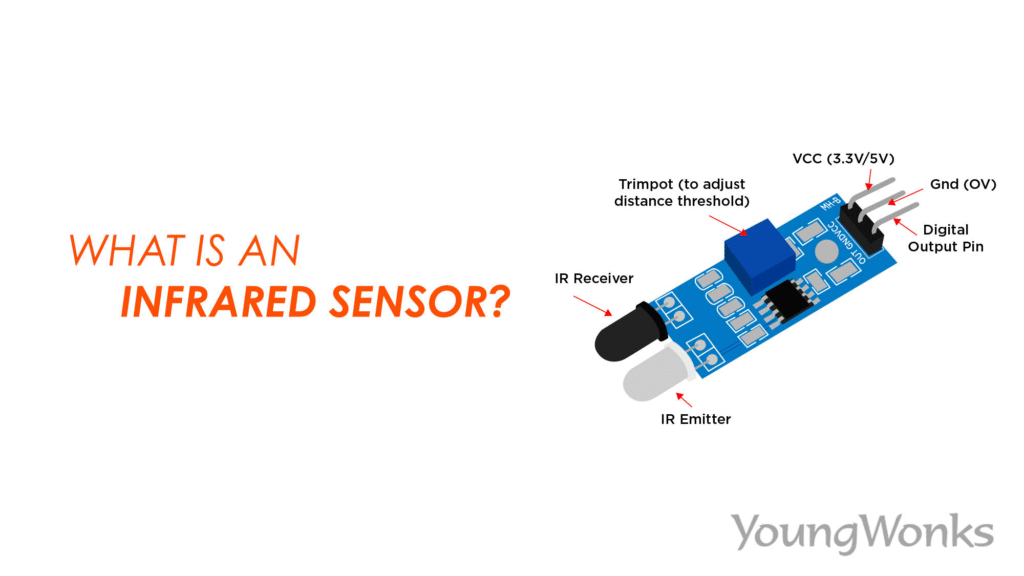
The Science Behind Thermal IR Sensors: How They Work
Unveiling the Infrared Spectrum: The Invisible World
The world around us is filled with waves that escape our typical perception, yet these waves play a crucial role in how we interact with our environment. Amongst these waves, infrared (IR) radiation stands out due to its profound significance in various fields. The infrared spectrum is a part of the electromagnetic spectrum, existing between visible light and microwaves, typically ranging from 700 nanometers (nm) to 1 millimeter (mm). Although we cannot see infrared radiation, we can feel it as heat. The human body emits infrared radiation at wavelengths predominantly between 9 and 10 micrometers, which is a key principle that thermal IR sensors exploit. By detecting these wavelengths, thermal IR sensors can accurately gauge temperature differences without physical contact, providing invaluable data in numerous applications.
From Heat to Signal: The Inner Workings of IR Sensors
At the heart of thermal IR sensors lies the principle of thermal radiation emitted by objects based on their temperature. When an object’s temperature increases, it emits more infrared energy. Thermal IR sensors utilize this emitted radiation, converting it into an electrical signal that can be interpreted and displayed. The most common type of thermal sensor is the thermopile, consisting of several thermocouples connected in series. These thermocouples generate voltage based on the temperature difference between two junctions, resulting in a measurable output related to the level of infrared radiation detected. Advanced versions of these sensors employ techniques such as microbolometers, which leverage changes in electrical resistance to detect minute variations in infrared radiation, making them incredibly sensitive and precise. Whether in consumer electronics or sophisticated industrial equipment, the underlying technology enables diverse applications, making thermal IR sensors a cornerstone of modern sensing technology.
Types of Thermal IR Sensors: A Spectrum of Choices
When we discuss thermal IR sensors, it is critical to recognize that they are not a one-size-fits-all solution. Various types cater to different needs and applications. One primary category is the uncooled microbolometer, ideal for standard ambient temperature detection due to its high sensitivity, low cost, and compatibility with mass production. These sensors are widely used in surveillance cameras and consumer electronic devices. In contrast, cooled thermal sensors, such as those based on mercury cadmium telluride (MCT), exhibit greater sensitivity and can detect lower temperature differences, making them suitable for scientific research and military applications. Additionally, fiber-optic thermal sensors are employed in intricate systems to monitor temperature in challenging environments, offering the benefits of flexibility and resistance to electromagnetic interference. By understanding these distinct types and their varying capabilities, businesses and individuals can select the appropriate thermal IR sensor that best fits their specific needs, ensuring optimal performance in their respective applications.
Applications That Change the Game: Where Thermal IR Sensors Shine
In Healthcare: Revolutionizing Medical Diagnostics
In the healthcare sector, thermal IR sensors have emerged as transformative tools, with applications ranging from diagnostics to patient monitoring. Non-contact thermometers, utilizing IR sensors, allow healthcare professionals to quickly assess a patient’s body temperature from a distance, significantly enhancing the safety protocols during infectious disease outbreaks, such as the recent COVID-19 pandemic. These thermometers provide rapid readings, eliminating the need for physical contact and minimizing cross-contamination risks. Moreover, in more advanced applications, thermal IR imaging is utilized to detect abnormal temperature patterns that may indicate underlying health issues, such as inflammation or vascular disorders. For instance, thermal imaging cameras can be employed to identify increased blood flow in tumors, supporting early cancer detection efforts. The ongoing research into integrating thermal IR sensing with artificial intelligence is further pushing healthcare diagnostics into a new era, facilitating real-time monitoring and predictive analytics that can help personalize patient care.
In Industry: Enhancing Efficiency and Safety
Industry applications of thermal IR sensors are vast and impactful, driving improvements in efficiency, safety, and productivity. In manufacturing processes, these sensors are integral for temperature control and monitoring machinery health. Infrared thermography allows engineers to detect hot spots in equipment, which often signal impending failures, enabling predictive maintenance strategies that save time and reduce operational downtime. For instance, electrical equipment often fails when components overheat, and thermal IR sensors can be used to identify these critical issues before catastrophic failures occur. Furthermore, thermal sensors play a pivotal role in quality control, ensuring that products maintain required temperature profiles while in production. Beyond preventative maintenance, these sensors contribute significantly to worker safety in industrial environments by detecting hazardous heat levels that could lead to workplace accidents, thereby ensuring compliance with safety regulations and enhancing the overall safety of employees.
In Home Automation: The Smart Revolution Begins
The rise of smart homes has ushered in a new era where efficiency, convenience, and energy savings are paramount. Thermal IR sensors have become integral components of this smart revolution, providing critical data for smart thermostats, security systems, and energy management applications. Smart thermostats, equipped with thermal sensors, can learn user habits and preferences, adjusting heating and cooling systems accordingly to optimize energy consumption and reduce utility bills. Moreover, these sensors enhance security systems by enabling motion detection capabilities that can trigger alarms or notifications when unusual heat signatures are detected, adding a layer of protection against intrusions. As homes increasingly rely on automation technology, the integration of thermal IR sensors not only promotes energy savings but also creates a more comfortable living environment for occupants, showcasing their versatility in enhancing daily life while contributing to sustainability goals.
The Benefits of Using Thermal IR Sensors: Why They’re Indispensable
Energy Efficiency: Saving Costs While Saving the Planet
The environmental benefits of adopting thermal IR sensors are manifold, chiefly centered on energy efficiency. These sensors play an essential role in optimizing energy consumption across various sectors. In commercial and residential buildings, thermal IR sensors enable effective energy management by providing real-time temperature data, allowing heating and cooling systems to function only when necessary. This approach not only lowers energy costs for consumers but also significantly minimizes carbon footprints, which is crucial in the context of global climate change. An empirical study revealed that buildings equipped with thermal management systems, including IR sensors, could achieve energy savings of up to 30%. As governments worldwide increasingly enforce regulations aimed at reducing energy consumption and emissions, the incorporation of thermal IR sensors into new and existing infrastructures stands as a proactive measure, aligning environmental sustainability with economic viability.
Non-Contact Temperature Measurement: A Touchless Experience
The evolution of non-contact temperature measurement technologies has become increasingly relevant in our current health-conscious society. Thermal IR sensors provide an ideal solution for precise temperature readings without necessitating physical interaction, making them valuable in numerous settings, particularly during health crises. For instance, they are widely used at airports, shopping centers, and hospitals to screen individuals for elevated body temperatures. The ability to instantly measure temperature from a distance minimizes the risk of transmitting infectious agents, offering a proactive solution for infection control. Beyond medical usage, non-contact thermal sensors have applications in food safety, where they help to ensure that food is stored and cooked at safe temperatures, thereby preventing foodborne illnesses. This touchless approach not only heightens convenience but also reinforces health safety measures, establishing thermal IR sensors as indispensable tools in an increasingly hygiene-focused world.
Security and Surveillance: A New Level of Protection
Thermal IR sensors have revolutionized the landscape of security and surveillance, presenting advanced capabilities that surpass traditional cameras. In low-light or complete darkness, thermal imaging technology offers visibility where standard visible-light cameras fail, making it an essential tool for security operators. Intruders or uninvited guests are often deterred by the enhanced detection capabilities, prompting a proactive stance in monitoring properties. Furthermore, thermal IR sensors can monitor perimeter security by detecting any movement or heat signatures around the premises, triggering alerts for potential breaches. The integration of these sensors with AI technology allows for advanced analytics, enabling systems to differentiate between animals and humans, refining the security response and reducing false alarms. As the demand for sophisticated security solutions grows, thermal IR sensors stand at the forefront, ensuring that homes, businesses, and critical infrastructure are better protected against potential threats.
The Future of Thermal IR Sensors: Innovations on the Horizon
Advancements in Sensor Technology: What’s Next?
The future of thermal IR sensors appears promising, with rapid advancements in sensor technology setting the stage for innovations that will further enhance their performance and applicability. Researchers are investigating new materials such as graphene and carbon nanotubes, which have the potential to improve sensor sensitivity and response times significantly. These materials could lead to the development of more compact and efficient sensors that provide real-time, high-resolution thermal imaging. Innovations such as frequency tuning and photonic integration are also on the horizon, enabling sensors to be tailored for specific applications—from detecting minute temperature changes in bodily fluids to assessing thermal profiles in microprocessors. As we move further into the era of miniaturization and integration, thermal IR sensors are expected to play an even more significant role in portable devices, enhancing their functionality while fostering seamless user experiences.
Integration with AI and IoT: A Smarter Tomorrow
The increasing convergence of thermal IR sensors with artificial intelligence (AI) and the Internet of Things (IoT) is a significant trend shaping the future of sensing technology. By leveraging AI algorithms, thermal sensors can process vast amounts of data in real-time, identifying patterns and anomalies that may be imperceptible to human observers. This synergy is particularly beneficial in industries such as healthcare, where predictive analytics can anticipate health issues based on thermal readings, leading to more informed decision-making and timely interventions. In smart homes, the integration of thermal IR sensors with IoT frameworks facilitates automation and enhanced energy management systems that learn from user habits to optimize performance. This interconnectedness not only augments efficiency but also fosters user convenience and comfort, paving the way for a future where technology adapts intuitively to human needs.
Expanding Horizons: New Industries and Applications
As technology continues to evolve, the potential applications of thermal IR sensors are expanding into new industries and use cases that were previously unimagined. In agriculture, for example, farmers are increasingly adopting thermal imaging to monitor crop health by assessing plant temperature differential, which can indicate water stress or disease. This application aids in more targeted irrigation and pest management strategies, ultimately enhancing yield while minimizing resource use. Similarly, in the automotive industry, thermal sensors are paving the way for advanced driver-assistance systems (ADAS), improving vehicle safety through night vision systems that enhance visibility in low-light conditions. As industries recognize the versatile capabilities of thermal IR sensors, we can expect to see continued innovation and adaptation in diverse fields, solidifying their place as essential instruments in modern technology.