
On a construction site, time is everything. Every hour counts. Workers, machines, and materials must move in the right order to keep the project on schedule. When something slows down, the whole system feels it.
One of the biggest causes of delay on construction sites is equipment downtime.
Downtime happens when tools or machines are not ready to use. Sometimes they are broken. Sometimes they are missing. Sometimes they just cannot be found. No matter the reason, the result is the same – work stops.
Many companies focus on buying strong tools and skilled labor. But they overlook one simple factor that plays a huge role in reducing downtime: proper equipment storage.
Good storage is not just about keeping tools in one place. It is about protecting them, organizing them, and making sure they are ready whenever needed.
How Poor Storage Causes Delays
Construction sites are busy and often messy environments. Tools move from one area to another throughout the day. At the end of the shift, they may be placed wherever space is available. Over time, this creates confusion.
When tools are not stored properly, several problems begin to appear.
First, equipment gets damaged more easily. Tools left on the ground can be stepped on, hit by other materials, or exposed to rain and dust. Electrical tools can suffer from moisture damage. Precision instruments can lose accuracy if they are dropped or shaken.
Second, tools go missing. When there is no clear storage system, workers waste time searching for equipment. A simple 10-minute search repeated multiple times a day becomes hours of lost productivity.
Third, equipment wears out faster. Constant exposure to dust, debris, and rough handling shortens tool lifespan. This leads to more repairs and replacements.
All of these issues increase downtime.
Better Storage Protects Equipment
The first benefit of proper equipment storage is protection.
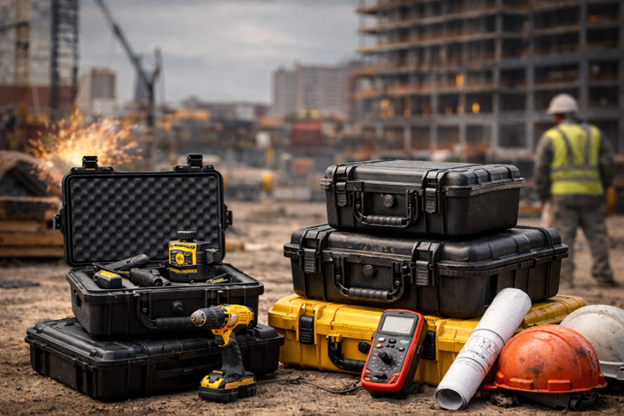
Using strong, durable storage cases helps prevent impact damage. When tools are placed inside protective cases instead of lying loose, they are less likely to be dropped or crushed. Hard outer shells protect against pressure and accidental hits. Secure latches prevent tools from falling out during transport.
Inside the case, foam inserts or padded compartments hold each tool firmly in place. This reduces vibration and prevents parts from hitting each other. Sensitive equipment like laser levels, measuring devices, and testing tools remain stable and accurate.
By protecting tools during both storage and transport, companies reduce unexpected breakdowns.
Organization Saves Time
One of the biggest hidden causes of downtime is simply not knowing where equipment is.
When tools are scattered across a job site or mixed together in large containers, workers spend valuable time searching. This time adds up quickly.
A structured storage system solves this problem. Each tool should have a dedicated place. Cases should be labeled clearly. Equipment should be grouped by function or task. When workers finish using a tool, they return it to its assigned space.
This simple habit reduces confusion and speeds up daily operations.
When everything has a place, work moves faster.
Storage Reduces Repair Costs
Construction tools are expensive investments. Companies expect them to last for years. But poor storage conditions reduce their lifespan.
Leaving tools exposed to dust, moisture, and extreme temperatures causes internal wear. Rust can form. Electronics can fail. Batteries can weaken.
Storing equipment in clean, dry, and secure areas protects it from environmental damage. Weather-resistant industrial cases add extra protection, especially for sites that operate outdoors.
When tools last longer, companies spend less on repairs and replacements. This means fewer interruptions and lower operating costs.
Faster Setup, Faster Work
Good storage also improves daily workflow.
When tools are properly stored and organized, teams can set up quickly each morning. Workers do not waste time sorting through mixed equipment. They simply open the correct case, take the required tool, and begin work.
At the end of the day, organized storage makes packing up faster as well. Equipment is placed back into its designated space, ready for the next shift.
This routine creates efficiency and reduces delays.
Improving Safety on Site
Better storage does more than protect tools. It also improves safety.
Loose equipment lying around creates tripping hazards. Damaged tools increase the risk of accidents. Misplaced electrical equipment can be dangerous.
When tools are stored properly, the site becomes cleaner and more organized. Workers move safely. Equipment remains in good condition. Fewer accidents occur.
Safe sites experience fewer disruptions, which means less downtime.
Building a Storage Culture
Reducing downtime through better storage is not just about buying cases or shelves. It requires a mindset change.
Management must set clear storage rules. Workers should understand why proper storage matters. Simple training sessions can teach staff how to handle and store tools correctly.
When everyone follows the same system, equipment stays organized and protected.
Over time, this culture of care leads to fewer breakdowns and smoother operations.
The Long-Term Impact
Downtime affects more than daily productivity. It affects project timelines, budgets, and client relationships.
When projects are delayed due to equipment issues, clients notice. Repeated delays can damage trust and harm reputation.
On the other hand, companies that maintain organized, protected equipment show professionalism. They complete projects on time and build stronger client relationships.
Investing in better equipment storage may seem small compared to other construction expenses. But its impact is significant.
Proper storage protects tools, saves time, reduces repair costs, improves safety, and keeps projects on schedule.
In construction, success depends on preparation and reliability. Tools are the backbone of every project. When they are stored correctly, they perform better and last longer.
Reducing downtime is not always about working faster. Sometimes, it is about organizing smarter.
Better equipment storage creates smoother workflows, stronger productivity, and more reliable results — helping construction teams stay on track from start to finish.