
Let me paint a familiar picture.
You’re sitting at your desk.
Laptop open.
Coffee cooling.
To-do list growing.
And the wall in front of you?
Blank. Flat. Lifeless.
Or worse — packed with heavy cabinets that make the room feel smaller.
Now imagine instead:
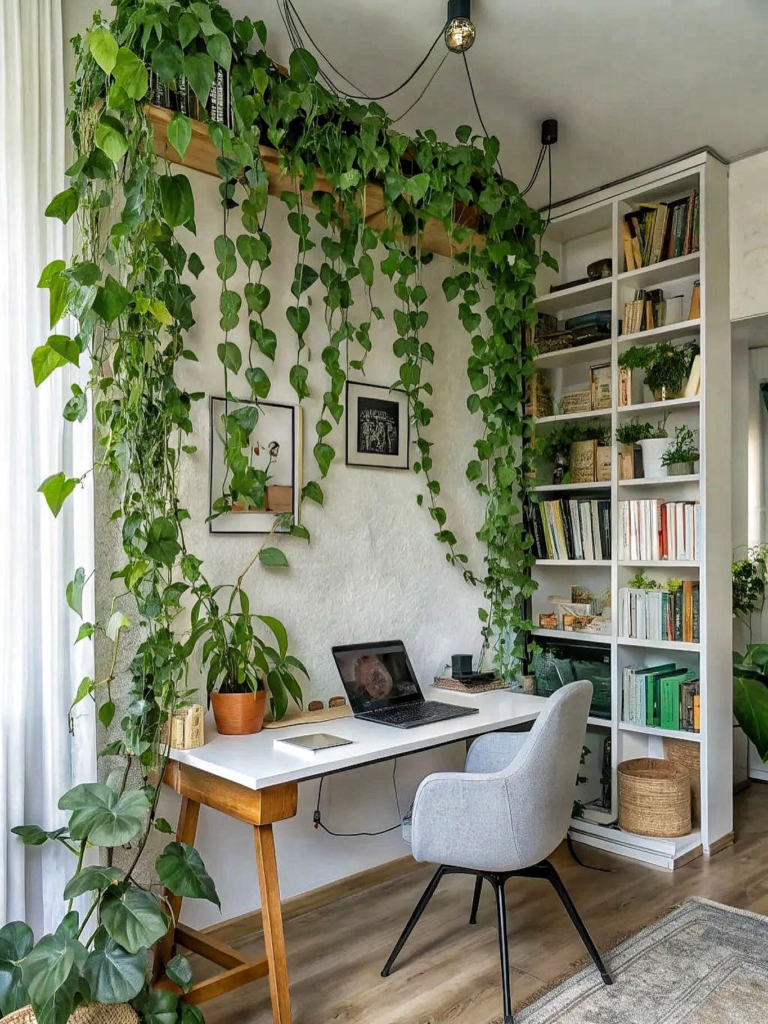
Floating wooden shelves.
Soft trailing greenery cascading down the sides.
Books, baskets, and plants working together.
Air that feels lighter.
A space that breathes.
That’s the power of a Living Storage Wall.
It’s not just decor.
It’s not just organization.
It’s not just plants.
It’s the intersection of storage + wellness + design.
And today, I’m going to show you exactly how to build one — even if you’ve never mounted a shelf or kept a plant alive.
Why Offices Feel “Heavy” — And How Living Walls Fix It
Home offices tend to suffer from two extremes:
- Too empty (uninspiring and sterile)
- Too cluttered (overwhelming and chaotic)
What most offices lack is vertical softness.
Hard lines.
Flat walls.
Sharp corners.
Electronics.
Plants introduce organic movement.
Floating shelves create open storage without bulk.
Together, they:
- Improve visual flow
- Reduce stress
- Add oxygen-producing greenery
- Keep storage functional
It’s minimal — but alive.

What Is a Living Storage Wall?
A Living Storage Wall combines:
- Floating shelves
- Trailing plants
- Functional storage (books, baskets, supplies)
- Intentional spacing
The goal is balance.
Not a jungle.
Not a heavy bookcase.
But a layered, breathable wall that feels curated — not crowded.
Why Floating Shelves Work Better Than Cabinets
Cabinets feel solid.
They block sightlines.
They add visual weight.
Floating shelves feel lighter because:
- You see wall space between them
- They don’t touch the floor
- They allow air and light to pass
In small offices (especially apartments), this makes a huge difference.
The wall feels taller.
The room feels bigger.
The Best Trailing Plants for Low Maintenance
Let’s talk plants.
If you’re worried about killing them — don’t worry.
These are beginner-friendly.
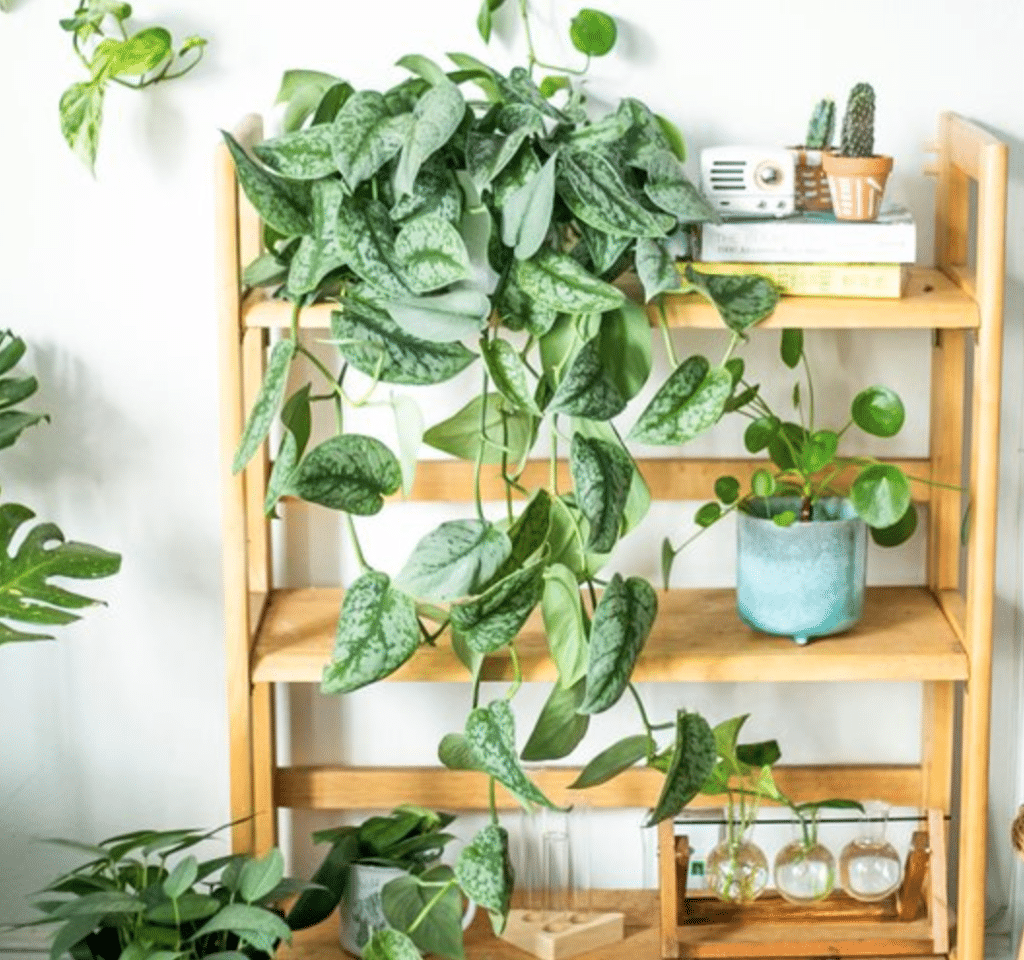
🌿 1. Pothos (The Underrated Hero)
Epipremnum aureum
This is the plant most people call “Pothos.”
Why it’s perfect:
- Thrives in low light
- Tolerates missed watering
- Trails beautifully
- Grows quickly
- Cleans indoor air
It’s basically the MVP of trailing office plants.
🌿 2. Heartleaf Philodendron
Philodendron hederaceum
Very similar vibe to Pothos, but slightly softer leaves.
Great for:
- Medium indirect light
- Elegant trailing look
- Beginner plant parents

🌿 3. String of Pearls (For a Modern Touch)
Curio rowleyanus
This one is more sculptural.
Best for:
- Bright light offices
- Modern minimalist setups
- Higher shelf placement
Needs slightly more care — but stunning when done right.
🌿 4. Spider Plant (Easy and Airy)
Chlorophytum comosum
Great for:
- Indirect light
- Fast growth
- Hanging baby offshoots
It adds playful movement.
Step 1: Plan Your Shelf Layout
Before drilling anything, plan visually.
Use painter’s tape to mark:
- Shelf length
- Vertical spacing
- Plant drop length
Ideal spacing between shelves:
10–14 inches minimum if plants are trailing.
You want room for growth.
Step 2: Choose Shelf Material
Your material sets the tone.
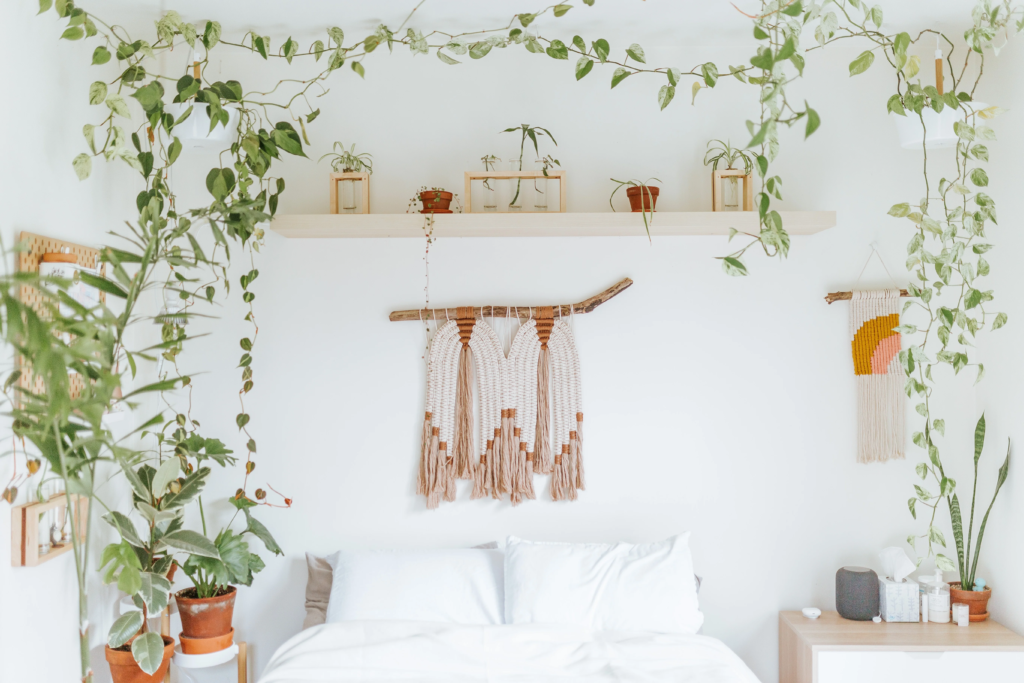
Light Oak or Maple
Airy, Scandinavian vibe.
Walnut
Warmer, cozier, more executive feel.
Matte White
Ultra-modern and clean.
Keep shelf depth around:
8–12 inches for balance.
Step 3: Balance Storage and Greenery
This is important.
If every shelf is plants → chaotic jungle.
If every shelf is books → heavy and academic.
Try this formula:
- Top shelf: 1 trailing plant + 2 decor items
- Middle shelf: books + small plant
- Bottom shelf: basket storage + upright plant
Alternate heights.
Alternate textures.
Leave negative space.
Step 4: Position Plants for Natural Flow
Place trailing plants:
- On outer corners of shelves
- Slightly elevated in ceramic pots
- Off-centered for asymmetry
Let vines drape naturally.
Don’t force perfect symmetry.
Organic flow feels more calming.
Step 5: Think About Light
Most trailing plants prefer:
Bright indirect light.
If your office:
- Faces north → add a small grow light
- Has limited windows → choose Pothos
- Gets direct sun → filter with sheer curtains
You can even mount discreet LED grow strips under shelves.
Invisible but effective.
Step 6: Watering Strategy (Without Ruining Wood)
Watering inside offices makes people nervous.
Here’s how to avoid mess:
- Use pots with drainage trays
- Or keep plants in plastic nursery pots inside decorative containers
- Water in sink, then return to shelf
Never let water pool on wood shelves.
You can also:
Line plant spots with thin cork or felt pads.
Step 7: Integrate Hidden Functionality
If you loved the hidden charging hub concept, you can:
- Run a concealed cable behind shelves
- Add a small grow light
- Hide a smart speaker among plants
Plants + tech can coexist beautifully.
Just keep wires invisible.
The Psychological Impact of Green Walls
There’s real science behind this.
Indoor plants:
- Reduce stress
- Improve focus
- Increase perceived air quality
- Boost creativity
Even small greenery improves cognitive performance.
In a home office, that matters.
You’re not just decorating.
You’re optimizing your environment.
Common Design Mistakes
❌ Overcrowding shelves
❌ Mixing too many plant types
❌ Using tiny shelves for large pots
❌ Forgetting plant growth length
❌ Ignoring lighting
Keep it simple.
Two or three plant types max.
Styling Ideas for Different Office Vibes
Minimalist Office
- White floating shelves
- One trailing Pothos
- Neutral ceramic pots
- Black framed art
Warm Cozy Workspace
- Walnut shelves
- Heartleaf philodendron
- Woven baskets
- Warm desk lamp
Modern Creative Studio
- Matte black shelves
- String of Pearls
- Sculptural planters
- Books stacked horizontally
Budget Breakdown
You don’t need custom millwork.
Budget Setup ($150–300)
- 2–3 floating shelves
- 2 trailing plants
- Simple ceramic pots
- Basic hardware
Mid-Level ($400–700)
- Solid wood shelves
- Multiple plants
- Grow lighting
- Coordinated planters
Premium Custom ($1000+)
- Built-in floating wall
- Hidden wiring
- Integrated lighting
- Layered shelving system
Start small.
You can expand over time.
Maintenance Routine (So It Stays Beautiful)
Weekly:
- Check soil moisture
- Rotate plants toward light
Monthly:
- Trim vines
- Dust leaves
Quarterly:
- Reposition for growth balance
Trailing plants grow quickly.
Embrace it — or prune for control.
Small Office? Try This Mini Version
Even in a tiny Tokyo apartment office, you can:
- Install two narrow shelves above desk
- Place one trailing plant
- Keep storage minimal
Vertical greenery makes small spaces feel taller.
Especially important in compact rooms.
Living Storage Wall + Silent Closet Combo
Imagine combining:
- A silent, soft-close storage system
- A hidden charging drawer
- A living storage wall
Now your office:
- Looks calm
- Sounds calm
- Feels breathable
- Functions efficiently
That’s intentional design layering.
Final Thoughts: Let Your Storage Breathe
Storage doesn’t have to be heavy.
Walls don’t have to be blank.
Offices don’t have to feel mechanical.
When you combine floating shelves with low-maintenance trailing plants, you create something powerful:
A wall that stores.
A wall that softens.
A wall that breathes.
And when your environment breathes —
You do too.