
Choosing the right wood is one of the most important decisions you’ll make in any DIY, furniture-building, or home-improvement project. Whether you’re crafting a coffee table, building garage shelving, or creating decorative trim inside your home, the type of wood you select will directly impact how your project looks, how long it lasts, and how easy it is to build.
But for beginners, wood aisles can feel overwhelming: pine, spruce, fir, cedar, redwood… plus hardwoods like oak, maple, cherry, walnut, and more. Each wood species has unique strengths, weaknesses, prices, uses, and working characteristics.
Wood is one of the most versatile materials for crafting, construction, and home décor. But the type you choose will influence:
- Strength and durability
- Cost of your project
- Ease of cutting, sanding, and finishing
- Resistance to insects, moisture, and decay
- Appearance (grain, color, and texture)
For example, a cottage-style painted bookshelf might do perfectly well in pine or poplar, while a dining table requires a harder, more durable wood like oak or maple. Outdoor projects require rot-resistant species like cedar or redwood. Understanding these differences is the key to avoiding wasted money and poor results.
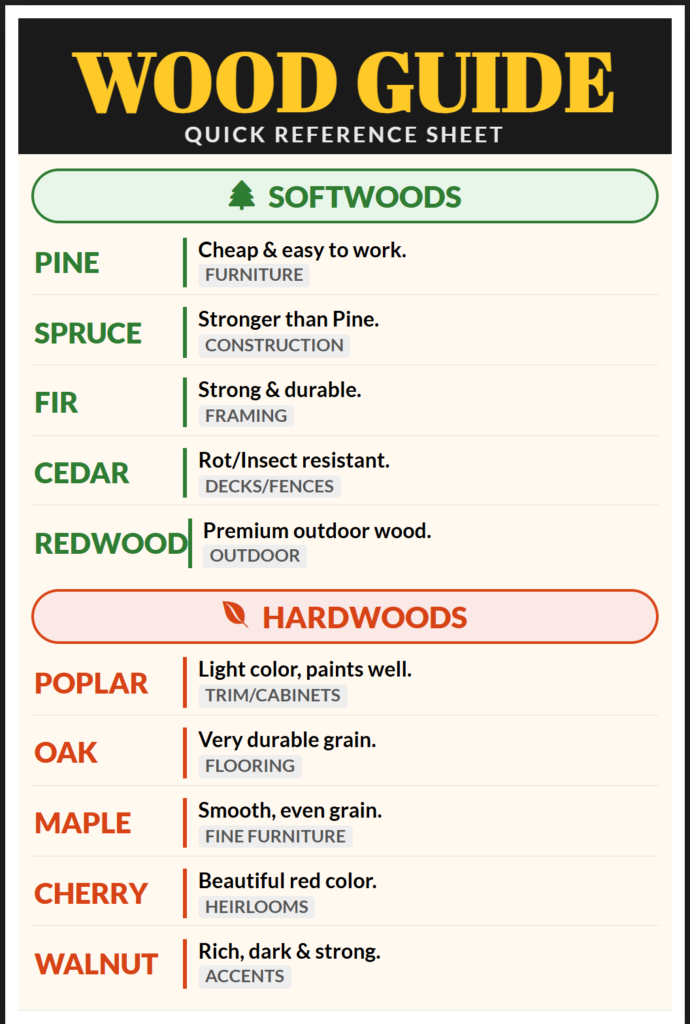
This guide breaks down each species shown in your image and expands on how to choose the right one for your needs.
2. Softwood vs Hardwood: What’s the Difference?
Many beginners believe hardwoods are always “hard” and softwoods are always “soft,” but that’s not true. The terms describe the botanical category of the tree, not its density.
Softwoods
- Come from coniferous trees (evergreens)
- Typically lighter and easier to work with
- More affordable
- Commonly used in construction and DIY beginner projects
- Examples: Pine, Spruce, Fir, Cedar, Redwood
Hardwoods
- Come from deciduous trees
- Generally harder, stronger, and more durable
- More expensive
- Preferred for furniture, flooring, and high-end projects
- Examples: Poplar, Oak, Maple, Cherry, Walnut
Both categories have strengths and unique uses. The key is matching your project’s requirements with the correct material.
3. Softwoods for DIY Projects
Softwoods are excellent for first-time builders because they’re affordable, easy to cut, and widely available at Home Depot, Lowe’s, and local lumberyards.
Pine
Type: Softwood
Features: Inexpensive, easy to work with, but not as strong as other woods
Uses: Furniture, construction, shelving, trim, craft projects
What Makes Pine Popular
Pine is one of the most widely used woods in the world. It’s affordable, lightweight, and incredibly beginner-friendly. You can cut, sand, or drill it without specialized tools. It also takes paint and stain well, although soft spots can cause blotching unless you use a pre-stain conditioner.
Pros
- Budget-friendly
- Easy to screw, nail, or glue
- Available in many sizes and formats
- Lightweight
- Great for painted projects
Cons
- Dents and scratches easily
- Knots can bleed through paint
- Not ideal for outdoor exposure
Best Pine Projects
- Bookshelves
- Storage cabinets
- Kids’ furniture
- Wall paneling or shiplap
- Indoor benches
- DIY farmhouse décor
Spruce
Type: Softwood
Features: Similar to pine, but slightly stronger
Uses: Framing, construction, basic furniture projects
Spruce is commonly sold as SPF lumber (Spruce-Pine-Fir). It’s a construction-grade wood known for strength relative to its weight.
Pros
- Affordable and widely available
- Good strength-to-weight ratio
- Stable and less prone to warping
Cons
- Not as attractive for furniture
- Rough grain makes it harder to sand smooth
Best Spruce Projects
- Framing walls
- Workbenches
- Utility shelves
- Garage storage racks
Fir (Douglas Fir)
Type: Softwood
Features: Strong, durable, more expensive than pine
Uses: Framing, construction, flooring underlayment, structural work
Douglas fir is one of the strongest softwoods available. Many builders choose it when they need structural integrity.
Pros
- Stronger and harder than pine or spruce
- Great dimensional stability
- Good for large structural cuts
Cons
- Not ideal for stain—grain can be uneven
- Harder on tools compared to pine
Best Fir Projects
- Doors
- Beams
- Outdoor furniture (if sealed properly)
- Sturdy work surfaces
Cedar
Type: Softwood
Features: Naturally rot-resistant and insect-resistant
Uses: Outdoor furniture, fences, decks, planters
Cedar has natural oils that resist moisture, decay, and pests like termites. This makes it one of the best woods for outdoor projects.
Pros
- Doesn’t rot easily
- Lightweight
- Beautiful color and aroma
- Repels insects
Cons
- More expensive than pine
- Soft—can dent easily
- Color fades in sunlight if not sealed
Best Cedar Projects
- Outdoor benches
- Garden beds
- Siding
- Pergolas
- Deck railings
Redwood
Type: Softwood
Features: Extremely rot- and insect-resistant; more expensive
Uses: Outdoor projects requiring durability, harsh environment exposure
Redwood is premium outdoor lumber. It lasts decades with minimal maintenance.
Pros
- High resistance to decay and bugs
- Dimensional stability in harsh weather
- Beautiful red tones
Cons
- Expensive
- Not available everywhere
- Too soft for high-wear applications
Best Redwood Projects
- High-end decks
- Fences
- Outdoor seating
- Garden arbors
4. Hardwoods for Furniture & Fine Woodworking
Hardwoods are heavier, denser, more durable, and typically more beautiful than softwoods. This makes them ideal for furniture, cabinetry, and decorative finishes.
Poplar
Type: Hardwood
Features: Versatile, light-colored, straight grain, easy to work
Uses: Trim, molding, furniture, cabinets, painted projects
Poplar is one of the best hardwoods for beginners because it’s inexpensive and easy to machine. Though technically a hardwood, it’s softer than oak or maple.
Pros
- Affordable relative to other hardwoods
- Very smooth grain
- Easy to cut and shape
- Perfect for painted furniture
Cons
- Dents more easily than other hardwoods
- Doesn’t take stain well (often turns blotchy)
Best Poplar Projects
- Cabinet frames
- Drawer boxes
- Interior trim
- Painted desks & tables
Oak
Type: Hardwood
Features: Strong, durable, bold grain pattern
Uses: Furniture, flooring, tables, cabinetry, staircases
Oak is one of the most popular furniture woods due to its unmatched strength and distinctive grain.
Pros
- Extremely durable
- Excellent for heavy-use furniture
- Ages beautifully
- Takes stain evenly
Cons
- Heavy
- Harder on tools
- More expensive than softwoods
Best Oak Projects
- Dining tables
- Bed frames
- Dressers
- Hardwood flooring
- Built-ins
Maple
Type: Hardwood
Features: Smooth, even grain
Uses: Furniture, butcher blocks, cutting boards, cabinetry
Maple is dense and very strong, making it popular for durable furniture and surfaces.
Pros
- Super smooth grain
- Very strong and wear-resistant
- Excellent for modern, clean designs
Cons
- Can be challenging to stain evenly
- Heavy
Best Maple Projects
- Kitchen cabinets
- Worktops
- Cutting boards
- Modern-style furniture
Cherry
Type: Hardwood
Features: Beautiful grain and natural color
Uses: High-end furniture, fine woodworking
Cherry wood darkens over time, developing a rich, warm patina.
Pros
- Luxurious appearance
- Easy to shape and sand
- Ages beautifully
Cons
- Expensive
- Soft compared to oak or maple
Best Cherry Projects
- Heirloom furniture
- Decorative trim
- Cabinet doors
Walnut
Type: Hardwood
Features: Rich dark color, striking grain, very durable
Uses: Premium furniture, veneers, luxury woodworking
Walnut is considered a top-tier wood for custom furniture and upscale interiors.
Pros
- Naturally dark, elegant appearance
- Strong yet easy to work
- Adds instant value to any project
Cons
- Very expensive
- Limited availability in large boards
Best Walnut Projects
- Dining tables
- Statement shelves
- Premium cabinetry
- Artistic wood pieces
5. How to Choose Wood Based on Your Project
Here’s a practical breakdown:
For Furniture
Choose hardwoods:
- Oak
- Maple
- Cherry
- Walnut
Budget-friendly options:
- Pine (for painted pieces)
- Poplar (for cabinets or trim)
For Outdoor Projects
Choose naturally rot-resistant woods:
- Cedar
- Redwood
For Beginner DIY Projects
Choose easy-to-work, inexpensive woods:
- Pine
- Poplar
- Spruce
For Heavy-Duty or Structural Projects
Choose stronger woods:
- Fir (construction)
- Oak (furniture or beams)
6. Wood Grades: What They Mean & What To Buy
Lumber is graded based on quality. Common grades:
Softwood Grades
- #1 – Few knots, high quality
- #2 – Typical for home stores
- #3 – Rough, knotty, for basic construction
Hardwood Grades
- FAS (First and Seconds) – High quality
- Select – Great for furniture
- #1 Common – More knots
- #2 Common – Rustic look
For furniture, choose Select or FAS.
For budget DIY, #2 Common pine can be fine.
7. How Lumber Is Sold
Nominal vs Actual Sizes
A “2×4” isn’t actually 2 inches by 4 inches.
It’s 1.5 in × 3.5 in.
Board Feet
Hardwoods are often sold by board foot:
Board foot formula:Thickness × Width × Length / 144
8. Moisture Content: Kiln-Dried vs Green Wood
Kiln-Dried (KD)
- Stable
- Ready to use
- Less warping
Green Wood
- Still contains moisture
- Cheaper
- Will shrink and warp
For furniture, ALWAYS choose kiln-dried wood.
9. Common Mistakes to Avoid
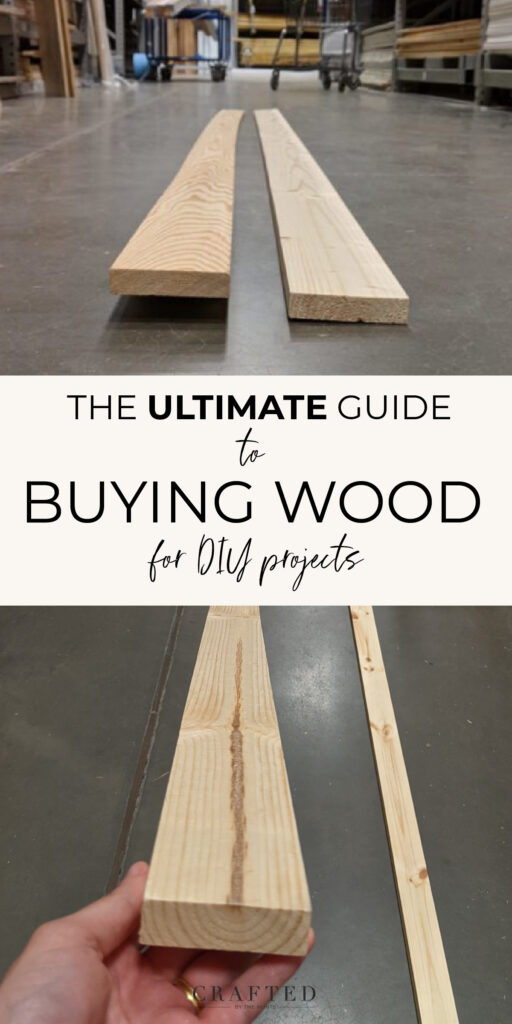
- Buying wet or warped boards
- Choosing the wrong wood for outdoors
- Not checking for knots or defects
- Not understanding board sizes
- Buying cheap wood for high-end projects
10. Pro Tips to Save Money When Buying Lumber
- Look for offcuts or shorts bins
- Buy S4S (surfaced wood) only when necessary
- Use poplar instead of maple for painted cabinets
- Buy in bulk for large projects
11. Best Places to Buy Wood
Big Box Stores
- Home Depot
- Lowe’s
Lumber Yards
- Better selection
- Higher quality hardwoods
Specialty Wood Suppliers
- Exotic woods
- Large slabs
12. Conclusion
Buying wood doesn’t have to be confusing. Once you understand the differences between softwoods and hardwoods, the typical uses, and the strengths of each species, you’ll be able to choose confidently for any DIY or professional project.
The wood species shown in your image—pine, spruce, fir, cedar, redwood, poplar, oak, maple, cherry, and walnut—represent the most commonly used woods in woodworking. Mastering these materials will prepare you for everything from simple weekend builds to advanced furniture-making.